
 English
 Español


Article Directory
In the high-precision world of textile manufacturing, the structural integrity of the raw material is the primary determinant of mechanical throughput. ACY Yarn (Air Covered Yarn), produced by commingling an elastomeric filament with a synthetic carrier through a high-pressure air jet, has revolutionized the stretch-fabric industry. Hengke Textile Technology Co., Ltd., headquartered in Zhejiang with a sister office in Jiangsu, has established a global reputation for production speed and quality practices in the marketing of polyester yarn and nylon yarn. As a leading player led by Mr. Daniel Wang, we recognize that for B2B manufacturers, the "intermingling consistency" of ACY Yarn is not just a quality metric—it is the backbone of operational uptime in high-speed circular knitting.
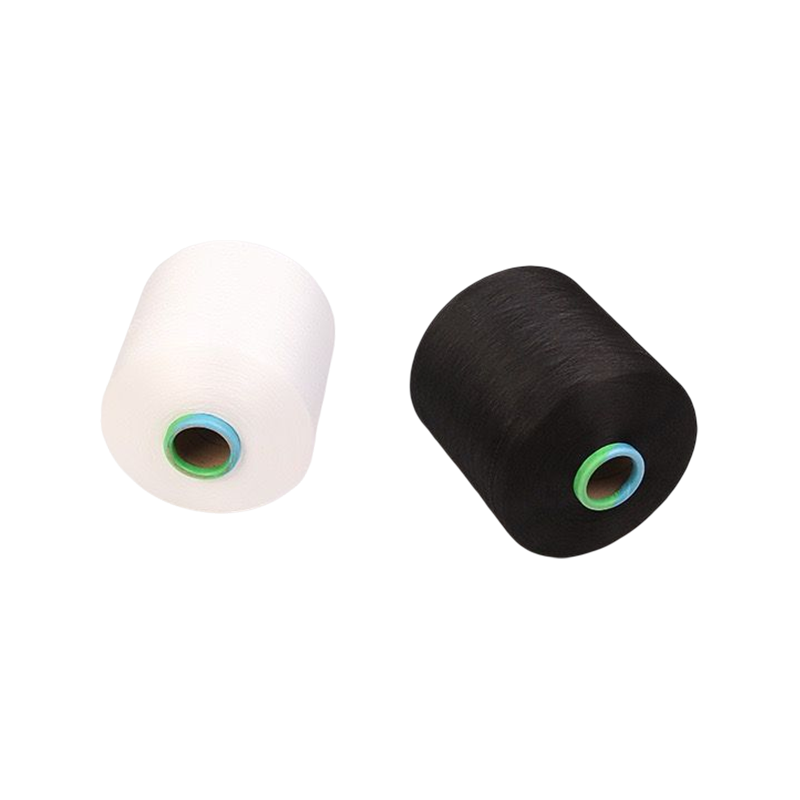
The Physics of Intermingling: Nips and Stability
Intermingling consistency refers to the uniformity of the periodic "nips" or entanglement points along the length of the polyester spandex air covered yarn. On high-speed circular knitting machines, which can operate at speeds exceeding 30-40 RPM, the yarn is subjected to intense centrifugal force and rapid needle engagement. If the nip density fluctuates, the yarn exhibits irregular tension, leading to needle breaks or "birdseye" defects in the fabric. While traditional covered yarns rely on mechanical wrapping, ACY Yarn relies on aerodynamic entanglement, making the precision of the air jet pressure critical for consistency.
| Feature | High Consistency ACY | Inconsistent ACY |
| Nip Frequency (per meter) | Uniform distribution (e.g., 80-100 nips/m) | Variable (clusters and gaps) |
| Yarn Tension | Stable, low-coefficient of variation (CV%) | Eratic spikes leading to yarn breakage |
| Fabric Appearance | Smooth, uniform stitch structure | Shadow stripes or uneven dyeing |
Impact on Machine Downtime and Maintenance
For large-scale textile mills, the cost of a "machine stop" is measured in lost kilograms per hour. When using high stretch ACY yarn for hosiery or activewear, poor intermingling often causes the spandex core to separate from the polyester or nylon sheath. This "stripping" effect clogs the yarn feeders and needles with lint and broken filaments. High-quality ACY Yarn ensures that the two components act as a single unit, significantly reducing the frequency of cleaning cycles. In contrast to low-grade yarns that require frequent manual intervention, premium air-covered products allow for continuous, unattended operation of 24/7 knitting cycles.
| Efficiency Metric | Premium ACY Performance | Standard ACY Performance |
| Needle Life Span | Extended due to reduced friction/lint | Shortened by core stripping/clogging |
| Stop-Motion Triggering | Rare; high yarn path reliability | Frequent; caused by slubs or weak nips |
| Waste Rate | Lower than 1-2% | 3-5% or higher due to defect trimming |
Optimizing Fabric Hand and Dyeing Uniformity
The technical excellence of antibacterial ACY yarn for activewear is often compromised if the intermingling is uneven. Uneven nips cause the yarn to absorb dye differently, resulting in "barre" or horizontal streaks in the finished garment. Furthermore, the elasticity of nylon spandex ACY for seamless garments is highly dependent on how well the air jet has integrated the elastomer. Consistent entanglement ensures that the fabric retains its modulus of elasticity over hundreds of wash cycles. At Hengke Textile Technology, we emphasize holistic quality practices to ensure our yarn provides the "touch" and "stretch" demanded by multi-million dollar business partners.
- Air Jet Precision: Utilizing advanced nozzles to ensure polyester spandex air covered yarn has repeatable entanglement patterns.
- Holistic Quality Control: Testing nip stability under high-speed unwinding conditions to simulate circular knitting stress.
- Transparency: Providing B2B clients with detailed batch reports on CV% and breaking strength.
Specific Advantages for Large-Scale Exports
As a renowned player in the field of textile exporting, we understand that B2B buyers in the US, Europe, and Southeast Asia prioritize "runnability." By ensuring the ACY Yarn maintains high intermingling consistency, we reduce the total cost of ownership for our clients, even when the initial material cost is slightly higher than unbranded alternatives.
Efficiency Analysis: Transitioning to Air-Covered Technology
While Single Covered Yarn (SCY) has long been the standard for premium hosiery, the development of high stretch ACY yarn for hosiery has shifted the economic landscape. By utilizing air-jet entanglement rather than mechanical spindles, manufacturers can achieve significantly higher processing speeds. Hengke Textile Technology ensures that our polyester spandex air covered yarn meets the modulus requirements of high-speed machines while reducing the total energy footprint of the textile mill.
1. Production Speed and Mechanical Throughput
The primary constraint of SCY is the physical limit of the rotating spindle, which generally tops out at 15,000–20,000 RPM. In contrast, ACY Yarn production is limited only by the air-jet velocity and winding speed, allowing for output rates up to 10 times faster than mechanical covering. This translates directly to shorter lead times for our multi-million dollar business partners.
| Production Metric | Single Covered Yarn (SCY) | ACY Yarn (Air Covered) |
| Manufacturing Speed | 15 - 25 m/min | 400 - 600 m/min |
| Energy Consumption | High (Mechanical spindle rotation) | Low (Compressed air efficiency) |
| Core-Sheath Bond | Mechanical twist/wrap | Aerodynamic intermingling (Nips) |
2. Friction Coefficients and Needle Wear
In high-speed circular knitting, the yarn-to-metal friction coefficient determines the heat buildup at the needle hook. Nylon spandex ACY for seamless garments typically exhibits a lower friction profile than SCY because the "nips" create a discontinuous surface area, reducing the drag across ceramic feeders. This result is a marked reduction in needle breakage and "melt-holes" in the fabric during high-RPM runs.
- Thermal Management: ACY reduces heat transfer to the knitting head by approximately 15% compared to SCY.
- Lint Generation: The intermingled structure of polyester yarn in ACY traps shorter fibers more effectively, leading to a cleaner knitting environment.
- Fabric Elasticity: SCY provides a more "contained" stretch, whereas high stretch ACY yarn offers a softer "power stretch" suitable for modern activewear.
3. Cost-Benefit Matrix for B2B Procurement
For wholesalers and large-scale factories, the "Cost per Kilogram" must be balanced against "Machine Efficiency." Our antibacterial ACY yarn for activewear provides an optimized ROI by combining functional additives with the lower manufacturing cost of air-jet technology.
| Cost Variable | SCY Impact | ACY Impact (Hengke) |
| Initial Material Cost | Higher (Labor/Time intensive) | Lower (High-speed automation) |
| Knitting Efficiency | 85 - 90% | 95 - 98% (with consistent nips) |
| Total Production Cost | Baseline (100%) | Reduction of 20 - 30% per KG |
4. Quality Assurance from Zhejiang and Jiangsu
Under the leadership of Mr. Daniel Wang, Hengke Textile Technology maintains a transparent production process. By leveraging the large textile centers of Zhejiang and Jiangsu, we provide ACY Yarn that bridges the gap between the cost-effectiveness of air-covering and the high-end finish of mechanical wrapping. Our production speed and quality practices ensure that every shipment supports your machine's maximum efficiency.
Frequently Asked Questions (FAQ)
- Q1: What is the optimal nip count for ACY Yarn in circular knitting?
A: For most high-speed circular knitting applications, a nip density of 60 to 100 nips per meter is recommended to ensure the yarn remains cohesive during rapid needle strikes. - Q2: How does intermingling affect dyeing?
A: If the nips are too tight or irregular, they can resist dye penetration or create optical differences in the fabric, leading to streaks known as "dyeing barre." - Q3: Can ACY Yarn replace traditional Single Covered Yarn (SCY)?
A: Yes, in many applications. ACY Yarn offers higher production speeds and lower costs, though it has a different hand-feel compared to the mechanical wrapping of SCY. - Q4: Why does poor intermingling cause machine stops?
A: When entanglement is weak, the spandex core can "snap back" or separate, creating a bunch of material that cannot pass through the ceramic feeders, triggering the machine's stop-motion sensors. - Q5: What makes Hengke's ACY Yarn different for hosiery?
A: Our high stretch ACY yarn for hosiery is engineered for extreme elongation and recovery, ensuring that the intermingling nips do not "open up" even under high tension.
Industry References
- International Federation of Knitting Technologists (IFKT) - Technical standards for yarn tension in circular knitting.
- Textile Research Journal - "Aerodynamics of Air-Jet Intermingling and Yarn Structure Properties."
- ASTM D4724 - Standard Test Method for Entanglements in Filament Yarns by Needle Insertion.
- Journal of the Textile Institute - Analysis of yarn-to-metal friction on high-speed knitting needles.
-2.png "Lightweight soft polyester DTY yarn Light Pink/Red/White/Purple/Yellow ZR0161-ZR0313 758")
-2.png "High elastic environmentally friendly polyester DTY yarn Blue Series ZB0118 350")
-2.png "High-performance environmentally friendly polyester DTY yarn Brown Series ZN0085 FM")
-2.png "Antibacterial and anti-odorant polyester DTY yarn White/Grey ZY0050-ZY0238FM")
-3.png "Wash-resistant and wear-resistant polyester DTY yarn Yellow/Grey/White ZY0076-ZY0334 178")
-3.png "Full-color custom polyester DTY yarn Silver Series ZE0006-ZE0668 121")
-2.png "Anti-wrinkle and antibacterial polyester DTY yarn Green Series ZG0136 Grass Green 084")
