
 English
 Español


What Is Polyester DTY Yarn?
Polyester DTY yarn — Draw Textured Yarn — is a fully drawn, textured polyester filament yarn produced by simultaneously drawing and false-twist texturing partially oriented yarn (POY) on a texturing machine. The process imparts a permanent helical crimp to each filament, giving the yarn stretch, bulk, and a soft hand feel that flat polyester filament cannot achieve. DTY is one of the three principal polyester yarn categories alongside POY and FDY (Fully Drawn Yarn), and it is the dominant choice wherever softness, elasticity, and coverage are required.
In practical terms: DTY yarn combines the durability and dimensional stability of polyester with a texture and drape that closely rivals natural fibres — at a fraction of the cost and with far greater consistency in production.
How Is Polyester DTY Yarn Made?
DTY production begins with POY, which is polyester filament spun at high speed (3,000–3,600 m/min) but left partially oriented — meaning the polymer chains are only partly aligned. POY is the feedstock. The texturing process completes the draw and locks in the crimp simultaneously:
- Unwinding: POY packages are mounted on a creel and fed into the texturing machine at a controlled overfeed rate.
- Draw zone: The yarn passes between two sets of godets (feed rollers) running at different speeds. The speed differential — typically a draw ratio of 1.5:1 to 1.8:1 — stretches and orients the polymer chains, increasing tenacity.
- False-twist texturing: Simultaneously, a friction disc unit (or pin spindle) twists, heat-sets, and untwists the yarn in rapid succession. The yarn passes through a primary heater at 160–220 °C; the twist is thermally locked into the filaments before the disc untwists them, leaving a permanent helical crimp.
- Secondary heater (optional): A second heater at 150–200 °C can be used to reduce residual torque (producing "low-torque" or "Set" DTY), which is preferred for knitting applications where the yarn must lay flat without spiralling.
- Winding: The finished DTY is wound onto cheese packages at 400–1,000 m/min, typically in weights of 1–5 kg per package.
The result is a yarn with 15–40% elongation, depending on overfeed and heater settings, versus less than 5% elongation for flat FDY of the same denier.
Key DTY Specifications Explained
| Parameter | Typical Range | What It Affects |
|---|---|---|
| Denier (dtex) | 50D – 600D (55–660 dtex) | Fabric weight, coverage, hand feel |
| Filament count | 24f – 288f | Softness — more filaments = softer |
| Twist direction | S-twist or Z-twist | Fabric balance in single-jersey knits |
| Lustre | Bright, semi-dull, full-dull | Fabric sheen and dyeability |
| Tenacity | 3.0 – 4.5 cN/dtex | Fabric strength and pilling resistance |
| Elongation at break | 25 – 35% | Stretch recovery and wearability |
Can Polyester DTY Yarn Be Dyed?
Yes — but polyester requires disperse dyes and high-temperature dyeing conditions that differ significantly from the dyeing of natural fibres or nylon. This is the most important technical consideration when working with polyester DTY in fabric production.
Why Polyester Needs Disperse Dyes
Polyester is a hydrophobic, semi-crystalline polymer. Its tightly packed molecular structure has no ionic dye sites — there are no free amino groups (as in nylon or wool) or hydroxyl groups (as in cotton) that ionic or reactive dyes can bond to. Disperse dyes are non-ionic, low-molecular-weight molecules that diffuse into the amorphous regions of the polyester structure at elevated temperature and pressure, physically lodging between polymer chains. When the fibre cools, the chains contract and trap the dye molecules — a process called solid-solution dyeing.
Standard Dyeing Conditions for Polyester DTY
| Parameter | Standard Condition | Notes |
|---|---|---|
| Dye class | Disperse dyes (E, SE, S types) | S-type for high wash/light fastness |
| Temperature | 125 – 135 °C | Requires pressurised HT dyeing machine |
| Pressure | 2.0 – 3.0 bar | To keep water liquid above 100 °C |
| pH | 4.5 – 5.5 (acidic) | Acetic acid carrier; prevents dye hydrolysis |
| Dyeing time | 45 – 90 minutes at peak temp | Longer for dark shades (navy, black) |
| Reduction clearing | Sodium hydrosulphite + NaOH | Removes surface dye for wash fastness |
Dope-Dyed (Solution-Dyed) DTY
An increasingly popular alternative is dope-dyed DTY, also called solution-dyed or spun-dyed polyester. In this process, pigment is blended directly into the molten polyester polymer before spinning. The colour becomes an integral part of the fibre structure rather than a surface deposit. Dope-dyed DTY achieves lightfastness ratings of 7–8 on the ISO Blue Scale (versus 5–6 for conventionally dyed polyester) and eliminates the wastewater burden of the dyeing process entirely. It is the preferred specification for outdoor textiles, automotive upholstery, and contract furnishing fabrics where UV resistance and wash fastness are critical.
The limitation: dope-dyed DTY is produced in fixed colours and requires minimum order quantities — typically 5–20 tonnes per shade — making it unsuitable for short-run or fashion production.
Will Polyester DTY Yarn Shrink?
Polyester DTY has very low shrinkage compared to natural fibres — but it is not zero. Understanding the distinction between yarn shrinkage and fabric shrinkage is essential for garment and technical textile specifications.
Polyester DTY Yarn Shrinkage Data
| Test Condition | Typical Shrinkage (DTY) | Comparison: Cotton Yarn |
|---|---|---|
| Boiling water (100 °C, 30 min) | 3 – 7% | 5 – 10% |
| Dry heat, 160 °C, 15 min | 4 – 9% | N/A (cotton scorches) |
| Tumble dry, 60 °C | Less than 1% | 3 – 8% |
| Standard wash, 40 °C | Less than 0.5% | 2 – 5% |
The shrinkage that does occur in DTY fabric is largely structural — caused by relaxation of crimp in the yarn rather than chemical change in the fibre — and it occurs almost entirely in the first wash or heat exposure. Subsequent washes produce negligible additional shrinkage, which is why polyester DTY fabrics are considered dimensionally stable in consumer care conditions.
Factors That Increase Polyester Shrinkage
- Insufficient heat-setting during finishing: Knitted or woven DTY fabric must be heat-set on a stenter at 170–190 °C to stabilise dimensions before cutting and sewing. Under-heat-set fabric retains internal stress that releases as shrinkage in the first wash.
- High residual draw stress: DTY with a draw ratio at the upper end of the range (above 1.75:1) may retain more thermal shrinkage potential. Boiling water shrinkage (BWS) is a standard quality check; premium DTY is specified at BWS below 5%.
- Exposure to temperatures above the glass transition point: Polyester's glass transition temperature (Tg) is approximately 67–80 °C. Sustained exposure above this — such as tumble drying on a high-heat setting — can cause localised shrinkage in tightly constructed fabrics.
Do Polyester and Acrylic Shrink Differently?
Yes — and the differences are significant enough to affect blended fabric care instructions and production finishing parameters.
| Property | Polyester DTY | Acrylic Yarn |
|---|---|---|
| Wash shrinkage (40 °C) | Less than 1% | 1 – 3% (standard); up to 8% (bulk acrylic) |
| Tumble dry shrinkage | Less than 1% | 2 – 5% (heat-sensitive) |
| Steam/wet heat behaviour | Stable below 130 °C | High-bulk acrylic shrinks intentionally at 100 °C+ |
| Heat sensitivity | Moderate (melts above 250 °C) | High (softens from 170 °C, shrinks from 85 °C wet) |
| Dimensional recovery | Excellent — minimal further change | Moderate — can continue relaxing |
| Dry cleaning suitability | Yes (most solvents) | Varies — check solvent compatibility |
High-bulk acrylic yarn is actually engineered to shrink. It is produced as a blend of high-shrinkage and low-shrinkage fibres; when steamed, the high-shrinkage component contracts, forcing the low-shrinkage component to buckle outward and create bulk. This is an intentional manufacturing mechanism — not a defect. In polyester/acrylic blended fabrics, care must be taken during finishing to avoid the steam or wet-heat conditions that activate acrylic bulk development, as this can distort the fabric structure if polyester and acrylic are not pre-stabilised together.
Where Polyester DTY Yarn Is Used
DTY's combination of softness, stretch, bulk, and dyeability makes it one of the most broadly applied textile yarns globally. Annual global DTY production exceeds 15 million tonnes, with China accounting for approximately 70% of output.
| End Use | Typical DTY Spec | Key Property Required |
|---|---|---|
| Sportswear / activewear | 75D/72f or 150D/144f, semi-dull | Stretch recovery, moisture management |
| Warp knit lingerie / lace | 50D/24f bright, S+Z combined | Fine denier, low torque, high clarity |
| Woven apparel lining | 75D/36f or 100D/36f, bright | Smooth hand, low friction, drape |
| Upholstery / home textiles | 150D/96f – 300D/96f, full-dull | Bulk, cover, abrasion resistance |
| Carpet / rugs | 300D/96f – 600D/192f, full-dull | Bulk, resilience, stain resistance |
| Outdoor / technical fabrics | Dope-dyed DTY, 150D/48f | UV stability, colour fastness, weathering |
Summary
Polyester DTY yarn is a draw-textured filament yarn that delivers the stretch, softness, and bulk that flat polyester cannot provide, while retaining polyester's core advantages of durability, low shrinkage, and dimensional stability. It can be dyed using disperse dyes under high-temperature pressurised conditions, or produced in dope-dyed form for superior fastness and sustainability. Compared to acrylic, polyester DTY is significantly more dimensionally stable — shrinking less than 1% in standard wash conditions versus up to 5% or more for heat-sensitive acrylic. For most apparel, home textile, and technical applications, polyester DTY offers an unmatched balance of performance, processability, and cost.
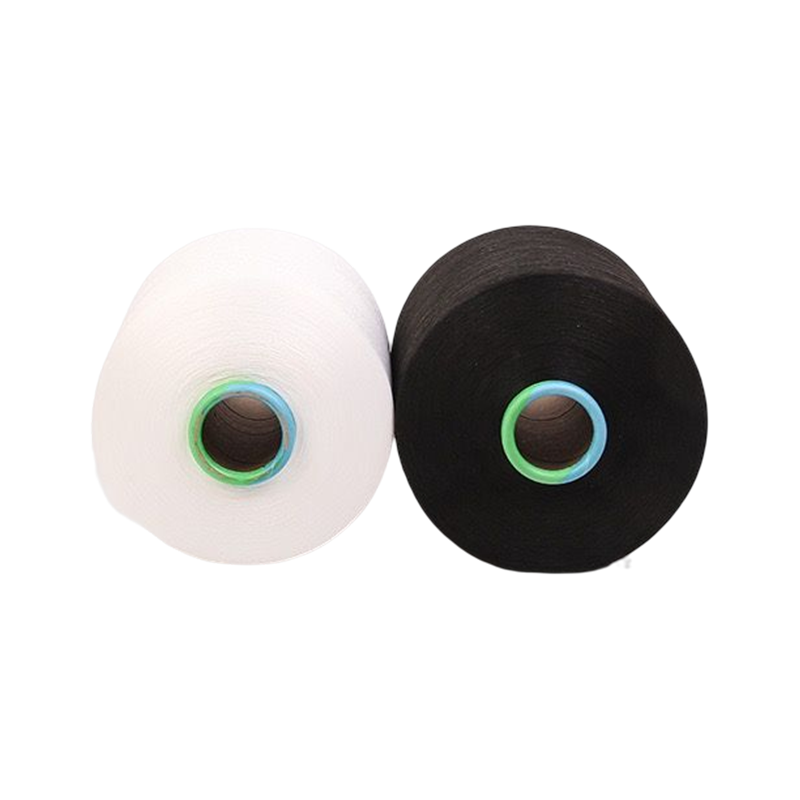
-2.png "Antibacterial and anti-odorant polyester DTY yarn White/Grey ZY0050-ZY0238FM")
-2.png "Lightweight soft polyester DTY yarn Light Pink/Red/White/Purple/Yellow ZR0161-ZR0313 758")
-3.png "Wash-resistant and wear-resistant polyester DTY yarn Yellow/Grey/White ZY0076-ZY0334 178")
-3.png "Full-color custom polyester DTY yarn Silver Series ZE0006-ZE0668 121")
-2.png "High elastic environmentally friendly polyester DTY yarn Blue Series ZB0118 350")
-2.png "Anti-wrinkle and antibacterial polyester DTY yarn Green Series ZG0136 Grass Green 084")
-2.png "Multifunctional Environmentally friendly recycled polyester DTY yarn Purple ZP0471-ZP0566 306")
