
 English
 Español


Article Directory
In high-speed knitting and weaving environments, the selection of filament materials significantly impacts the cumulative production yield. As the industry transitions toward a circular economy, determining the polyester yarn dty specification that balances environmental compliance with machine uptime is critical. This engineering evaluation focuses on the molecular differences, frictional coefficients, and thermal stability between virgin polymers and Global Recycled Standard (GRS) certified rPET (recycled Polyethylene Terephthalate) during secondary processing.
Molecular Consistency and Tensile Strength in DTY Texturing
The primary engineering divergence lies in the molecular weight distribution (MWD). Virgin polyester yarn dty is characterized by a highly uniform polymer chain, resulting in a tensile strength of polyester DTY that typically reaches 3.5 to 4.5 cN/dtex. In contrast, recycled polyester yarn vs virgin polyester DTY comparisons often reveal that rPET may contain trace impurities or variations in Intrinsic Viscosity (IV). This can lead to a slightly higher rate of capillary breakage during the Draw Textured Yarn (DTY) process. However, how GRS certification affects yarn quality involves strict batch testing and filtration protocols that mitigate these variances, ensuring the mechanical properties of recycled DTY meet modern industrial thresholds.
Hengke Textile Technology Co., Ltd., headquartered in Zhejiang, China, is a leading exporter specializing in high-performance textile products. Under the leadership of Mr. Daniel Wang, we have established a robust reputation for production speed and quality practices. With a sister office in Jiangsu Province—another major Chinese textile hub—we manage multi-million dollar businesses with total transparency. Our expertise covers polyester yarn dty, nylon yarn, and ACY yarn, providing a holistic approach to the global marketing of textile-related products.
| Technical Metric | Virgin Polyester DTY | GRS-Certified Recycled DTY |
| Tenacity (cN/dtex) | 4.0 - 4.5 | 3.7 - 4.2 |
| Elongation at Break (%) | 20 - 25% | 22 - 28% |
| Boiling Water Shrinkage | Less than 3% | 3% - 5% (Adjustable) |
Frictional Coefficients and Machine Uptime in High-Speed Knitting
Processing efficiency is heavily influenced by the frictional coefficient of DTY yarn. Recycled polyester yarn DTY processing efficiency can be optimized by adjusting the spin-finish oil concentration. During high-speed circular knitting (above 25 RPM), minimizing breakage in recycled polyester yarn requires a specialized lubricant that accounts for the slightly more abrasive nature of rPET filaments. Furthermore, the dyeing consistency of GRS polyester yarn depends on the thermal history of the recycled flakes; inconsistent heat setting during texturing can lead to "barré" effects in finished fabrics. Engineers must monitor the Ra surface finish of the texturing rollers to prevent damage to the more sensitive recycled filaments.
- Intermingling Density: Maintaining a consistent nips per meter in polyester DTY (typically 60-100 for NIM/HIM) to ensure yarn stability during warp knitting.
- Thermal Stability: Verifying the glass transition temperature of rPET DTY to optimize the heater temperature in the DTY machine (usually 160-220 degrees Celsius).
- Colorfastness: Ensuring the color absorption rate of recycled DTY meets ISO 105-B02 standards for sunlight resistance in apparel applications.
Why does rPET DTY require specific machine settings?
The draw ratio for recycled polyester yarn must often be set 2% to 5% lower than virgin yarn to compensate for the lower molecular orientation. This prevents premature filament rupture. By understanding why recycled DTY has more capillary breaks, technical teams can calibrate the friction disk speed and D/Y ratio to maintain stable production speeds in textile mills. Hengke Textile Technology Co., Ltd. provides technical support to help customers optimize their equipment for our high-end GRS-certified products.
Dyeing Performance and Thermal Shrinkage Control
Thermal stability is the decisive factor in fabric dimensional control. The boiling water shrinkage of polyester DTY must be tightly controlled during the set-heating stage. In dyeing recycled vs virgin polyester yarn, the rPET version often exhibits a faster dye-uptake rate due to its slightly more amorphous structure. This necessitates a modified dyeing cycle for rPET DTY, utilizing slower temperature ramps to ensure levelness. These key differences in processing rPET DTY are manageable through precise ASTM D2256 testing and rigorous quality practices adopted by Hengke Textile Technology.
| Processing Variable | Virgin Standard | Recycled Parameter |
| D/Y Ratio | 1.60 - 1.70 | 1.55 - 1.65 |
| Heater Temp (T1) | 190 - 200 degrees Celsius | 185 - 195 degrees Celsius |
| Spin Finish % | 0.8% - 1.2% | 1.0% - 1.5% |
What is the impact of GRS certification on B2B supply chains?
Securing GRS-certified polyester yarn dty ensures that the entire supply chain—from the plastic flake provider to the spinner—is audited for social and environmental compliance. For B2B buyers, the benefits of GRS yarn for ESG reporting include a verifiable reduction in carbon footprint and water consumption. As a leading Zhejiang-based exporter, Hengke Textile Technology facilitates this transparency, ensuring that multimillion dollar textile businesses can meet the strict sustainability demands of global retailers without sacrificing the mechanical performance of their fabrics.
FAQ
Is GRS-certified recycled DTY more expensive than virgin DTY?
Generally, yes. Due to the complex collection, cleaning, and chemical or mechanical recycling processes, GRS-certified rPET DTY typically commands a 10% to 20% price premium over virgin materials.
Can I mix virgin and recycled DTY in the same fabric?
While possible, it is not recommended for solid-dyed fabrics due to the differences in dye uptake rates, which may cause uneven color or "streaking." It is best used for blended yarns or specific patterned weaves.
What are the common deniers available for polyester DTY?
Standard deniers include 75D/36F, 75D/72F, 100D/36F, 150D/48F, and 150D/144F. Custom deniers can be manufactured based on technical requirements.
Does recycled DTY have a different odor than virgin yarn?
High-quality GRS-certified rPET is thoroughly cleaned and degassed. There should be no discernable difference in odor compared to virgin yarn in the final product.
How can I verify if a yarn is truly GRS-certified?
You should request a Transaction Certificate (TC) from the supplier for each batch. This document traces the material back to the recycling source.
Technical References
- ISO 2060: Textiles — Yarn from packages — Determination of linear density (mass per unit length) by the skein method.
- ASTM D2256: Standard Test Method for Tensile Properties of Yarns by the Single-Strand Method.
- Global Recycled Standard (GRS) 4.0: Implementation and Auditing Guidelines.
-2.png "Lightweight soft polyester DTY yarn Light Pink/Red/White/Purple/Yellow ZR0161-ZR0313 758")
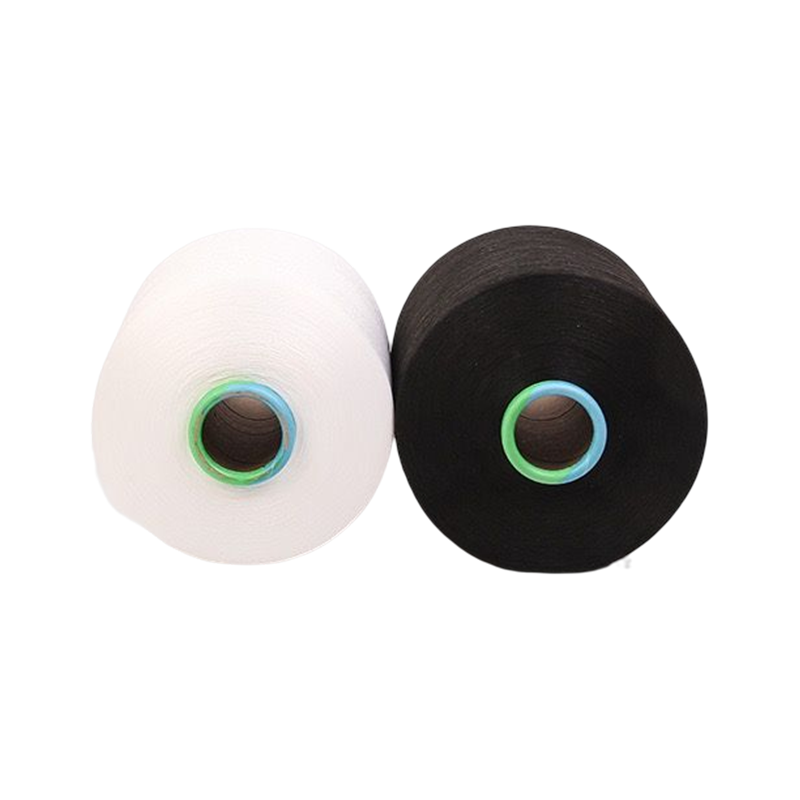
-2.png "Antibacterial and anti-odorant polyester DTY yarn White/Grey ZY0050-ZY0238FM")
-3.png "Wash-resistant and wear-resistant polyester DTY yarn Yellow/Grey/White ZY0076-ZY0334 178")
-3.png "Full-color custom polyester DTY yarn Silver Series ZE0006-ZE0668 121")
-2.png "High elastic environmentally friendly polyester DTY yarn Blue Series ZB0118 350")
-2.png "Anti-wrinkle and antibacterial polyester DTY yarn Green Series ZG0136 Grass Green 084")
-2.png "Multifunctional Environmentally friendly recycled polyester DTY yarn Purple ZP0471-ZP0566 306")
