
 English
 Español


Article Directory
When a tier-one supplier quotes a new interior program for a mid-size SUV, the yarn decision comes before the fabric construction. The specification sheet already contains the hard numbers: a fogging limit, a minimum Martindale abrasion level, a xenon weathering rating, and a grey interior shade that has to match across the seat, door panel and headliner fabric produced in three different plants. Draw textured yarn (DTY) is not the most visible material in that car, but it is one of the most relied upon. DTY has become a standard raw material for automotive interiors because it balances bulk, resilience, abrasion resistance and shade availability, yet not every DTY works in every part of the vehicle.
DTY is a fully drawn polyester multifilament yarn that has passed through a false-twist texturing step to develop crimp, bulk and a soft, cotton-like hand. In automotive textiles, those properties translate directly into cover, comfort and dyeability, which is why DTY-based fabrics appear throughout the passenger cabin.
Why DTY Fits Automotive Textile Requirements
The texturing process is the starting point. Partially oriented yarn (POY) is drawn and false-twist textured so that each filament takes on a wavy, coiled structure. The yarn becomes bulkier, more elastic and better at covering a fabric surface than a flat filament of the same denier. A fabric made with DTY can therefore meet the same requirements for cover and hand at a lighter basis weight, which helps control both vehicle weight and material cost.
Polyester DTY also brings characteristics that align with typical automotive interior expectations:
- Tenacity and abrasion resistance high enough for seat and carpet fabrics that must survive years of daily use.
- Low moisture regain, around 0.4%, which supports quick drying and, with the correct finish, low fogging behaviour.
- Dimensional stability across the temperature range a closed car interior can reach during summer.
- Good dyeability with disperse dyes, which supports deep, repeatable shades across production batches.
These properties are the reasons polyester DTY has become a first-choice input for seat covers, headliners, floor carpets and luggage covers in volume-produced vehicles.
Where DTY Is Used Inside the Vehicle
The passenger compartment is not one single application, and each construction places different demands on the yarn.
Seat Upholstery
Seat cover fabric is the most demanding visible application. Woven and knitted seat fabrics in 150D-300D polyester DTY are common, often with elevated filament counts to improve softness. The fabric must resist seam slippage, pilling and abrasion, hold its shade after UV exposure, and keep its shape without excessive bagging. DTY bulk helps fill the weave structure, improving both comfort and appearance retention.
Headliners and Sun Visors
Headliners require a lightweight, smooth surface with dimensional stability and low fogging. Fine-denier DTY in tricot or circular knit constructions gives the soft, clean face that design teams specify, while the polyester base remains stable when the part is thermoformed. Off-white and light grey are the shades most often requested here.
Carpets, Floor Mats and Trunk Liners
Floor systems use heavier yarns, commonly 500D-1300D, tufted into a primary backing and then coated. The key requirements are abrasion resistance, pile retention and soil hiding. Trilobal cross-section DTY is often selected in this area, because the faceted filament geometry reflects light differently and hides traffic wear longer than round filament yarn.
Door Panels and Interior Trim
Door panels and other trim parts usually combine a rigid substrate with a fabric face. A 150D-300D DTY woven or warp-knit face provides a uniform, durable surface that wraps around contours without tearing. In this area, shade match to the seat fabric matters more than any other single property.
| Application | Typical denier range | Key requirement | Why DTY is used |
|---|---|---|---|
| Seat upholstery | 150D-300D | Abrasion, UV, seam strength | Bulk, soft hand, shade depth |
| Headliner | 75D-150D | Lightweight, low fogging | Fine-denier surface, thermoform stability |
| Carpet and floor mats | 500D-1300D | Pile retention, soil hiding | Trilobal filaments, abrasion resistance |
| Door panels and trim | 150D-300D | Shade match, wrap performance | Uniform surface, dimensional stability |
| Trunk liner and parcel shelf | 300D-600D | Abrasion, cost efficiency | Cover at moderate weight |
Performance Criteria That Decide the Yarn Spec
Every automotive program arrives with its own test protocol, but several criteria come up again and again when a DTY is being qualified for interior use.
Abrasion and Mechanical Durability
Martindale abrasion according to ISO 12947 is the most frequently cited test for seat covers, with requirements commonly falling in the 40,000 to 100,000 cycle range depending on seat position and OEM. Filament count and texturing quality determine how the fabric face wears over time. Poor texturing appears as premature fuzzing or pile loss before the fabric structure itself fails, which is why machine settings and yarn uniformity are checked at the supplier stage.
Lightfastness and UV Resistance
Interior parts must hold their shade after long exposure to sunlight through glass. Accelerated weathering with a xenon arc, such as SAE J2412 or ISO 105-B02, is standard practice, with a widely accepted minimum of grade 4 on the grey scale for colour change. This means the DTY shade must be stable, and the disperse dye package must be selected for heat and light stability, not only for depth of colour.
Flammability and Fogging
FMVSS 302 limits the horizontal burn rate of interior materials, and the melting behaviour of polyester generally supports compliance when the fabric construction and backcoating are engineered correctly. Fogging, measured according to ISO 6452 or DIN 75201, relates to condensation of evaporating components on the windshield. A clean DTY with a well-chosen finish and low residual spinning oil contributes directly to low fogging results.
Shade, Cross-Section and Batch Consistency
Colour is where automotive programs become sensitive. A model can run for several years, and the seat supplier, door panel supplier and carpet maker all have to hit the same interior shade. This places heavy demands on yarn suppliers for batch-to-batch consistency in both colour and physical properties.
Two decisions matter at the yarn stage. Cross-section determines surface character: round filaments are the safe default for most applications, while trilobal filaments give higher lustre and better soil-hiding behaviour for floor systems. Shade continuity is managed with tested dye recipes and approved master samples, against which every production lot is compared before shipment.
For automotive buyers, the practical entry point is visual. A colour-first catalogue makes shortlisting faster: the color card library organizes the range by colour family, and each production article is identified by shade number. Typical grey and silver interiors can start with an evaluation of the Silver 121 DTY article. Warm beige and tan interiors, common in SUVs and crossover models, are served by the FM Light Brown DTY article. For light headliners and pale trim surfaces, the Rice White DTY article is a practical reference shade.
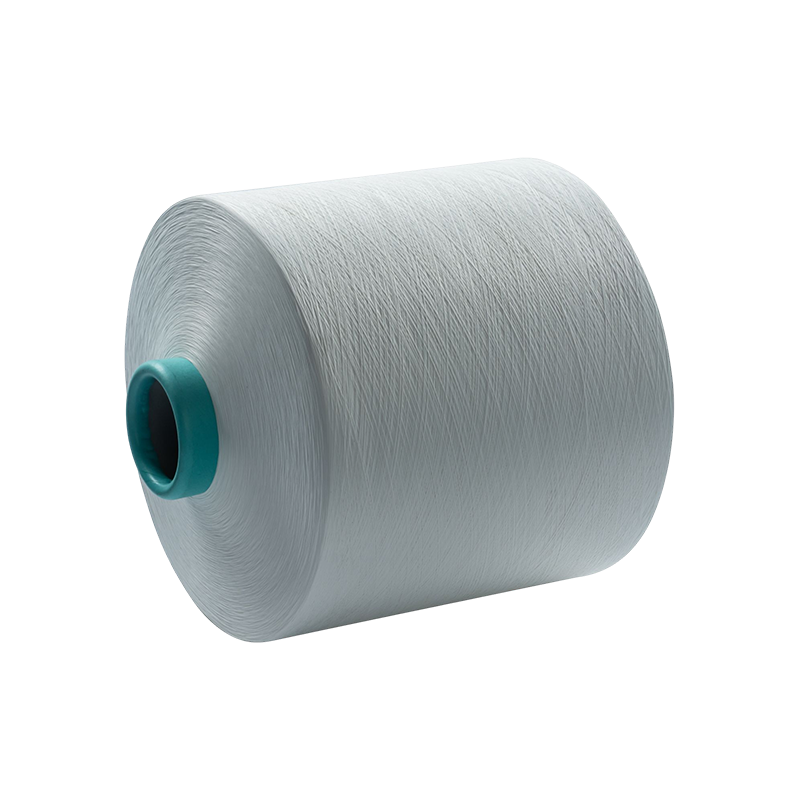 Wholesale Antibacterial and anti-odorant polyester DTY yarn White/Grey ZY0050-ZYHengke Textile Technology Co., Ltd is China custom Antibacterial and anti-odorant polyester DTY yarn White/Grey ZY0050-ZY0238FM suppliers...View Product →
-1.png) Wholesale High-performance environmentally friendly polyester DTY yarn Brown SerHengke Textile Technology Co., Ltd is China custom High-performance environmentally friendly polyester DTY yarn Brown Series ZN0085 FM su...View Product →
Wholesale High-performance environmentally friendly polyester DTY yarn Brown SerHengke Textile Technology Co., Ltd is China custom High-performance environmentally friendly polyester DTY yarn Brown Series ZN0085 FM su...View Product →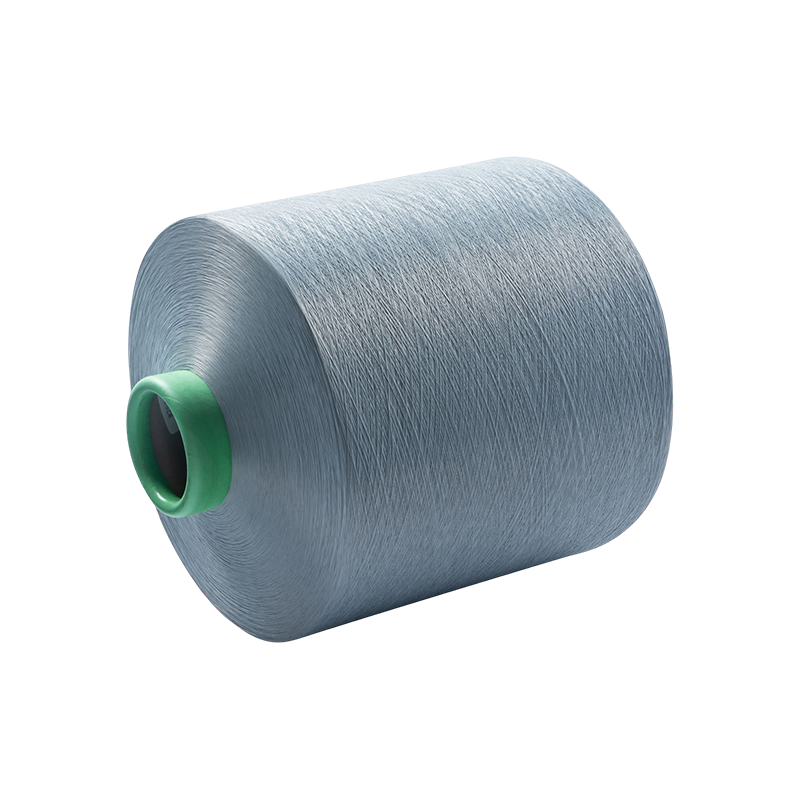 Wholesale Full-color custom polyester DTY yarn Silver Series ZE0006-ZE0668 121 SHengke Textile Technology Co., Ltd is China custom Full-color custom polyester DTY yarn Silver Series ZE0006-ZE0668 121 suppliers and com...View Product →
These are not claims that a single article automatically passes every OEM test. They are concrete, documented starting points that allow a buyer to shortlist material and then run the required UV, abrasion and fogging validation on a real sample.
Sourcing Checklist for Automotive Interior Buyers
Automotive buyers tend to evaluate a yarn supplier the same way they evaluate a fabric mill: what can the supplier prove, and how predictable is the supply? The following points cover the most common purchasing gaps.
- Request batch test records, not just certificates. Ask how shade, tenacity and elongation are controlled between lots, and whether the supplier operates its own testing lab.
- Confirm that the laboratory can test the same standards your program requires, such as Martindale, xenon weathering or fogging, rather than relying on third-party reports alone.
- Check shade continuity against a physical standard. A master sample or color card prevents slow approvals when production ramps up.
- Verify real capacity and lead time. Hengke, for example, declares a standard delivery window of about 20 days after order confirmation and runs annual capacity above 300,000 tonnes, which matters when a vehicle program needs steady repeat supply.
- Ask about configuration flexibility, such as denier, filament count and interlacing levels, before the design is frozen. Changing yarn spec later is expensive.
The full material choice, from denier to shade, is best reviewed at an early stage of the project; our industry guide to DTY yarn specifications and applications covers the basic selection logic, while the analysis of how DTY improves fabric performance explains the link between yarn structure and finished fabric behaviour.
DTY is one of the few yarn families that can serve the seat cover, the headliner and the floor carpet without a change in resin. That versatility, combined with a wide shade range and predictable supply, is why manufacturers keep returning to polyester DTY for automotive interiors. Start with a clearly defined shade reference, verify the supplier's test capability, and validate against the program's numbers before approving the material.
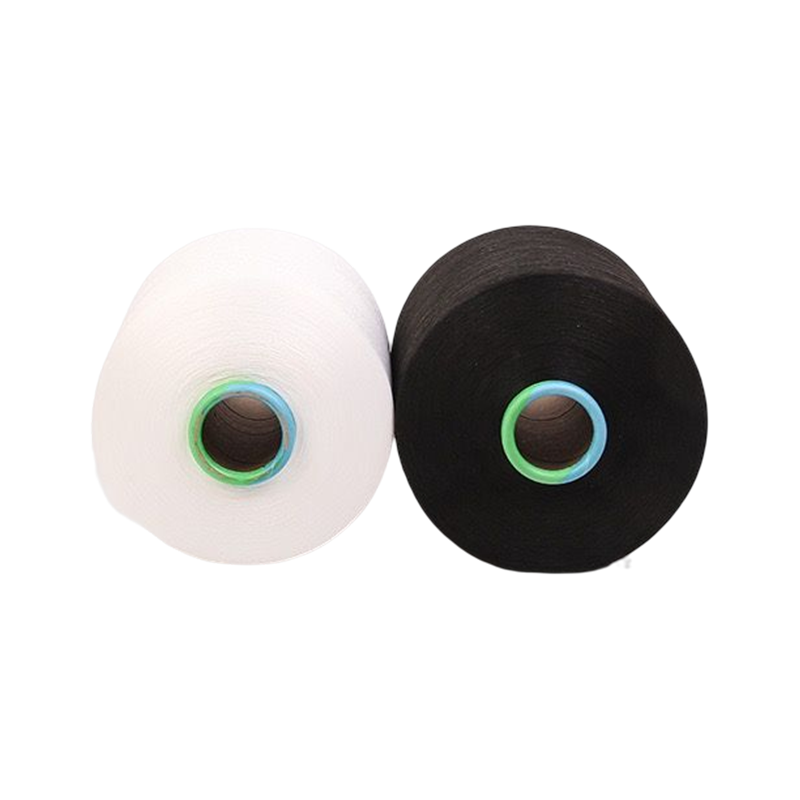
-2.png "Lightweight soft polyester DTY yarn Light Pink/Red/White/Purple/Yellow ZR0161-ZR0313 758")
-2.png "Anti-wrinkle and antibacterial polyester DTY yarn Green Series ZG0136 Grass Green 084")
-2.png "Antibacterial and anti-odorant polyester DTY yarn White/Grey ZY0050-ZY0238FM")
-3.png "Wash-resistant and wear-resistant polyester DTY yarn Yellow/Grey/White ZY0076-ZY0334 178")
-3.png "Full-color custom polyester DTY yarn Silver Series ZE0006-ZE0668 121")
-2.png "High elastic environmentally friendly polyester DTY yarn Blue Series ZB0118 350")
-2.png "Multifunctional Environmentally friendly recycled polyester DTY yarn Purple ZP0471-ZP0566 306")
