
 English
 Español


Article Directory
An OEM draw textured yarn order looks simple on paper. You hand the mill a denier, a filament count, a target shade, and a quantity, then you wait for cones of finished DTY to arrive. What separates a smooth fabric run from an expensive rework is everything that happens between those two points: draw ratio, texturing speed, heat setting, intermingling level, winding tension, and the color system a supplier uses to reproduce your shade. The conclusion is worth stating clearly at the start: a reliable OEM draw textured yarn manufacturing arrangement is built during specification and process review, not discovered at final inspection. This guide explains how the process works, where quality is actually controlled, and how you should evaluate an OEM supplier before signing an order.
What OEM Draw Textured Yarn Manufacturing Covers
OEM production, in the context of draw textured yarn, means the manufacturer runs the DTY process to your specification and produces yarn under your own product references instead of a generic mill stock item. In practice, that covers more parameters than most fabric buyers realize:
- Yarn geometry: nominal denier, filament count, luster (semi-dull, bright, or trilobal), and cross-section shape.
- Color: custom shades matched to a Pantone number, a physical swatch, or a supplier's standard color reference.
- Mechanical targets: tenacity, elongation, crimp, and thermal shrinkage.
- Process-related values: oil content and intermingling level, both of which affect downstream knitting and weaving.
- Packaging and labeling: package weight, cone type, tube color, and your product marking.
Because these items are often compressed into a single purchase order, a small gap between what you assume and what the mill understands becomes a defect on the fabric side. A written technical specification is not bureaucracy; it is the cheapest quality control step you can buy.
From POY to Finished DTY: The Process That Determines Quality
Every draw textured yarn starts as partially oriented yarn (POY), the filament produced by melt spinning. The OEM process then converts POY into DTY in four main operations, each of which leaves a measurable fingerprint on your fabric.
Drawing and false-twist texturing
The draw ratio defines the balance between strength and softness. Higher draw ratios produce leaner, stronger yarn with lower elongation; lower ratios preserve bulk, softness, and stretch. False-twist texturing then creates the crimp that gives DTY its cover and elasticity, while texturing speed influences both production cost and crimp uniformity. For OEM work, the supplier should confirm the draw ratio and texturing temperature against your target tenacity and hand feel rather than simply running a generic profile.
Heat setting and intermingling
Heat setting fixes the crimp and controls shrinkage, which becomes critical when your fabric is dyed, set, or finished under tension. Intermingling, sometimes called interlacing, binds filaments at regular intervals so the yarn behaves well in knitting and warping; the interlacing level can be specified just like denier. A typical polyester DTY for apparel might run at 50 to 100 interlacing nodes per meter, though the optimum depends on your machine configuration. If you need a practical starting point, our guide to choosing polyester DTY yarn specifications for fabric quality and process stability walks through the main parameters and how they interact.
Some OEM programs also include air-covered yarn (ACY), where a spandex core is wrapped with polyester or nylon filaments. The same discipline of setting draw, speed, and tension applies, but the stretch behavior is determined by the spandex ratio rather than texturing alone.
An example helps to make the process concrete. When a customer specifies a light-reflective silver for sportswear linings, the supplier does not simply select a dye; the luster and cross-section are decided upstream so that the silver 121 standard (ZE0006/ZE0668) reproduces the same visual effect batch after batch.
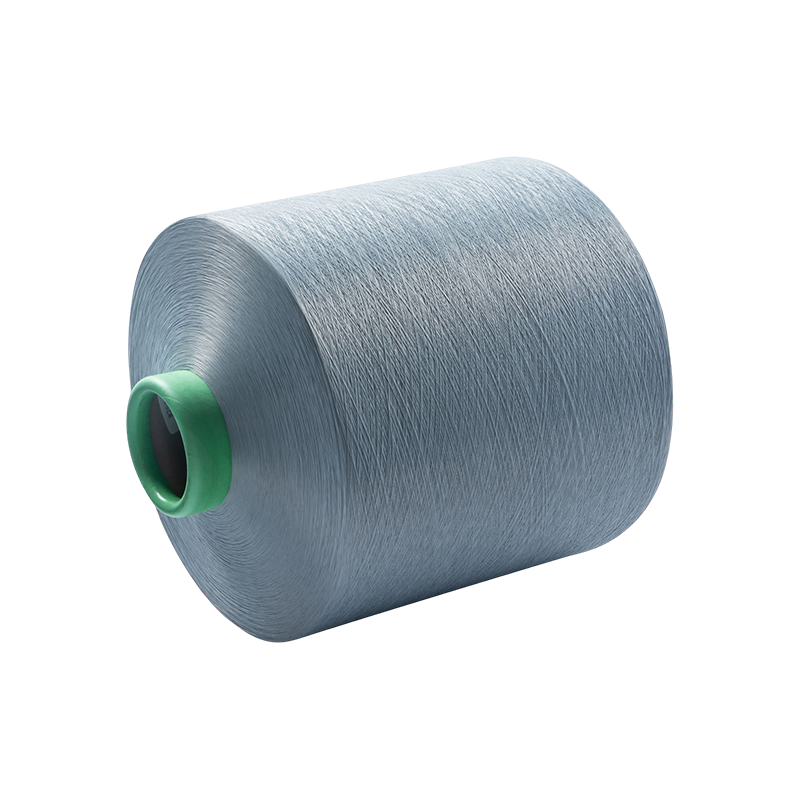 Wholesale Full-color custom polyester DTY yarn Silver Series ZE0006-ZE0668 121 SHengke Textile Technology Co., Ltd is China custom Full-color custom polyester DTY yarn Silver Series ZE0006-ZE0668 121 suppliers and com...View Product →
Quality Control Points That Protect Your Fabric
Quality control in OEM DTY manufacturing is not one test at the end of the line. It is a set of properties checked continuously and reported in a certificate of analysis for each lot.
Tenacity, elongation, and crimp
For most weaving and knitting applications, polyester DTY should hold a breaking tenacity in the range of roughly 3.5 to 4.5 cN/dtex with an elongation between 20% and 35%. Crimp value controls fabric bulk and stretch recovery. If elongation creeps outside the agreed window, the draw ratio or texturing temperature has drifted, and the next batch of fabric will see the consequences.
Thermal shrinkage
Hot-air shrinkage is the number to watch for downstream dyeing and heat setting. When shrinkage varies from cone to cone, finished fabric can develop distorted stitches, wavy edges, or uneven width. A supplier should be able to state both the average and the batch-to-batch spread, not just a single nominal value.
Dye uptake and levelness
In conventionally dyed DTY, uneven dye uptake appears as barré streaks in circular knits. In spun-dyed (dope-dyed) yarn, pigment is introduced before spinning, so color consistency depends on chip and pigment management instead of dye-bath performance. Both routes require shade-difference testing against the reference, typically measured with a spectrophotometer and expressed as Delta E.
Oil content and intermingling
Oil content usually sits in the range of 2.5% to 4.5% by weight. Too little oil causes filament damage and static; too much can contaminate knitting needles or create issues in dyeing. Intermingling levels need the same verification, because a broken or absent network will show up as filament snagging at high-speed processing.
A credible OEM partner should be able to issue a certificate of analysis and to explain how each value was tested. Hengke Textile operates an in-house laboratory with dedicated equipment for checking tenacity, elongation, shrinkage, and shade consistency, and documentation is part of every production lot. The key quality control points for polyester DTY are covered in more detail in our industry library if you want a technical refresher before negotiating with a mill.
Color Matching: Turning a Reference into a Reproducible Shade
Color is the stage where OEM DTY orders most often stall. A Pantone fan deck is not a production standard: the final yarn shade depends on polymer chemistry, pigment or dye selection, heat history, and after-treatment. The fastest way to align with a supplier is to work from a standardized color card that links a visual reference to a production code. Your buyer's cloth swatch can be matched to one of these references, or the mill can develop a dedicated shade with a spectrophotometric target. You can browse the full color card library to see how the system works across beige, blue, brown, gray, green, orange-yellow, pink, purple, red, and other color families.
For OEM programs, spun-dyed DTY is worth a serious look. Because the pigment is added during chip preparation, color is locked inside the filament rather than applied in a dye bath. That translates into better color fastness, shorter makeready time, and a more predictable repeat order. The trade-off is that minimum quantities are usually higher, and you should confirm the lot-to-lot tolerance with the mill. If your product line relies on a deep blue, the blue 350 reference (ZB0118) is a useful example of how a standard shade is held across batches; once approved, it can be reproduced as an OEM reference under your own code.
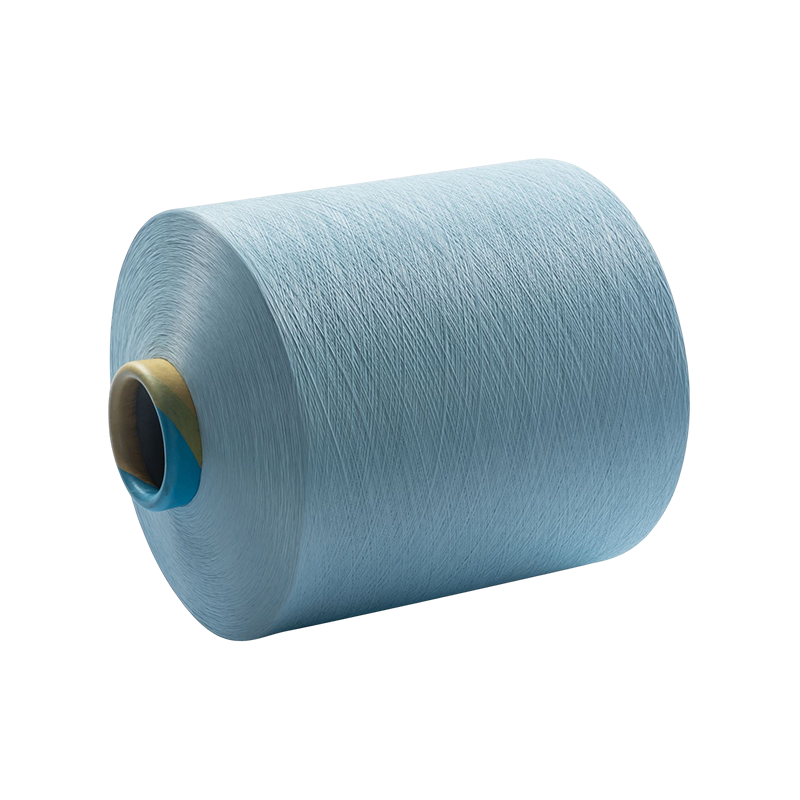 Wholesale High elastic environmentally friendly polyester DTY yarn Blue Series ZHengke Textile Technology Co., Ltd is China custom High elastic environmentally friendly polyester DTY yarn Blue Series ZB0118 350 suppli...View Product →
How to Evaluate an OEM DTY Supplier
Once the process and quality points are clear, the next step is challenging the supplier's actual capability. The table below lists the evaluation areas that matter most in OEM sourcing and what to look for.
| Evaluation area | What to check | Why it matters |
|---|---|---|
| Production scale | Annual output, number of texturing lines, and load stability | Large orders need consistent machine capacity, not overflow capacity from other brands |
| Testing capability | In-house lab, test instruments, certificate of analysis | Reduces the risk of defects being found after shipment |
| Color management | Standard color card, custom shade development, spun-dyed options | Shortens the approval cycle and makes repeats reproducible |
| Delivery performance | Stated lead time and history of on-time shipment | Fabric planning depends on reliable dates, especially for seasonal goods |
| Communication and documentation | Export experience, bilingual staff, shipping documents, traceability | Prevents misunderstandings on spec, labeling, and claims |
Scale and infrastructure make a practical difference in OEM work. Hengke Textile maintains an annual capacity of more than 300,000 metric tons, a dedicated testing lab, and a typical delivery window of around 20 days after order confirmation, which is only possible because we control the process from raw material planning to finished-package packing. For seasonal programs, built-in standard shades such as rice white (ZY0050/ZY0238FM) carry their own production history, so a reorder does not start from scratch.
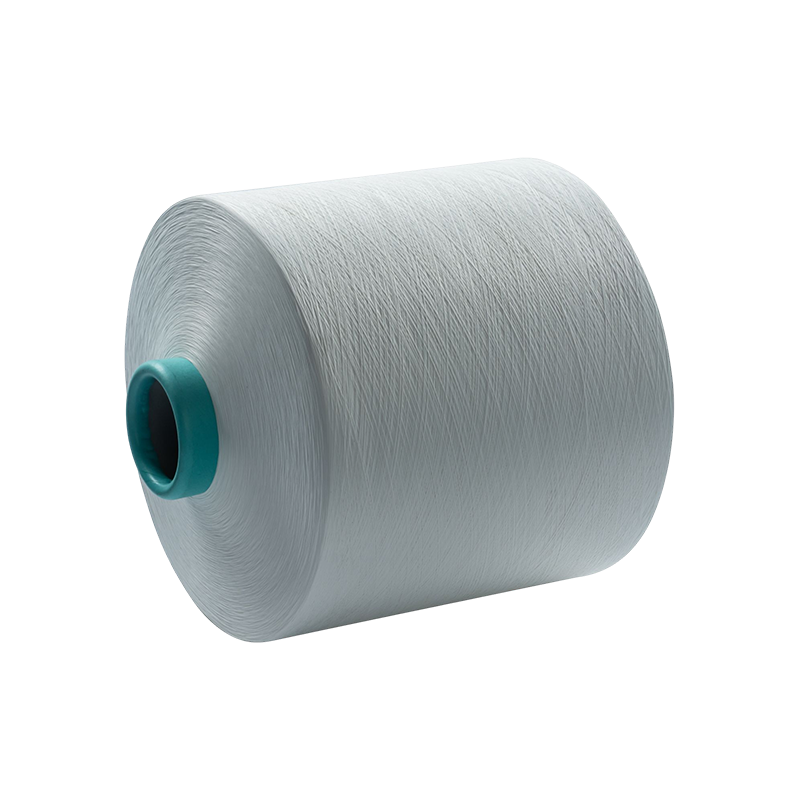 Wholesale Antibacterial and anti-odorant polyester DTY yarn White/Grey ZY0050-ZYHengke Textile Technology Co., Ltd is China custom Antibacterial and anti-odorant polyester DTY yarn White/Grey ZY0050-ZY0238FM suppliers...View Product →
A few warning signs should make you pause, whatever the price quote looks like:
- No access to a testing lab or refusal to share a certificate of analysis.
- No standard color card and no spectrophotometer-based shade target.
- Vague answers about draw ratio, interlacing level, or shrinkage tolerance.
- Lead times that change after the order is confirmed.
- Unwillingness to commit to a written technical specification.
Final OEM DTY Sourcing Checklist
Use the checklist below before you commit to a supplier or place your order.
- Define the full yarn specification: denier, filament count, luster, cross-section, tenacity, elongation, shrinkage, oil content, and interlacing level.
- Set the color target using your swatch, a Pantone reference, or a supplier color card code, and agree on the Delta E tolerance.
- Request pre-production samples and, if possible, a trial lot at production scale rather than a lab sample only.
- Review the quality control plan: which parameters are tested, how often, and what a certificate of analysis must include.
- Confirm packaging details: package weight, cone type, tube color, labeling, and pallet configuration for your warehouse or CIF destination.
- Clarify the delivery window, minimum order quantity per shade, and the cost structure for custom shade development.
- Check the supplier's export experience and documentation flow, including test reports and shipping documents for customs clearance.
OEM draw textured yarn manufacturing rewards buyers who treat the first order as a process qualification rather than a transactional purchase. When the specification is complete, the color references are standardized, and the supplier's lab confirms the key parameters, a DTY program becomes repeatable, order after order and shade after shade.
-2.png "Lightweight soft polyester DTY yarn Light Pink/Red/White/Purple/Yellow ZR0161-ZR0313 758")
-3.png "Full-color custom polyester DTY yarn Silver Series ZE0006-ZE0668 121")
-2.png "Anti-wrinkle and antibacterial polyester DTY yarn Green Series ZG0136 Grass Green 084")
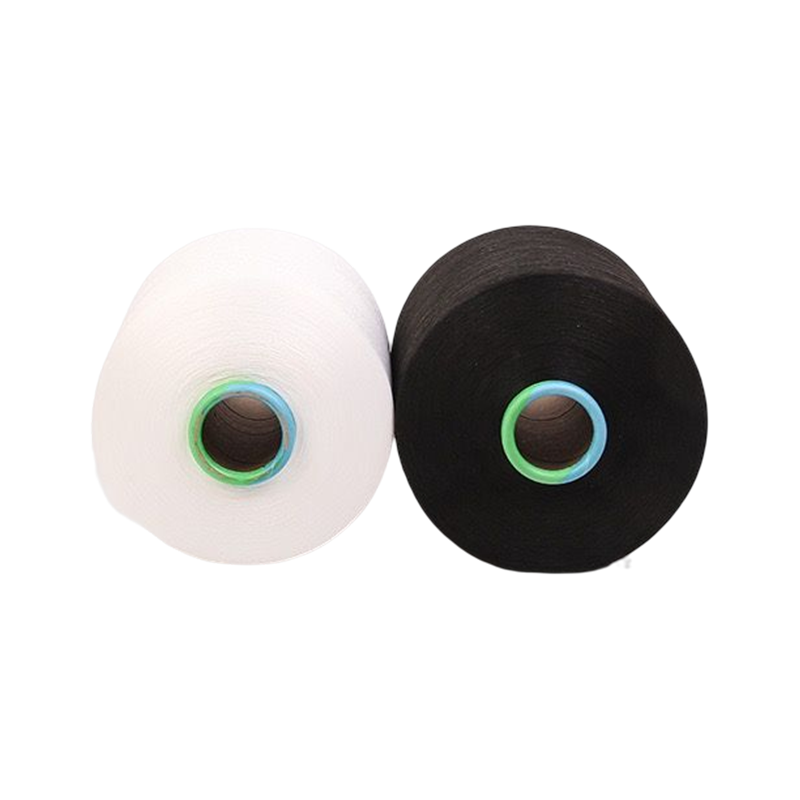
-2.png "Antibacterial and anti-odorant polyester DTY yarn White/Grey ZY0050-ZY0238FM")
-3.png "Wash-resistant and wear-resistant polyester DTY yarn Yellow/Grey/White ZY0076-ZY0334 178")
-2.png "High elastic environmentally friendly polyester DTY yarn Blue Series ZB0118 350")
-2.png "Multifunctional Environmentally friendly recycled polyester DTY yarn Purple ZP0471-ZP0566 306")
