
 English
 Español


Article Directory
- 1 What actually stands behind a DTY quality standard
- 2 Start with the raw material and draw texturing process
- 3 Tenacity and elongation: two numbers that predict processability
- 4 Crimp properties: what makes DTY behave like a textured yarn
- 5 Denier uniformity and dyeing consistency: the hidden cost of variation
- 6 Interlacement, broken filaments, and foreign matter
- 7 Quick reference: DTY quality checks for B2B buyers
- 8 What to ask before you place a DTY order
What actually stands behind a DTY quality standard
Two cones of draw textured yarn (DTY) can look identical on the outside and then behave very differently on a circular knitting machine. The reason is rarely visible to the eye: it is in the tenacity, elongation, crimp, denier uniformity, dye behavior, and defect level of the yarn. DTY quality standards exist to turn these hidden properties into measurable numbers that both buyer and supplier can verify. Once you know how each test is performed and what its value means, a mill report becomes a working tool instead of a paperwork requirement.
This guide explains the DTY quality indicators that matter most in B2B purchasing, why they are measured, and which tolerances are realistic when you compare offers. It is written for buyers who want to reduce their risk before bulk production.
Start with the raw material and draw texturing process
DTY quality is not created only in the texturing machine. The final yarn is drawn from polyester pre-oriented yarn (POY), and if the POY is unstable in denier or elongation, no texturing parameter can fully correct it. As a result, a responsible supplier will explain both the raw material specification and the draw ratio used for a given product. A buyer should ask how the POY is selected, not just how the DTY is textured.
The draw ratio determines how much molecular orientation and residual elongation remain in the yarn. Too low a draw ratio leaves the yarn weak and difficult to process. Too high a draw ratio increases strength but can reduce bulk, softness, and dyeability. This is why good quality standards are not a single set of numbers; they are the operating window around each product's end use. A competent supplier will be able to state the draw ratio range for a specific item and explain its effect on fabric performance.
Tenacity and elongation: two numbers that predict processability
Tenacity
Tenacity, measured in centinewtons per decitex (cN/dtex), tells you how much load the yarn can take before breakage. For most standard polyester DTY products, common values fall between roughly 3.2 and 4.5 cN/dtex. Higher tenacity helps to reduce yarn breaks in warping, weaving, and high-speed knitting. But chasing the highest possible tenacity is not a good buying target: if the draw ratio is pushed too far, the yarn can lose the soft bulk that makes DTY useful in apparel and home textiles.
Elongation
Elongation at break, typically between 20% and 32% for standard DTY, shows how much the yarn can stretch before it fails. More important than the absolute number is the consistency between cones and between packages. If elongation varies from cone to cone, the same machine settings will produce a different fabric width or stitch density, and the fabric appearance will change without an obvious cause. When comparing offers, ask the supplier to state tenacity and elongation together from the same lot, not from two different production dates.
For a deeper look at how these values affect fabric strength and tearing behavior, see our guide to polyester yarn tenacity and tear strength.
Crimp properties: what makes DTY behave like a textured yarn
Crimp properties are what distinguish DTY from flat filament yarn. DTY is not valued only for strength; it is valued for bulk, softness, and the ability to cover a fabric surface. The two most important crimp indicators are crimp rigidity and crimp stability. Crimp rigidity measures the yarn's ability to retain its wavy structure after being compressed. Crimp stability measures how well that structure survives the mechanical stress of later processing.
Typical crimp rigidity values for polyester DTY used in apparel and upholstery often fall in an 8–15% range. A lower value can show up as a flat, lean fabric with poor cover. A higher value can give more body and warmth, but if the yarn is too bulky it may be harder to knit with precision. The correct target depends on the end use, which is why a supplier should explain the crimp data in context instead of giving you an unexplained laboratory number.
Linear density uniformity
Denier is not a single number on a label; it is a distribution of thousands of filaments across many cones. If the linear density varies within a lot, the yarn will tension differently on a machine and will often absorb dye unevenly. Good DTY quality control tracks denier variation, often expressed as a coefficient of variation (CV), from cone to cone and from the start to the end of a package. A low CV percentage is a stronger buying signal than the average denier itself.
Dyeing consistency
Polyester DTY is usually dyed after it has been knitted or woven. That makes shade consistency a quality standard in its own right. A yarn that appears white on the cone can produce a cold tone in one batch and a warm tone in another. For shade-critical orders, ask whether the supplier uses a light box, a spectrophotometer, or a reference shade card to control color. The answer tells you how much reproduction risk you are taking.
At Hengke Textile, we organize product selection around a color-card-first system. Instead of describing a shade by name only, you can browse our color card to see the families we currently run. For blue shades, the blue section of our color card is a practical starting point because it connects a visible shade to a product number.
For example, a buyer who needs a deep, clean blue for a sportswear order can evaluate our polyester DTY in Blue 350 and then approve the shade through a lab dip before bulk production starts.
Interlacement, broken filaments, and foreign matter
Quality standards are not limited to average values. The defects that stop a knitting or weaving machine are just as critical, and they often escape a table of average results.
Interlacement
Interlacement points keep the filaments together and help the yarn run smoothly through guides, needles, and air splices. Too few interlacements can lead to broken filaments and poor cohesion. Too many can make the yarn firm and alter the hand feel of the final fabric. The right level depends on denier, filament count, and downstream equipment, so it should be defined by the supplier as a range, not a vague count.
Broken filaments and contamination
Broken filaments are a common cause of fuzz, loops, and dye streaks. A single broken filament may not change the average tenacity, but it can appear as a visible fault after dyeing. Regular wrap tests, performed on a black board, are a simple way to check the yarn surface. Foreign matter, including dust, lint, oil, or fibers from a previous lot, is a separate category that indicates how well the production line is cleaned and how carefully the packages are protected.
Quick reference: DTY quality checks for B2B buyers
The table below summarizes the tests that appear most often in DTY specifications. The ranges are typical references, not contractual limits; a supplier should give you product-specific data.
| Property | Typical reference range or target | What it predicts |
|---|---|---|
| Tenacity | 3.2–4.5 cN/dtex | Yarn strength, warp and knitting efficiency |
| Elongation at break | 20–32% | Stability of tension, fabric width, and stitch density |
| Crimp rigidity | 8–15% | Bulk, cover, softness, and insulation behavior |
| Denier variation (CV) | Low, process-controlled limit stated by the supplier | Streaks, dye distribution, and fabric weight consistency |
| Interlacements | Supplier-defined range | Processability, splicing, and fabric hand |
| Broken filaments | No visible broken filaments in standard wrap test | Fuzz, machine stops, and dye-streak risk |
A table of ranges is useful only when the supplier can explain how its own product sits within that range. If a sales document shows a broad industry table but cannot produce actual lot data, the buyer is still carrying the technical risk.
What to ask before you place a DTY order
The fastest way to avoid a quality surprise is to ask how the supplier applies quality standards to your specific lot. The test method matters as much as the result.
- Ask for lot-wise test data from the batch that will be shipped, not from the product brochure.
- Ask how tenacity, elongation, crimp, and dyeing consistency are measured, and whether the same internal lab performs all tests.
- Ask for a defined tolerance for elongation and interlacement, not just a target number.
- Ask how shade approval works: visual comparison, instrument measurement, or both, and what happens if the bulk yarn differs from the approved sample.
- Confirm the packaging and cone format, because even a good DTY lot can be damaged in storage or transit.
A concrete product reference helps when you ask these questions. For a gray or silver tone, for example, our polyester DTY in Silver 121 can be used as the starting point for a shade approval and then checked against the same quality parameters described above.
-2.png "High-performance environmentally friendly polyester DTY yarn Brown Series ZN0085 FM")
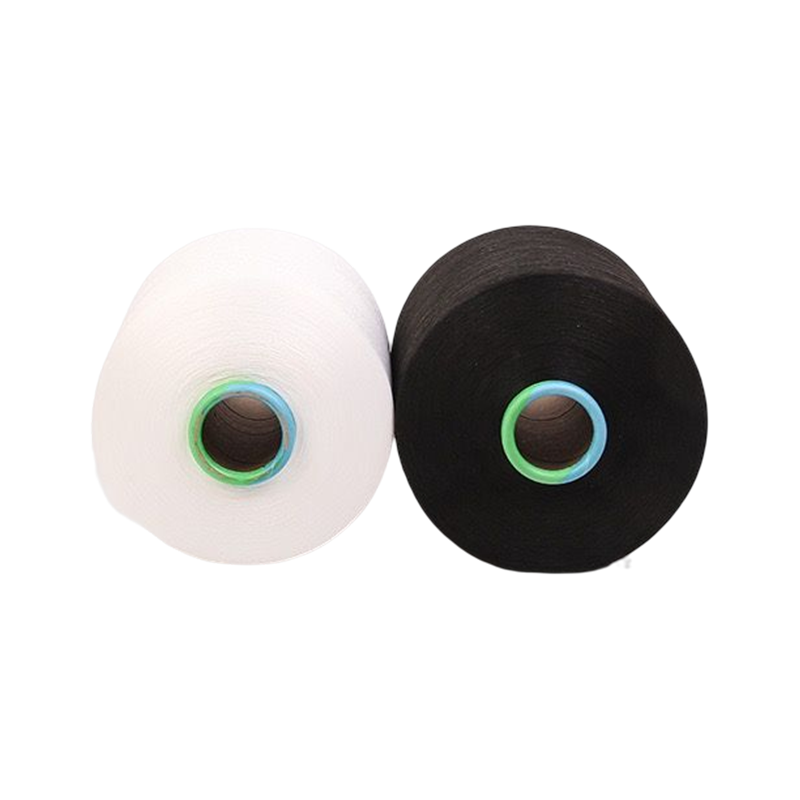
-2.png "Antibacterial and anti-odorant polyester DTY yarn White/Grey ZY0050-ZY0238FM")
-2.png "Lightweight soft polyester DTY yarn Light Pink/Red/White/Purple/Yellow ZR0161-ZR0313 758")
-3.png "Wash-resistant and wear-resistant polyester DTY yarn Yellow/Grey/White ZY0076-ZY0334 178")
-3.png "Full-color custom polyester DTY yarn Silver Series ZE0006-ZE0668 121")
-2.png "High elastic environmentally friendly polyester DTY yarn Blue Series ZB0118 350")
-2.png "Anti-wrinkle and antibacterial polyester DTY yarn Green Series ZG0136 Grass Green 084")
