
 English
 Español


Article Directory
Polyester DTY yarn — Draw Textured Yarn — is the most widely used yarn in knitted fabric production worldwide, accounting for over 60% of global polyester yarn consumption. Made by drawing and false-twisting Partially Oriented Yarn (POY) in a single continuous process, DTY delivers the elasticity, bulk, and soft hand feel that woven fabrics and flat filament yarns cannot replicate. Whether you are sourcing for circular knitting, warp knitting, or specialty performance textiles, this guide gives you the exact specifications, denier ranges, quality benchmarks, and sourcing criteria to make the right decision.
01Which DTY Yarn Suits Knitting?
The right DTY specification for knitting depends on the machine type, gauge, and the intended fabric structure. DTY is produced in two intermingling variants — Semi-Intermingled (SIM) and Non-Intermingled (NIM) — and selecting the wrong type causes tension inconsistencies and needle breakage.
Interlace knots at 40 – 80 per metre provide cohesion without stiffness. Recommended for circular knitting machines at 18 to 28 gauge. Produces fabrics with even loop formation, consistent GSM, and reduced yarn breakage at speeds above 25 RPM. Standard for single-jersey, interlock, and fleece constructions.
No interlace knots — filaments move freely. Used in warp knitting (Raschel and Tricot machines) where yarn passes through guide bars with tight geometry. Also preferred for air-jet and water-jet weaving where interlace knots cause loom stop motions. Softer drape but requires careful tension control on circular knitting machines.
DTY Types by Knitting Application
| Knitting Method | Recommended Type | Twist Direction | Typical Count |
| Circular knitting (single jersey) | SIM, low elastic | S+Z balanced | 75D – 150D |
| Circular knitting (interlock) | SIM, medium elastic | S+Z balanced | 50D – 100D |
| Warp knitting (Tricot) | NIM or low-interlace | Z-twist preferred | 50D – 75D |
| Raschel / lace | NIM, fine count | Z-twist | 20D – 50D |
| Fleece / terry knit | SIM, high bulk | S+Z balanced | 150D – 300D |
Always specify twist direction alongside Denier and filament count when ordering DTY for knitting. A 75D/72F SIM DTY in S-twist will cause fabric spiralling in single-jersey production if the machine tension is calibrated for Z-twist. Balanced S+Z supply (equal cones of each) eliminates this problem on standard circular knitting machines.
02What Denier Should You Choose?
Denier selection directly determines fabric weight (GSM), hand feel, opacity, and production economics. For knitting applications, the effective range spans 20D to 300D, with the most commercially active band sitting between 50D and 150D.
| Denier | Fabric Weight | Primary End Use | Machine Gauge |
| 20D – 40D | 40 – 80 gsm | Hosiery, sheer legwear, sportswear liners | 32 – 40 gauge |
| 50D – 75D | 80 – 140 gsm | Activewear, swimwear, lightweight jerseys | 24 – 32 gauge |
| 100D – 150D | 140 – 220 gsm | T-shirts, polo shirts, casual knitwear | 18 – 24 gauge |
| 150D – 200D | 200 – 300 gsm | Outerwear, bonded fleece, track jackets | 14 – 18 gauge |
| 200D – 300D | 280 – 420 gsm | Heavy fleece, blankets, upholstery knits | 10 – 14 gauge |
Filament count (F) within each Denier range is equally critical. A 150D/48F DTY produces a coarser, more structured fabric than a 150D/144F DTY, which delivers micro-filament softness at the same fabric weight. Higher filament counts increase per-kg cost by 8 – 15% but reduce pilling in finished garments by up to 40% according to Martindale abrasion testing.
03How DTY Affects Fabric Quality
DTY texturing quality determines four measurable fabric properties: evenness, pilling resistance, colour uptake, and dimensional stability after washing.
Yarn mass variation, measured as Coefficient of Variation (CV%), must be below 1.5% for knitting-grade DTY. High CV% causes GSM variation across fabric width — visible as light and dark bands after dyeing. Premium DTY from major spinners achieves CV% below 0.8%.
Higher filament count and tighter false-twist angle reduce fibre protrusion that causes pilling. DTY with 96F or more at 75D passes ISO 12945-2 pilling test at Grade 4 or above — the minimum commercial standard for sportswear in European markets.
Cationic-dyeable DTY (CD-DTY) and semi-dull DTY take disperse dyes at different temperatures and exhaustion rates. Semi-dull DTY dyes at 130 degrees Celsius with 85 – 95% exhaustion; bright DTY requires lower temperatures but achieves only 70 – 80% exhaustion, leaving more dye in wastewater.
Residual shrinkage in DTY above 8% causes finished fabric to shrink more than 5% after three wash cycles — a common cause of customer returns. Specify boiling water shrinkage (BWS) below 6% for knitting-grade DTY. Heat-set DTY (HS-DTY) achieves BWS of 2 – 4%, suitable for performance garments.
04How to Source Quality DTY Yarn
Sourcing polyester DTY yarn from a reliable supplier requires evaluating six criteria beyond price per kilogram. Suppliers who cannot provide documentation for all six should be disqualified before sampling.
-
Test report package — Request tenacity (cN/dtex), elongation at break (%), CV%, boiling water shrinkage (%), and interlace count (per metre) for every lot. Reputable suppliers provide these from in-house or third-party labs such as SGS, Intertek, or Bureau Veritas. Reject suppliers who provide only a Certificate of Analysis without raw test data.
-
Lot-to-lot consistency — Request shade comparison cards from three consecutive production lots. Colour deviation above Delta-E 1.0 between lots causes visible stripiness in striped or solid-dyed knitted fabrics. Ask for the supplier's standard lot-to-lot CV% guarantee in writing.
-
Raw material traceability — Confirm the POY feedstock origin. DTY made from virgin PET chip produces more consistent Denier and lower CV% than recycled-content POY. If recycled content is claimed (rDTY), request GRS (Global Recycled Standard) certification and transaction certificates for each shipment.
-
OEKO-TEX Standard 100 certification — Mandatory for any DTY entering European or North American apparel supply chains. Certification covers over 100 harmful substances including formaldehyde, heavy metals, and pH deviation. Verify the certificate number directly on the OEKO-TEX database at oeko-tex.com before placing an order.
-
Package density and winding quality — Standard DTY cones are 1.5 kg, 2.0 kg, or 2.5 kg. Uneven winding tension causes yarn tension variation on the knitting machine. Request cross-wound (random wound) cones for circular knitting — precision-wound parallel cones are suited to warp knitting only.
-
Minimum order and lead time flexibility — Standard DTY MOQ from major Chinese and Indian spinners is 500 kg per count per colour (greige). Lead time for standard specifications is 15 – 21 days; custom counts or CD-DTY may require 30 – 45 days. Suppliers with no flexibility on MOQ below 500 kg are typically trading intermediaries, not mills — factor the added margin into your landed cost calculation.
For circular knitting of apparel fabrics, the optimal starting specification is 75D/72F SIM DTY, semi-dull, S+Z twist balanced, BWS below 6%, CV% below 1.2%, OEKO-TEX certified, cross-wound on 2 kg cones. This specification covers the widest range of single-jersey and interlock constructions, minimises machine downtime, and satisfies the certification requirements of major fast-fashion and sportswear brands without premium pricing.
-2.png "Antibacterial and anti-odorant polyester DTY yarn White/Grey ZY0050-ZY0238FM")
-3.png "Wash-resistant and wear-resistant polyester DTY yarn Yellow/Grey/White ZY0076-ZY0334 178")
-3.png "Full-color custom polyester DTY yarn Silver Series ZE0006-ZE0668 121")
-2.png "Anti-wrinkle and antibacterial polyester DTY yarn Green Series ZG0136 Grass Green 084")
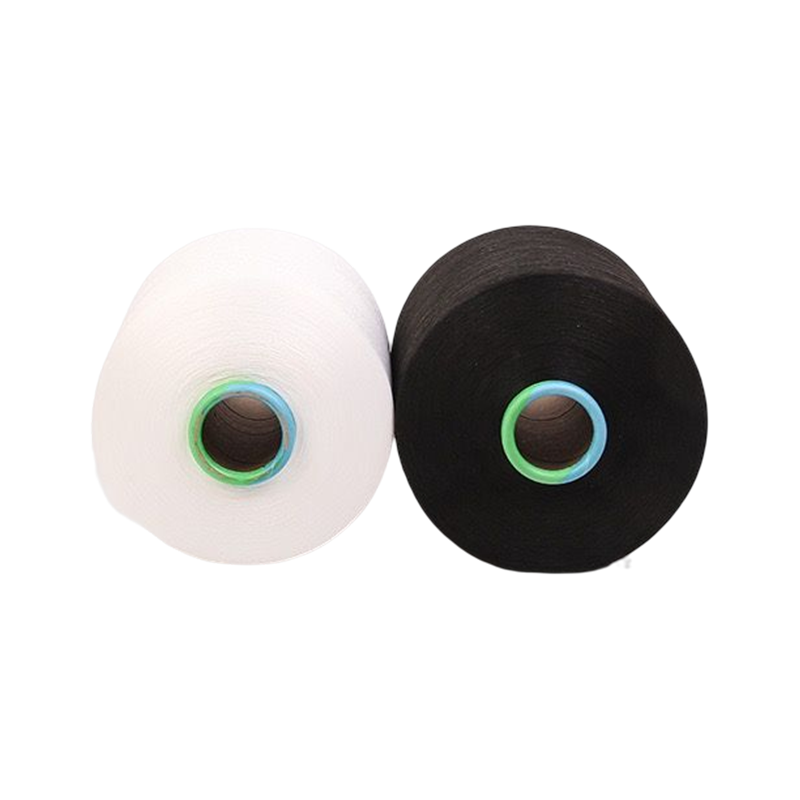
-2.png "Lightweight soft polyester DTY yarn Light Pink/Red/White/Purple/Yellow ZR0161-ZR0313 758")
-2.png "High elastic environmentally friendly polyester DTY yarn Blue Series ZB0118 350")
-2.png "Multifunctional Environmentally friendly recycled polyester DTY yarn Purple ZP0471-ZP0566 306")
