
 English
 Español


Article Directory
- 1 1. Molecular Orientation and Crystallinity Dynamics
- 2 2. Crimp Contraction and Surface Morphology
- 3 3. Engineering Solutions for Dyeing Consistency
- 4 Conclusion: The Balance of Velocity and Quality
- 4.1 Frequently Asked Questions (FAQ)
- 4.1.1 1. Does higher texturizing speed always mean worse polyester DTY dyeing uniformity?
- 4.1.2 2. How can I detect polyester DTY dyeing uniformity issues before knitting?
- 4.1.3 3. What is the difference in mechanical properties of polyester DTY at different speeds?
- 4.1.4 4. Why is sourcing premium polyester DTY for garment manufacturing so important?
- 4.1.5 5. Does the DTY yarn texturizing process change for different colors?
- 4.2 Industry References
- 4.1 Frequently Asked Questions (FAQ)
In the high-precision world of synthetic fiber manufacturing, Draw Textured Yarn (DTY) represents a pinnacle of structural engineering. The quality of the final garment—specifically its color consistency—is deeply rooted in the thermomechanical history of the polyester yarn dty during production. Hengke Textile Technology Co., Ltd., a leading exporter headquartered in Zhejiang with a strategic presence in Jiangsu, has built a global reputation for quality practices and production speed. Under the leadership of Mr. Daniel Wang, we handle multi-million dollar businesses specializing in polyester yarn dty and ACY yarns. For textile engineers, understanding the mechanical properties of polyester DTY at varying speeds is crucial, as the texturizing velocity directly dictates the molecular orientation and subsequent polyester DTY dyeing uniformity in finished textiles.
.png)
1. Molecular Orientation and Crystallinity Dynamics
Texturizing speed is not merely a measure of throughput; it is a critical variable that influences the residence time of the yarn in the primary heater. As speeds increase, the time available for molecular chains to relax decreases, which can lead to higher residual stress. When comparing high speed vs low speed DTY texturizing, higher speeds often result in a less uniform crystalline structure if the heating profile is not perfectly calibrated. This variation in crystallinity creates "dye-affinity zones." Understanding how texturizing speed affects polyester DTY quality requires a look at the amorphous regions of the fiber; higher crystallinity generally reduces dye uptake, while lower crystallinity increases it. Therefore, maintaining a consistent texturizing speed for DTY is the only way to avoid "barre" effects in circular knitted fabrics.
Crystallinity and Dye Absorption Matrix
- Thermal Residence Time: Higher speeds reduce the time the yarn spends in the heater, potentially leading to incomplete molecular setting.
- Dye Uptake Velocity: Inconsistent crystallinity across the polyester yarn dty cross-section results in uneven exhaustion of the dye bath.
| Processing Speed | Molecular Orientation | Dyeing Uniformity Result |
| Optimized Speed (e.g., 600-800 m/min) | Balanced and stable | Excellent (Deep, even shades) |
| Excessive Speed | High residual tension | Poor (Light spots/Streaking) |
| Inconsistent Speed | Fluctuating crystallinity | Barre effect in finished fabric |
2. Crimp Contraction and Surface Morphology
The texturizing process gives polyester yarn dty its characteristic bulk and elasticity. The impact of texturizing temperature on DTY yarn is intensified by the speed; as the yarn moves faster through the friction twist unit, the "twist per meter" can fluctuate, affecting the crimp stability. High tenacity polyester DTY yarn requires a precise balance between draw ratio and speed to ensure the surface morphology remains receptive to disperse dyes. If the speed is too high, the friction discs may cause microscopic abrasions on the fiber surface, altering the light reflection and appearing as polyester DTY dyeing uniformity issues. This is why sourcing premium polyester DTY for garment manufacturing from a holistic player like Hengke is vital, as we ensure synchronized spindle speeds across all production lines.
Crimp and Texture Sequence
- Primary Heating: The DTY yarn texturizing process begins with thermoplastic softening.
- Friction Twisting: Mechanical crimp is inserted; speed variations here lead to "tight spots."
- Secondary Setting: Higher speeds may result in insufficient crimp contraction of DTY yarn, leading to a flatter fabric appearance.
3. Engineering Solutions for Dyeing Consistency
To mitigate the risks associated with high-speed production, engineers must utilize advanced polyester DTY manufacturing techniques such as online tension monitoring and automated temperature compensation. The benefits of low-denier polyester DTY for fine-gauge garments are only realized when the texturizing speed is optimized for the specific decitex (dtex) of the yarn. At Hengke Textile Technology, our transparent management and technical rigor ensure that our polyester yarn dty meets the stringent requirements of the global market. When comparing semi-dull vs bright polyester DTY dyeing, the refractive index of the titanium dioxide (TiO2) particles interacts with the surface texture, making speed-induced defects even more visible in bright yarns. Utilizing wholesale polyester DTY yarn from a leading exporter ensures that these technical variables are controlled at the source.
| Technical Variable | Impact on Dyeing | Solution |
| Tension Variation | Creates "tiger stripes" in fabric | Online tension sensors/Auto-adjustment |
| Heater Efficiency | Inconsistent dye affinity | Short-track heaters for high-speed runs |
| Friction Disc Wear | Surface physical damage | Ceramic or specialized polyurethane discs |
Conclusion: The Balance of Velocity and Quality
The texturizing speed of polyester yarn dty is a double-edged sword: while it drives production efficiency, it significantly influences the polyester DTY dyeing uniformity of the final product. By controlling the mechanical properties of polyester DTY through stabilized heating and synchronized twisting, manufacturers can avoid the costly rejections associated with uneven dyeing. Hengke Textile Technology Co., Ltd. remains committed to this technical excellence, leveraging our expertise in Zhejiang and Jiangsu to provide the global industry with premium polyester yarn dty that delivers consistent, vibrant, and flawless results in every garment.
Frequently Asked Questions (FAQ)
1. Does higher texturizing speed always mean worse polyester DTY dyeing uniformity?
Not necessarily. While higher speeds reduce heating time, modern machines use "short-track" high-temperature heaters to compensate. However, if the machine is not high-end, speed increases usually lead to crystallinity variations and uneven dyeing.
2. How can I detect polyester DTY dyeing uniformity issues before knitting?
The most common method is the "Knitting and Dyeing Test," where sample socks are knitted and dyed in a standard bath. Engineers also check the crimp contraction of DTY yarn and hot air shrinkage as indicators of thermal history.
3. What is the difference in mechanical properties of polyester DTY at different speeds?
Higher speeds generally lead to slightly higher residual shrinkage and lower elongation if the draw ratio is kept constant, which can affect how the fabric "takes" the dye under pressure and heat.
Premium manufacturers like Hengke ensure that every spindle on the texturizing machine is running at the exact same speed and temperature. Minor deviations between spindles lead to "shading" differences in the final garment.
5. Does the DTY yarn texturizing process change for different colors?
The process remains the same for raw white yarn, but dope-dyed polyester DTY requires different speed settings to preserve the integrity of the integrated pigments and ensure color consistency across the batch.
Industry References
- ISO 2062: Textiles — Yarns from packages — Determination of single-end breaking force and elongation at break using constant rate of extension (CRE) tester.
- Journal of Engineered Fibers and Fabrics: "The Effect of Heater Temperature and Yarn Speed on the Properties of False-Twist Textured Yarn."
- Textile Research Journal: "Crystallinity and Dyeability of Poly(ethylene terephthalate) Fibers."
- Hengke Textile Internal R&D: "Optimization of High-Speed Texturizing for 75D/72F Polyester DTY" (2025).
-2.png "Lightweight soft polyester DTY yarn Light Pink/Red/White/Purple/Yellow ZR0161-ZR0313 758")
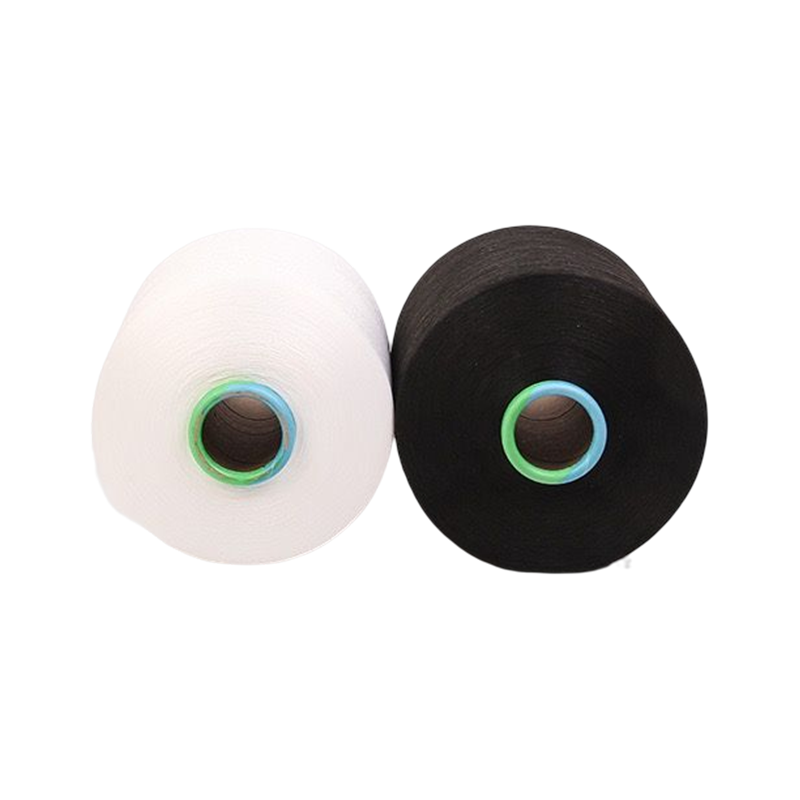
-2.png "High elastic environmentally friendly polyester DTY yarn Blue Series ZB0118 350")
-2.png "Multifunctional Environmentally friendly recycled polyester DTY yarn Purple ZP0471-ZP0566 306")
-2.png "High-performance environmentally friendly polyester DTY yarn Brown Series ZN0085 FM")
-2.png "Antibacterial and anti-odorant polyester DTY yarn White/Grey ZY0050-ZY0238FM")
-3.png "Wash-resistant and wear-resistant polyester DTY yarn Yellow/Grey/White ZY0076-ZY0334 178")
-3.png "Full-color custom polyester DTY yarn Silver Series ZE0006-ZE0668 121")
