English
 Español


Article Directory
- 1 Decode the Specification String Before You Compare Prices
- 2 The Laboratory Values That Predict Machine Efficiency
- 3 Colour Consistency and Lot Traceability Drive Claim Rates
- 4 Certification Is a Document, Not a Claim
- 5 Commercial Terms That Move the Landed Cost
- 6 How to Verify a DTY Supplier Before the First Container
- 7 Sourcing Questions Buyers Ask Most Often
Bulk DTY sourcing rewards buyers who treat the yarn as an engineered input rather than a commodity. Denier, filament count, intermingle level, shrinkage class and colour code each change how the yarn behaves on a knitting machine or a loom, and each one changes the price. This guide walks through the factors that decide whether a container of polyester DTY performs the way the quotation promised, from the specification string through laboratory testing, colour control, certification, packing, commercial terms and supplier verification.
Decode the Specification String Before You Compare Prices
A complete polyester DTY specification needs five values: linear density, filament count, intermingle level, shrinkage class and colour code. Anything less makes two quotations impossible to compare, no matter how detailed the price breakdown looks.
Linear density and filament count
The notation 150D/48F means 150 denier distributed across 48 filaments. One denier equals one gram per 9,000 metres, so the same yarn appears as 167 dtex on a Chinese mill certificate, where one dtex equals one gram per 10,000 metres. Divide 150 by 48 and the average filament weighs 3.1 denier.
That per-filament figure, normally written as dpf, controls both hand feel and machine behaviour. Most apparel knits sit between 2.5 and 3.5 dpf. Below 1.0 dpf the fabric feels softer and drapes better, but individual filaments break more easily during texturing and knitting. Above 5 dpf the yarn is aimed at industrial webbing, straps and heavy upholstery.
Intermingle level
Intermingle count is measured in knots per metre and records how tightly the texturing process has tangled the filaments together. Commercial DTY normally ships between 15 and 40 knots/m. Below 10 knots/m the yarn is classed as non-intermingled, and weavers usually add twist or sizing before it can run on a warp beam. Knitters who buy low-intermingle yarn to save a small amount per kilogram often pay for it in machine stops.
Shrinkage class
Boiling water shrinkage separates DTY into three commercial classes: regular at 2 to 5 percent, low-shrink below 2 percent, and high-shrink between 8 and 40 percent. Shrinkage is fixed during texturing and heat setting and cannot be corrected downstream. Blending a regular lot with a low-shrink lot inside one fabric produces puckering after dyeing that no finishing line can remove.
If a quotation does not state denier, filament count, intermingle level, shrinkage class and colour code, treat the price as non-comparable and request a corrected offer before any negotiation begins.
The Laboratory Values That Predict Machine Efficiency
Seven measurements explain most of the gap between polyester DTY that runs at 95 percent knitting efficiency and yarn that stops the line every shift: linear density variation, tenacity, elongation, shrinkage, intermingle count, oil pick-up and colour difference between lots.
| Test parameter | Typical bulk acceptance window | Reference method |
| Linear density variation | 1.5% or below within a package; 2.0% or below between packages | ISO 2060 |
| Tenacity | 3.5 to 4.5 cN/dtex; 5.5 cN/dtex and above for high-tenacity grades | ISO 2062 |
| Elongation at break | 20% to 30% | ISO 2062 |
| Boiling water shrinkage | 2% to 5% for regular; below 2% for low-shrink | ISO 2500 |
| Intermingle count | 15 to 40 knots per metre | Supplier method |
| Oil pick-up | 1.5% to 2.5% | Solvent extraction |
| Colour difference between lots | Delta E of 1.0 or below against the approved standard | ISO 105-J03 |
Denier variation deserves the first look. A coefficient of variation above 1.5 percent within a single package produces thin and thick bands that appear as barré in dyed fabric, and no dyeing correction hides them. Tenacity and elongation must be read as a pair: a 4.0 cN/dtex yarn with 25 percent elongation behaves very differently from a 4.0 cN/dtex yarn with 18 percent elongation, even though both pass a simple strength test.
A supplier that hands over lot records on request is easier to work with than one that only issues a certificate at year end. The quality control checkpoints used for polyester DTY are a reasonable template for the test list to write into a bulk contract.
Colour Consistency and Lot Traceability Drive Claim Rates
Colour generates more claims in bulk DTY than any physical property, because a colour difference of 1.5 Delta E between two lots is visible in a finished garment panel even when both lots pass every strength and shrinkage test.
Delta E is the CIE Lab colour difference measured between a delivered lot and the approved colour standard. For polyester filament yarn, 1.0 or below is normally accepted as a commercial match, while automotive and upholstery programmes often specify 0.8 or tighter.
A published colour library shortens that conversation considerably. Hengke Textile Technology Co., Ltd. arranges its polyester DTY range by colour family, including beige, blue, brown-curry, gray, green, orange-yellow, pink, purple and red, with every shade mapped to a product code and a colour number. Buyers can order against the colour card reference rather than describing a shade in words, which removes most of the argument about what navy or rice white actually means.
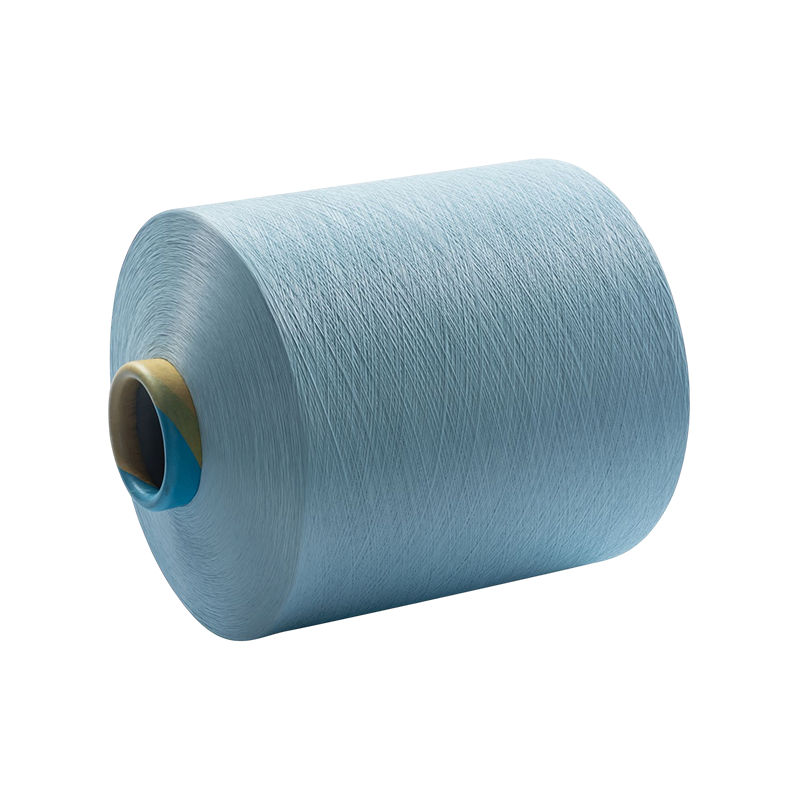 High Elastic Eco-Friendly Polyester DTY Yarn Blue Series ZB0118 350Blue-series DTY with proprietary deep-blue pigment and high-pressure dyeing, mapped to a colour number for apparel, home textiles and technical fabrics.View Product →
Colorfastness follows the same discipline. For apparel, request grade 4 to 5 on the ISO 105-A02 grey scale for washing and grade 4 or above for rubbing, and agree the standard before bulk production rather than after the first dyeing complaint.
Traceability completes the picture. Every package label should carry the lot number, production date, machine position and colour code, and the supplier should retain a sample of each lot for at least 12 months. Without that link, a shade complaint cannot be traced back to a production batch, and the buyer carries the cost of the whole shipment.
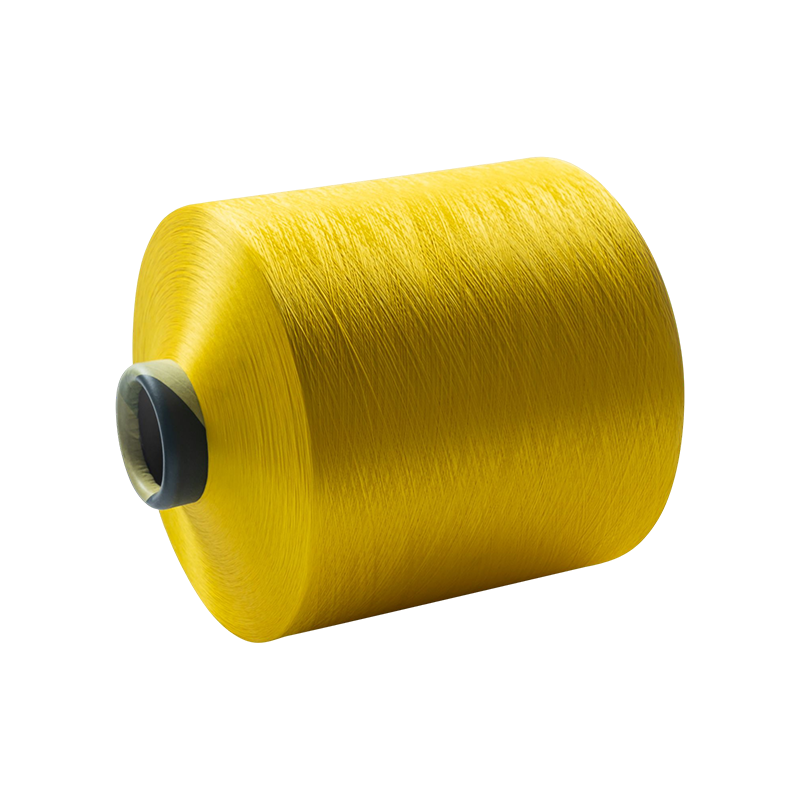
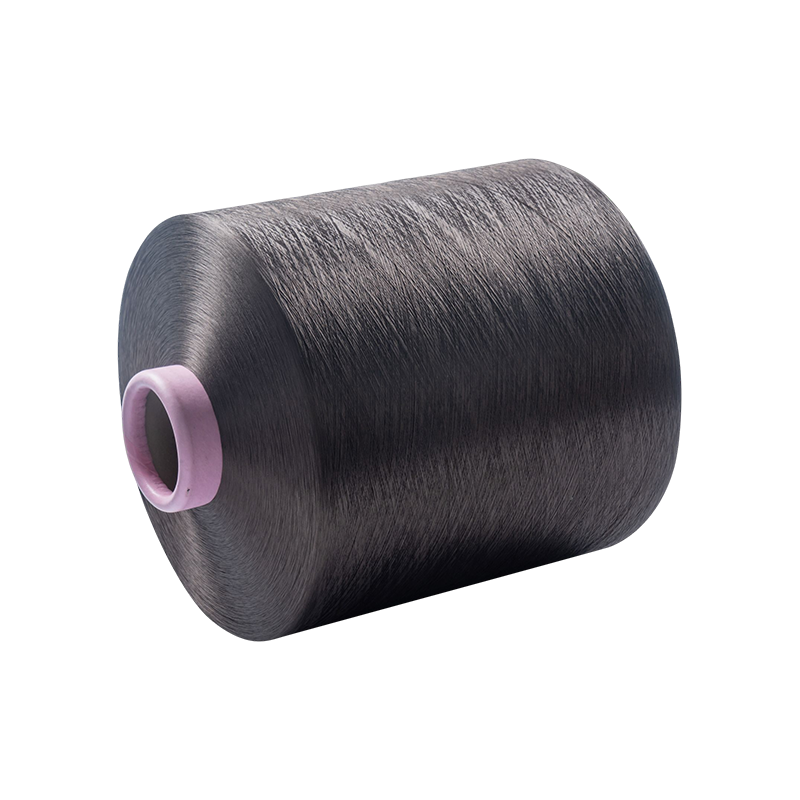 High-Performance Eco-Friendly Polyester DTY Yarn Brown Series ZN0085 FMBrown draw-textured yarn for apparel, home and industrial fabrics; traceable lot labels and Oeko-Tex/GRS checks support bulk shade consistency.View Product →
Certification Is a Document, Not a Claim
For apparel-facing bulk orders, request Oeko-Tex Standard 100 first, then the Global Recycled Standard (GRS) where recycled content is claimed. Both certificates carry a number that can be verified in the issuing body's public database, which is the only check that matters.
- Oeko-Tex Standard 100, product class II, covers textiles with direct skin contact and is accepted by most European and North American apparel brands without further testing.
- Global Recycled Standard (GRS) is required when the yarn carries a recycled polyester claim, and traces the material from the recycler through texturing to the finished package.
- ISO 9001 covers the quality management system rather than the product, but it indicates that lot records and non-conformance handling are documented.
- A REACH SVHC declaration is needed for EU shipments, and it should list the substances screened together with the test date.
- Functional variants such as UV-resistant, antibacterial and antiodorant DTY depend on additives dosed during spinning, so ask for the additive content and evidence that it survives heat setting and dyeing.
One practical warning applies to all functional yarns: additive and dope-dyed products behave differently from raw white yarn in the dyehouse. Confirm the finishing route before placing a bulk order, because a small change in additive content can shift dye uptake and force a reformulation of the dyeing recipe.
Commercial Terms That Move the Landed Cost
Packing, minimum order quantity and container loading shift landed cost by more than the unit price gap most buyers spend weeks negotiating over.
Minimum order quantity is set by the production batch, not by the sales department. A custom shade usually starts between 1,000 kg and 3,000 kg per colour, because one dyeing or dope-dyeing run has to be scheduled as a single batch. Stock shades such as black, raw white and navy are frequently available in smaller volumes.
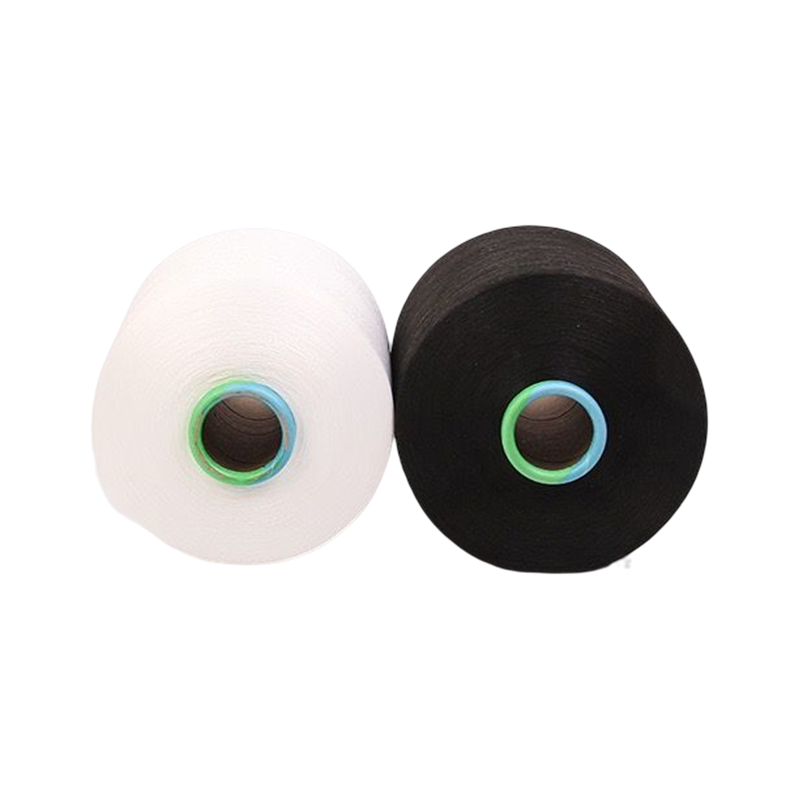
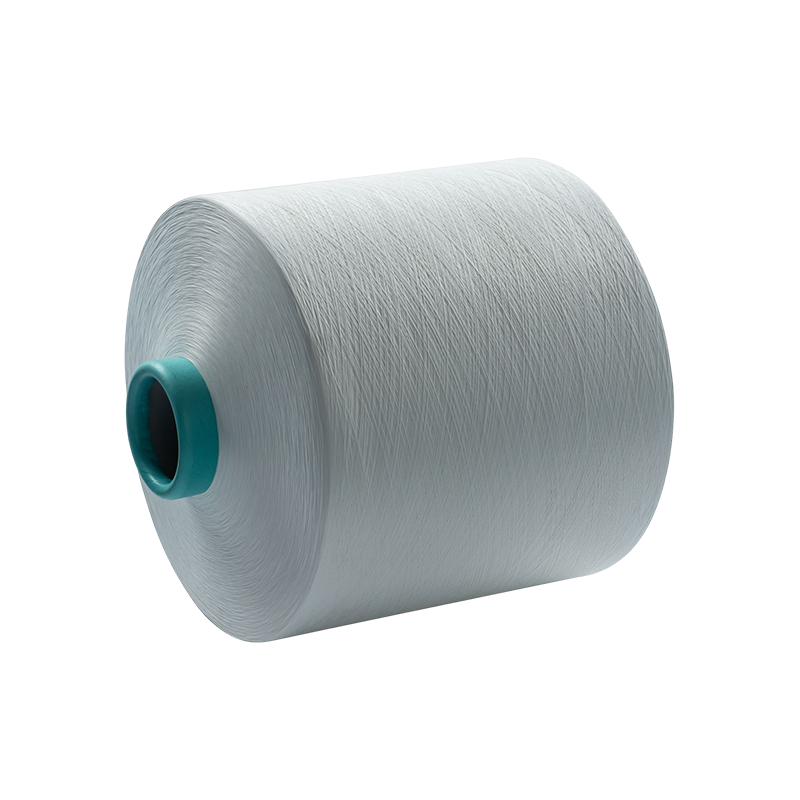 Antibacterial Anti-Odorant Polyester DTY Yarn White/Grey ZY0050-ZY0238FMWhite or grey functional DTY with antibacterial odor control for apparel, medical and home textiles; stock shades may be available in smaller volumes.View Product →
Packing follows the same logic. Export DTY is normally wound on cones between 4.5 kg and 6 kg, packed in cartons and shipped on pallets, with desiccant and moisture barrier liners on long sea routes. Heavier cones reduce handling cost, but they raise the risk of package deformation at the base of a stack, so confirm winding density and pallet height before booking a full container.
Payment structure matters as much as price. A common arrangement is a 30 percent telegraphic transfer deposit with the balance against a bill of lading copy, or a letter of credit at sight. A supplier quoting a 20 percent price advantage in exchange for full advance payment is not offering a better deal, only a different risk position.
How to Verify a DTY Supplier Before the First Container
Verification should produce three pieces of physical evidence: a third-party test report for the quoted specification, a retained sample approved by both parties, and proof that the supplier tests every lot rather than every shipment.
Signals of a stable supplier
- An in-house testing laboratory with evenness, tensile and shrinkage instruments that can be inspected during a factory visit.
- Lot-level records for linear density variation, tenacity, elongation and colour difference, released on request rather than after a complaint.
- Named quality staff with the authority to hold a lot back, plus a documented release procedure.
- Sample-to-bulk consistency demonstrated across at least three consecutive orders.
Signals that need a second look
- A sample that passes inspection while the bulk lot arrives with a different hand feel or colour depth.
- Packages that carry no lot number, machine position or production date.
- Certificates quoted without a number, an issuing body or a validity date.
- A price far below the market band with no technical explanation, or a delivery date promised without a confirmed production slot.
Sourcing Questions Buyers Ask Most Often
What minimum order quantity applies to a custom polyester DTY colour?
For a custom shade, mills commonly set the minimum between 1,000 kg and 3,000 kg per colour, because one dyeing or dope-dyeing run must be scheduled as a single batch. Stock shades such as black, raw white and navy can often be ordered from one pallet, roughly 300 kg to 500 kg.
Does intermingle level change the yarn price?
Yes, but by a limited margin. Raising intermingle from below 10 knots/m to the 25 to 40 knots/m range adds an air-jet interlacing step that typically lifts the unit price by a low single-digit percentage while cutting breakage in circular knitting.
Which tests should be written into a purchase contract?
Name at least five: linear density variation to ISO 2060, tenacity and elongation to ISO 2062, boiling water shrinkage, intermingle count, and colour difference to ISO 105-J03 with a Delta E limit of 1.0 or tighter. A contract containing these five converts a verbal quality promise into an enforceable specification.
How long does bulk delivery take from a Chinese mill?
Hengke Textile Technology Co., Ltd. states a standard delivery window of 20 days after order confirmation, supported by annual capacity above 300,000 tonnes. Add 3 to 5 days for third-party inspection at loading and 7 to 10 days for a first-run custom shade, since the colour standard has to be approved before production starts.
Bulk polyester DTY is bought on the specification sheet, not on the sample card. Buyers who compare five values per quotation, write seven test limits into the contract and keep a retention sample from every lot spend less time arguing about claims and more time planning the next container.