
 English
 Español


Article Directory
High-performance polyester dty yarn (Draw Textured Yarn) exhibits exceptional dimensional stability, meaning it does not shrink under normal laundry parameters, nor does it fray easily when woven or knitted into dense textile structures. However, as a thermoplastic synthetic polymer, polyester yarn will melt when its temperature threshold reaches 491 degrees Fahrenheit (255 degrees Celsius). When analyzing raw structural boundaries, both polyester and acrylic fibers resist water-induced shrinkage completely, but they will undergo permanent thermal deformation if exposed to excessive heat that exceeds their respective glass transition points during commercial processing or finishing.
Structural Integrity: Does Polyester Yarn Fray Easily?
To evaluate whether does polyester yarn fray, it is necessary to examine the physical configuration of the filaments. Draw Textured Yarn is manufactured by simultaneously twisting and drawing virgin filaments, creating permanent crimps, loops, and mechanical bulk. This texturing process gives the individual microfilaments a highly interlocked, textured profile.
Unlike spun yarns made from short staple fibers that can slide apart under friction, the continuous filaments of polyester dty yarn stay tightly bound together within the textile matrix. While raw fabric edges cut during garment assembly will show minimal loose thread separation, the yarn itself resists progressive unravelling. Applying a standard thermal edge-seal or utilizing overcast stitching melts the yarn ends together instantly, eliminating structural fraying risks across heavy commercial service life cycles.
Thermal Thresholds: Does Polyester Yarn Melt Under Heat?
As a long-chain synthetic polymer derived from petroleum bases, polyester yarn melt behavior is a direct function of heat intensity. When exposed to open flame or extreme machinery contact temperatures, the material behaves consistently according to its thermoplastic classification, skipping structural scorching and shifting straight into liquid phase deformation.
When temperatures surpass 158 degrees Fahrenheit (70 degrees Celsius), the material enters its glass transition stage, where the inner polymer chains become flexible. If heat continues rising to its ultimate melting window between 482 and 491 degrees Fahrenheit (250 to 255 degrees Celsius), the crystalline lattice collapses completely, turning the filaments into a thick, plastic liquid bead. This thermal behavior requires strict process temperature management during industrial ironing, heat-setting, and calendering operations to protect the structural integrity of the fabric.
Dimensional Physics: Do Polyester and Acrylic Shrink?
A common inquiry among commercial textile manufacturers is how synthetic fibers react to water exposure versus dry heat, specifically: does polyester yarn shrink, and do polyester and acrylic shrink during aggressive laundering cycles? The factual testing data matrix below highlights the precise dimensional changes observed under varying environmental stresses.
Analyzing Stress Responses in Polyester and Acrylic Blends
When manufacturing high-bulk winter outerwear or industrial blankets, combining polyester dty yarn with acrylic fibers creates a textile that blends the structural strength of polyester with the wool-like insulation properties of acrylic. Understanding how these two fibers respond to stress is critical for maintaining correct garment sizing.
Both polyester and acrylic fibers are highly hydrophobic, displaying minimal moisture absorption rates. Because water molecules cannot enter the fiber cores, washing these materials in cold or warm water will not alter their structural dimensions. This gives synthetic blends excellent washing stability compared to natural wool yarns, which are prone to severe felting and shrinkage.
While moisture poses no threat to shape retention, dry heat can cause issues. Acrylic has a lower thermal degradation threshold than polyester. When exposed to temperatures above 266 degrees Fahrenheit (130 degrees Celsius), acrylic chains begin contracting rapidly, causing the fabric to tighten and stiffen. Blended fabrics must be processed using low heat settings to prevent uneven fiber shrinkage.
Industrial Processing Guidelines to Prevent Melting and Shrinkage
To ensure finished textiles retain their shape and clean appearance during commercial manufacturing, processing plants must enforce strict control limits across all finishing stages:
Before dyeing, the fabric must pass through a stenter frame for thermal stabilization, with temperatures held between 356 and 374 degrees Fahrenheit (180 to 190 degrees Celsius) for exactly thirty seconds. This controlled heat exposure pre-shrinks the synthetic filaments, locking the yarn dimensions in place so it resists further shrinkage during subsequent manufacturing steps.
During commercial pressing and ironing stages, the machinery contact plates must never exceed a maximum safe operating limit of 284 degrees Fahrenheit (140 degrees Celsius). Working above this thermal ceiling can flatten the textured micro-loops of the yarn, stripping away its elastic bulk and leaving behind a stiff, unnatural surface sheen.
When cutting stacked layers of synthetic material, fabric fabricators should use high-speed vertical knives coated with a fine layer of liquid silicone coolant. This lubrication keeps blade friction temperatures below the melting point of the yarn, preventing the cut edges of the panels from fusing together into solid, rigid plastic crusts.
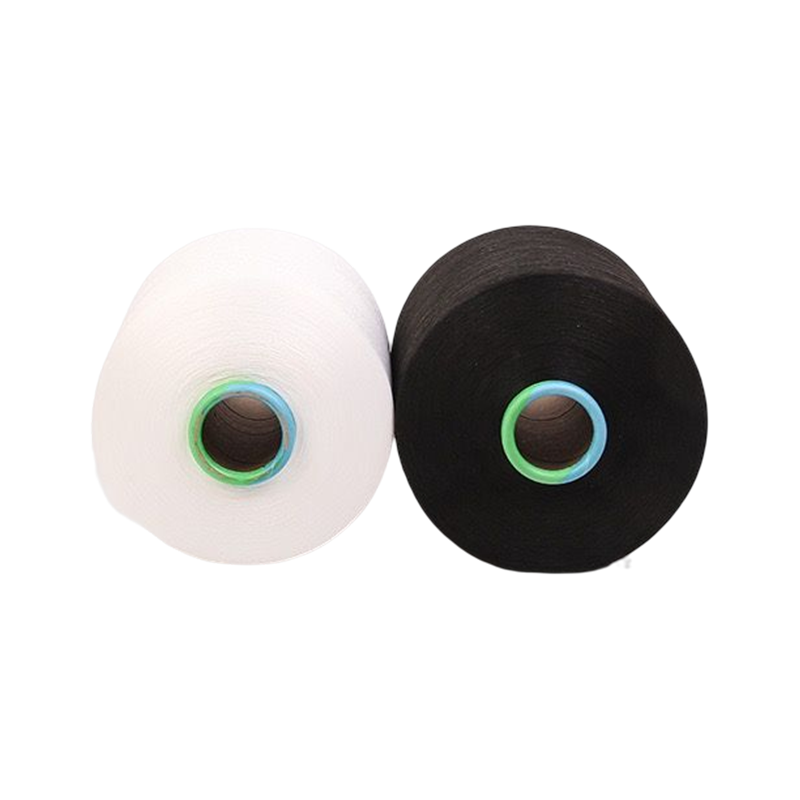
-2.png "Antibacterial and anti-odorant polyester DTY yarn White/Grey ZY0050-ZY0238FM")
-2.png "Lightweight soft polyester DTY yarn Light Pink/Red/White/Purple/Yellow ZR0161-ZR0313 758")
-3.png "Wash-resistant and wear-resistant polyester DTY yarn Yellow/Grey/White ZY0076-ZY0334 178")
-3.png "Full-color custom polyester DTY yarn Silver Series ZE0006-ZE0668 121")
-2.png "High elastic environmentally friendly polyester DTY yarn Blue Series ZB0118 350")
-2.png "Anti-wrinkle and antibacterial polyester DTY yarn Green Series ZG0136 Grass Green 084")
-2.png "Multifunctional Environmentally friendly recycled polyester DTY yarn Purple ZP0471-ZP0566 306")
