
 English
 Español


Article Directory
- 1 What Polyester DTY Yarn Is — and How It Differs from Other Polyester Yarns
- 2 Is Polyester Yarn Good for Beginners?
- 3 Is Polyester Yarn Good for Knitting?
- 4 Is Polyester Yarn Good for Crochet?
- 5 DTY Yarn Specifications That Matter for Fabric Performance
- 6 How to Choose the Right Polyester DTY Yarn for Your Application
Polyester DTY yarn — Draw Textured Yarn — is a fully oriented, crimped polyester filament yarn produced by simultaneously drawing and false-twist texturing partially oriented yarn (POY). The texturing process creates a spiral crimp along each filament, giving DTY its characteristic bulk, softness, and stretch recovery. It is one of the most widely manufactured synthetic yarns in the world, with global production exceeding 12 million metric tons annually, and it forms the base material for a vast range of woven and knitted fabrics.
To answer the related questions up front: polyester yarn is good for beginners — it is forgiving, durable, and inexpensive. It is well-suited for both knitting and crochet, performing especially well in projects where stitch definition, shape retention, and washability matter more than drape or natural-fiber warmth. DTY-specific yarns used in industrial and commercial fabric production share the same core polymer as craft polyester, but differ in filament count, denier, and twist structure.
What Polyester DTY Yarn Is — and How It Differs from Other Polyester Yarns
Not all polyester yarn is the same. The manufacturing route determines the final yarn's texture, elongation, bulk, and end-use suitability. Understanding where DTY sits in the polyester yarn family clarifies why it dominates certain fabric categories.
| Yarn Type | Process | Texture / Handle | Primary End Use |
|---|---|---|---|
| POY (Partially Oriented Yarn) | Melt-spun at high speed, not fully drawn | Smooth, low crimp, extensible | Feedstock for DTY / FDY processing |
| FDY (Fully Drawn Yarn) | Melt-spun and fully drawn in one step | Smooth, flat, low bulk | Lining fabrics, embroidery thread, warp |
| DTY (Draw Textured Yarn) | POY drawn and false-twist textured | Bulky, crimped, soft, elastic | Knit fabrics, fleece, sportswear, home textiles |
| ATY (Air Textured Yarn) | Air-jet entangling of filaments | Loopy, cotton-like surface | Upholstery, outdoor fabrics, technical textiles |
DTY's defining advantage is its elastic crimp. The false-twist texturing process permanently deforms each filament into a coiled structure. When a DTY-based fabric is stretched, those coils extend; when released, they recover. Elongation at break for standard DTY ranges from 25% to 35%, compared to 10–15% for FDY. This stretch recovery is why DTY dominates circular knitting, jersey fabrics, and interlock structures used in activewear and casualwear.
Is Polyester Yarn Good for Beginners?
Polyester yarn is widely recommended as a first fiber for new knitters and crocheters, and the recommendation is well-founded. The reasons are practical and specific, not just general enthusiasm for a low-cost material.
- Consistent twist and diameter throughout the skein — no thick-thin variations that cause dropped stitches
- Machine washable and tumble-dry safe — practice swatches and first projects survive repeated washing without felting, shrinking, or distorting
- Resists pilling at least as well as acrylic, and better than untreated wool, during the learning phase when yarn is handled repeatedly
- Price point: a 100g ball of worsted-weight polyester typically costs 30–60% less than equivalent merino wool, reducing the cost of learning mistakes
- Wide color availability — polyester accepts reactive and disperse dyes evenly, producing vibrant, fade-resistant shades that motivate beginners
- Low heat tolerance — polyester begins to soften around 150–160°C; blocking with steam (used for shaping natural-fiber knits) will distort polyester fabric
- Lower breathability than cotton or linen — not ideal for warm-weather garments where moisture wicking matters
- Slippery hand on some finishes makes it harder to control tension on metal needles; bamboo or wood needles provide better grip
Is Polyester Yarn Good for Knitting?
Polyester performs well in knitting when the project suits the fiber's properties. The yarn's smooth, consistent surface feeds evenly through the hands and off needles without snagging, making it well-adapted to machine knitting as well as hand knitting. The key is matching project type to the fiber's strengths.
Projects where polyester knitting yarn excels:
- Toys and amigurumi: Polyester holds stitch definition sharply — each knit and purl stitch reads clearly. It is also hypoallergenic and fully washable, which matters for children's items. The fiber does not felt, so there is no risk of the toy surface matting.
- Bags, market totes, and home accessories: Polyester's high tensile strength — 4.0 to 5.5 g/denier, compared to cotton's 2.5 to 4.0 g/denier — means bags knitted in polyester hold weight without stretching out of shape over time.
- Sportswear and activewear: DTY-based chunky knitting yarns mimic the stretch-recovery of performance knit fabrics. A DTY blend knit with a gauge of 18–22 stitches per 10 cm can achieve 20–30% stretch across the course direction — enough for fitted athletic garments.
- Washcloths and bathroom accessories: Unlike cotton, polyester dries quickly and resists mildew formation in perpetually damp bathroom environments.
Where to be cautious: Fine-gauge lace knitting in slippery polyester can be challenging to frog (unravel) without tangling, and delicate stitch patterns may lack the crisp definition achievable in lightly twisted wool. For heirloom lace projects, a blend of polyester and nylon or a wool-polyester blend usually gives better results than 100% polyester.
Is Polyester Yarn Good for Crochet?
Polyester is among the most commonly used fibers in crochet, and for good reason. The mechanical demands of crochet — repeated insertion of the hook into stitches, pulling loops through, and building up dense fabric — favor a yarn that is smooth, resilient, and consistent in diameter.
A specific advantage in crochet is that polyester yarn's low friction coefficient allows the hook to slide through stitches cleanly. In contrast, some lightly spun wools can split under the hook if the tip is not perfectly aligned. For beginners working on single crochet or granny square projects, polyester reduces the frequency of split-yarn frustration significantly.
Polyester crochet applications by project category:
- Blankets and throws: The most popular polyester crochet category. A full-size throw in chunky polyester (approximately 400–600g of yarn) will wash and dry in a standard home machine, resist color fading through 50+ wash cycles, and maintain its loft better than acrylic alternatives over time.
- Bags and structured accessories: Cotton is often recommended for bags because it holds shape, but a tightly crocheted polyester fabric at a dense gauge achieves comparable stiffness with lighter weight and faster drying.
- Decorative items and appliques: The high sheen available in certain polyester DTY constructions (particularly semi-dull and bright DTY) adds a decorative quality to crocheted flowers, appliques, and surface embellishments that matte cotton cannot replicate.
- Amigurumi and stuffed figures: Identical advantages to knitting — washable, allergy-safe, non-felting, and stitch-definition clarity that makes facial features crisp.
DTY Yarn Specifications That Matter for Fabric Performance
For buyers and fabric manufacturers working with polyester DTY yarn at an industrial or commercial level, the specification parameters that govern fabric quality are denier, filament count, twist direction, and luster grade. Each has a direct impact on the finished fabric hand, appearance, and performance.
- Denier (D): The linear density of the yarn — grams per 9,000 meters. Common DTY deniers range from 50D to 600D. Lower denier (50D–150D) produces lightweight, draping fabrics for apparel. Higher denier (300D–600D) is used in home textiles, upholstery, and technical fabrics where bulk and cover are required.
- Filament count (f): The number of individual filaments twisted together to form the yarn bundle. A 150D/96f DTY has 96 filaments each averaging 1.56 denier — a micro-filament count that produces a soft, silky handle. A 150D/48f DTY has coarser individual filaments and a firmer, more structured hand.
- Twist direction (S or Z): DTY is produced in S-twist and Z-twist variants. Alternating S and Z twist yarns in a fabric structure cancels out torque and produces a balanced, non-spiraling fabric. Single-direction twist fabrics exhibit spiral distortion (torque) after washing — a defect specification for jersey knit fabrics.
- Luster grade: Bright DTY contains no delusterant — high sheen, used in lingerie and decorative fabrics. Semi-dull contains 0.3% TiO2 — standard apparel hand. Full-dull contains 0.6% or more TiO2 — matte, cotton-like appearance preferred in outdoor and casual wear.
How to Choose the Right Polyester DTY Yarn for Your Application
Whether the end use is hand craft or industrial fabric production, matching the DTY specification to the application requirements avoids costly rework and quality failures. The following decision points apply:
- For circular knit sportswear fabrics requiring stretch and recovery: specify DTY 75D/72f or 150D/144f with intermingling (IM) for cohesion, S+Z twist balanced construction, and elongation at break of 28–32%.
- For fleece and brushed fabrics: higher denier single filaments (150D/48f or 300D/96f) are preferred — coarser filaments raise more efficiently during brushing or napping to produce dense pile. Micro-filament DTY (sub-1 denier per filament) tends to break during the napping process rather than raising cleanly.
- For woven fabrics requiring good cover and opacity: semi-dull or full-dull DTY at 150D/96f to 300D/144f, woven at a pick density that keeps the fabric opaque at a weight of 120–180 g/m².
- For hand knitting and crochet craft yarn: DTY-based yarns are typically plied (2-ply to 4-ply) and twisted at the yarn level rather than the filament level to produce the round, smooth profile that feeds well off skeins and cones. Look for a balanced twist that does not bias the finished fabric.
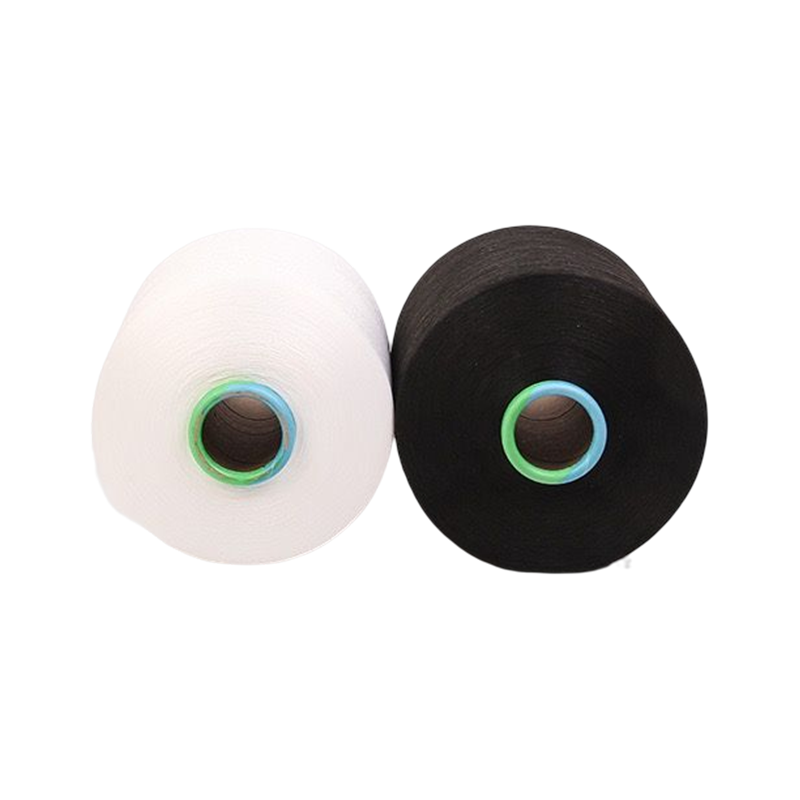
-2.png "Antibacterial and anti-odorant polyester DTY yarn White/Grey ZY0050-ZY0238FM")
-2.png "Lightweight soft polyester DTY yarn Light Pink/Red/White/Purple/Yellow ZR0161-ZR0313 758")
-3.png "Wash-resistant and wear-resistant polyester DTY yarn Yellow/Grey/White ZY0076-ZY0334 178")
-3.png "Full-color custom polyester DTY yarn Silver Series ZE0006-ZE0668 121")
-2.png "High elastic environmentally friendly polyester DTY yarn Blue Series ZB0118 350")
-2.png "Anti-wrinkle and antibacterial polyester DTY yarn Green Series ZG0136 Grass Green 084")
-2.png "Multifunctional Environmentally friendly recycled polyester DTY yarn Purple ZP0471-ZP0566 306")
