
 English
 Español


Article Directory
- 1 The Technical Relationship Between Denier and Fabric Softness
- 2 The Role of Filament Count in Texture Engineering
- 3 Optimizing Intermingling and Crimp for Tactile Sensation
- 4 Why Partner with Hengke Textile Technology?
- 5 Frequently Asked Questions (FAQ)
- 5.1 1. How does the "F" number impact the cost of polyester yarn DTY?
- 5.2 2. What is the difference between Semi-Dull (SD) and Bright (BR) DTY in hand-feel?
- 5.3 3. Why is DTY preferred over FDY for warp knitting?
- 5.4 4. Can I get customized intermingling for wholesale orders?
- 5.5 5. Which specification is best for high-end "peach skin" finishes?
In the textile manufacturing sector, the tactile quality—often referred to as "hand-feel"—is a primary differentiator for high-end warp knitted fabrics. Achieving the perfect balance between softness, drape, and durability depends heavily on the specifications of the base material. Polyester yarn DTY (Draw Textured Yarn) is the preferred choice for warp knitting due to its excellent bulkiness and elasticity. Hengke Textile Technology Co., Ltd., a leading exporter headquartered in Zhejiang with a strategic presence in Jiangsu, specializes in the production and marketing of these specialized yarns. Under the leadership of Mr. Daniel Wang, our company has built a reputation for transparency and quality, handling multi-million dollar businesses by providing customized textile solutions that meet the rigorous demands of global garment and home textile markets.
-2.png)
The Technical Relationship Between Denier and Fabric Softness
Denier (D) is a direct measure of linear density, representing the weight in grams of 9,000 meters of yarn. In warp knitting, a lower denier typically results in a lighter, finer fabric with a delicate hand-feel, whereas a higher denier increases the fabric's weight and perceived stiffness. When sourcing wholesale polyester DTY for warp knitting, engineers must calculate the optimal denier to ensure the fabric provides enough "body" without becoming overly rigid. According to the 2024-2025 Global Fiber Market Trends report by the International Textile Manufacturers Federation (ITMF), there is a significant 12% growth in the demand for "sub-denier" or micro-denier yarns as consumer preference shifts toward ultra-lightweight and breathable performance apparel.
Source: ITMF - International Textile Industry Statistics 2024
Comparing Fine Denier vs. Coarse Denier Hand-feel
Low denier yarns provide a silky, smooth texture suitable for intimate apparel, while high denier yarns provide the structural integrity required for upholstery or heavy sportswear. The choice fundamentally dictates the fabric's flexural rigidity.
| Specification | Fine Denier (e.g., 50D - 75D) | Coarse Denier (e.g., 150D - 300D) |
| Touch Perception | Soft, silky, and skin-friendly | Crisp, firm, and textured |
| Fabric Drape | High (fluid movement) | Low (retains shape) |
| Typical Application | Lingerie and lightweight linings | Outerwear and home upholstery |
The Role of Filament Count in Texture Engineering
Filament count (F) refers to the number of individual continuous fibers that make up a single strand of polyester yarn DTY. Even at the same denier, a yarn with a higher filament count (often called "micro-filament") will feel significantly softer. This is because a high filament count polyester DTY yarn increases the total surface area and reduces the diameter of each individual filament, allowing the yarn to bend more easily under the touch. In the current market, 75D/72F polyester DTY for soft fabrics has become a standard for manufacturers seeking a balance between mechanical strength and a premium, peach-skin texture.
Structural Comparison: Standard Filament vs. Micro-filament
Standard filament yarns have a larger individual fiber diameter which resists bending, leading to a "crunchy" feel. In contrast, micro-filament yarns possess a smaller fiber cross-section, which dramatically increases the yarn's flexibility and softness.
| Metric | Standard Filament (e.g., 75D/36F) | Micro-filament (e.g., 75D/144F) |
| Surface Area | Lower | Significantly Higher |
| Bending Resistance | High | Very Low |
| Hand-feel Effect | Standard, slightly synthetic | Velvety, plush, and natural-like |
Optimizing Intermingling and Crimp for Tactile Sensation
Beyond denier and filament count, the texturing process itself—specifically the intermingling points (measured in meters)—affects the fabric's hand-feel. A low intermingled polyester DTY yarn (SIM) provides a smoother surface with less friction, which is ideal for fabrics requiring a glossy finish. Conversely, highly intermingled yarns (HIM) offer better stability for the high-speed stresses of warp knitting machines. Recent advancements in "Soft-Crimp" technology in 2025 allow for 75D/36F semi dull polyester DTY to achieve the bulkiness of 150D yarns without the weight, enhancing the "fluffy" sensation of the knitted surface.
According to the 2024 Textile Technical Bulletin from the American Association of Textile Chemists and Colorists (AATCC), standardized testing for "Fabric Grasp" now emphasizes the coefficient of friction in DTY yarns, noting that specialized finishes can reduce surface drag by up to 20% to improve skin comfort.
Source: AATCC - Technical Manual of Fiber and Fabric Testing Standards
Choosing the Right DTY Specification for Your Project
- Softness: Opt for high filament counts (e.g., 144F or 288F).
- Opacity: Use 75D/36F semi dull polyester DTY to reduce shine and improve the "natural" look.
- Elasticity: Ensure the crimp contraction (CC%) is optimized during the texturing phase.
- Warping Efficiency: Select the appropriate intermingling level to prevent yarn breakage.
Why Partner with Hengke Textile Technology?
Choosing the right polyester yarn DTY requires more than just reading a spec sheet; it requires a partner with deep technical expertise. Hengke Textile Technology Co., Ltd. combines Zhejiang's manufacturing prowess with Jiangsu's logistical advantages to offer premium yarns like wholesale polyester DTY for warp knitting. Our holistic approach ensures that every batch of yarn—whether it is nylon, ACY, or polyester—undergoes rigorous quality practices. We operate with total transparency, providing the high-end technical support necessary for our customers to lead in their respective markets.
Frequently Asked Questions (FAQ)
1. How does the "F" number impact the cost of polyester yarn DTY?
Generally, a higher "F" number (filament count) increases the production cost because it requires more precision during the spinning and texturing processes. However, a high filament count polyester DTY yarn adds significant value to the final fabric's hand-feel, allowing for higher retail pricing.
2. What is the difference between Semi-Dull (SD) and Bright (BR) DTY in hand-feel?
While the chemical composition is similar, 75D/36F semi dull polyester DTY contains titanium dioxide, which can slightly increase the yarn's friction compared to bright yarns. SD yarns are preferred for a softer, more matte appearance.
3. Why is DTY preferred over FDY for warp knitting?
Polyester yarn DTY has been textured to introduce crimp and bulk. This structure creates air pockets in warp knitted fabrics, leading to a warmer, softer, and more elastic hand-feel compared to the flat, plastic-like feel of FDY.
4. Can I get customized intermingling for wholesale orders?
Yes. As a leading exporter, Hengke Textile provides wholesale polyester DTY for warp knitting with customized intermingling (NIM, SIM, or HIM) to suit specific machine speeds and fabric designs.
5. Which specification is best for high-end "peach skin" finishes?
For a premium peach-skin effect, we recommend a 75D/72F polyester DTY for soft fabrics or even higher filament counts like 144F. Combined with the right finishing process, these yarns produce a luxurious, sueded hand-feel.
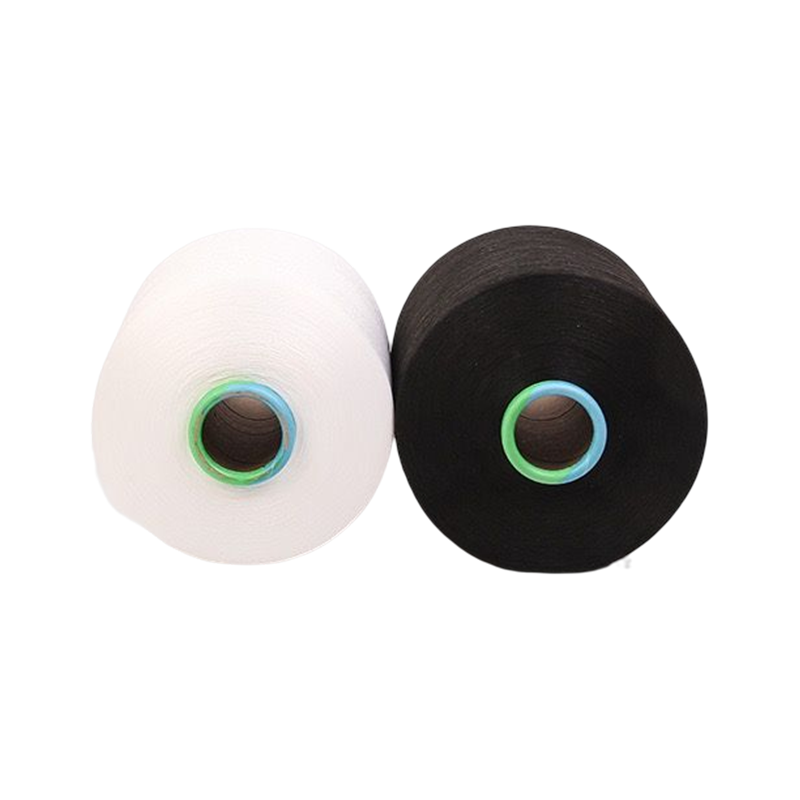
-2.png "Antibacterial and anti-odorant polyester DTY yarn White/Grey ZY0050-ZY0238FM")
-2.png "Lightweight soft polyester DTY yarn Light Pink/Red/White/Purple/Yellow ZR0161-ZR0313 758")
-3.png "Wash-resistant and wear-resistant polyester DTY yarn Yellow/Grey/White ZY0076-ZY0334 178")
