
 English
 Español


Article Directory
- 1 1. The Mechanical Relationship Between Tenacity and Tear Resistance
- 2 2. The Role of Elongation in Energy Absorption
- 3 3. Influence of Intermingling on Industrial Fabric Stability
- 4 4. Analyzing DTY vs. ACY for Complex Industrial Needs
- 5 5. Durability and Environmental Resistance
- 6 Frequently Asked Questions (FAQ)
- 6.0.1 1. Does the denier of polyester yarn dty affect its tenacity?
- 6.0.2 2. How does Hengke Textile Technology ensure the quality of its DTY?
- 6.0.3 3. What is the difference between SIM and HIM DTY?
- 6.0.4 4. Can polyester yarn dty be used in automotive textiles?
- 6.0.5 5. What makes Zhejiang and Jiangsu provinces significant for DTY production?
- 7 Industry References
In the engineering of high-performance industrial textiles, the mechanical properties of the constituent filaments are the primary determinants of the final product's durability. Among the various synthetic fibers, polyester yarn dty (Drawn Textured Yarn) stands out due to its unique combination of bulk, soft hand-feel, and robust mechanical performance. Hengke Textile Technology Co., Ltd., a leading exporter headquartered in Zhejiang, China, has established a global reputation under the leadership of Mr. Daniel Wang for delivering high-quality polyester and nylon solutions. By leveraging the textile clusters of Zhejiang and Jiangsu, we provide technical-grade polyester yarn dty that meets the rigorous demands of multi-million dollar industrial businesses worldwide.
-2.png)
1. The Mechanical Relationship Between Tenacity and Tear Resistance
Tenacity, measured in centinewtons per tex (cN/tex), represents the ultimate breaking strength of the fiber. A frequent technical query is: what is the breaking strength of polyester yarn dty? In industrial textiles, such as tarpaulins or safety nets, high tenacity ensures that the fabric can withstand high-stress loads without fiber rupture. When polyester yarn dty possesses a high tenacity, the individual filaments act as a barrier against the propagation of a tear, effectively redistributing the energy across the weave.
While standard grade DTY is sufficient for apparel, industrial-grade DTY provides a much higher stress-to-strain threshold compared to recycled variants, ensuring that the fabric does not fail prematurely under peak load.
| Technical Parameter | High-Tenacity Polyester Yarn DTY | Standard Apparel Grade DTY |
| Tenacity (cN/tex) | > 3.5 - 4.5 | 2.5 - 3.2 |
| Tear Propagation Resistance | High (Resists sharp-force trauma) | Moderate |
| Load-Bearing Capacity | Superior for industrial strapping | Basic for garment use |
2. The Role of Elongation in Energy Absorption
Elongation at break is the measure of a fiber's ability to stretch before failing. Engineers often investigate: how does elongation affect polyester yarn dty performance? In a tearing event, a fiber with a higher elongation can deform significantly, which allows multiple yarns to "bundle" together at the tip of the tear. This bundling effect increases the cross-sectional area resisting the force, thereby increasing the total tear strength. Hengke Textile Technology Co., Ltd. specializes in the marketing of polyester yarn dty with controlled elongation profiles to optimize this energy absorption.
Compared to Fully Drawn Yarn (FDY), which is often too rigid for certain industrial applications, polyester yarn dty offers a "crimp" structure that provides an initial buffer of elasticity, significantly enhancing the fabric's toughness.
| Property | Polyester Yarn DTY (Textured) | Polyester FDY (Non-Textured) |
| Elasticity/Crimp | High (Better shock absorption) | Low (Rigid and brittle) |
| Fiber Bundling Effect | Excellent (Increases tear resistance) | Low (Individual fibers fail sequentially) |
| Impact Resistance | Superior | Moderate |
3. Influence of Intermingling on Industrial Fabric Stability
Intermingling (the process of creating "tack" points in the yarn) is a critical factor for DTY used in industrial weaving. Many manufacturers ask: is intermingled polyester yarn dty better for weaving? High-intermingled (HIM) yarns provide better cohesion, preventing filament migration and ensuring that the tenacity is applied uniformly across the fabric plane. This is essential for industrial applications of polyester yarn dty where the fabric must maintain its structural integrity under extreme weather or mechanical abrasion.
- Slight Intermingled (SIM): Ideal for soft-surface textiles.
- High Intermingled (HIM): Preferred for heavy-duty industrial fabrics to ensure warp-weft stability.
- Holistic Quality: Hengke Textile Technology ensures transparent production practices to maintain consistent tack counts in every batch.
4. Analyzing DTY vs. ACY for Complex Industrial Needs
For textiles requiring both the strength of polyester and the elasticity of spandex, polyester yarn dty vs acy yarn for textiles is a common comparison. ACY (Air Covered Yarn) integrates a spandex core, which changes the elongation profile entirely. While polyester yarn dty provides the structural backbone, the choice between the two depends on whether the industrial textile requires "recovery" or "static strength." Understanding how to identify quality polyester yarn dty involves evaluating the consistency of the denier and the uniformity of the texturizing heat-set.
5. Durability and Environmental Resistance
Industrial textiles are often exposed to UV and moisture. Why is polyester yarn dty used in outdoor fabrics? The inherent chemical structure of polyester is resistant to hydrophobic degradation and UV radiation. When coupled with high tenacity and optimal elongation, the resulting textile maintains its tear strength over a long service life, even in challenging climates.
Frequently Asked Questions (FAQ)
1. Does the denier of polyester yarn dty affect its tenacity?
Tenacity is a relative measure (force per unit of linear density). However, higher denier yarns generally provide higher absolute breaking strength, which is vital for heavy-duty industrial textiles.
2. How does Hengke Textile Technology ensure the quality of its DTY?
Under the guidance of Mr. Daniel Wang, we adhere to strict quality practices and a holistic approach, ensuring transparency in multi-million dollar businesses through rigorous testing of tenacity and elongation.
3. What is the difference between SIM and HIM DTY?
SIM (Slightly Intermingled) has fewer knots per meter, while HIM (High Intermingled) has a high frequency of knots, providing better stability for high-speed industrial weaving.
4. Can polyester yarn dty be used in automotive textiles?
Yes. Due to its high tear strength and resistance to abrasion, it is widely used in car seat covers, headliners, and interior components.
5. What makes Zhejiang and Jiangsu provinces significant for DTY production?
These regions are the largest textile centers in China. Hengke Textile Technology Co., Ltd. utilizes these hubs to ensure rapid production speed and access to the latest fiber technologies.
Industry References
- ISO 2062: Textiles — Yarns from packages — Determination of single-end breaking force and elongation at break using constant rate of extension (CRE) tester.
- ASTM D2256: Standard Test Method for Tensile Properties of Yarns by the Single-Strand Method.
- Textile Research Journal: "The Influence of Texturizing Parameters on the Mechanical Properties of Polyester DTY."
- Technical Standards Archive: Hengke Textile Technology Co., Ltd. (2024 Edition).
-2.png "Antibacterial and anti-odorant polyester DTY yarn White/Grey ZY0050-ZY0238FM")
-3.png "Wash-resistant and wear-resistant polyester DTY yarn Yellow/Grey/White ZY0076-ZY0334 178")
-2.png "Anti-wrinkle and antibacterial polyester DTY yarn Green Series ZG0136 Grass Green 084")
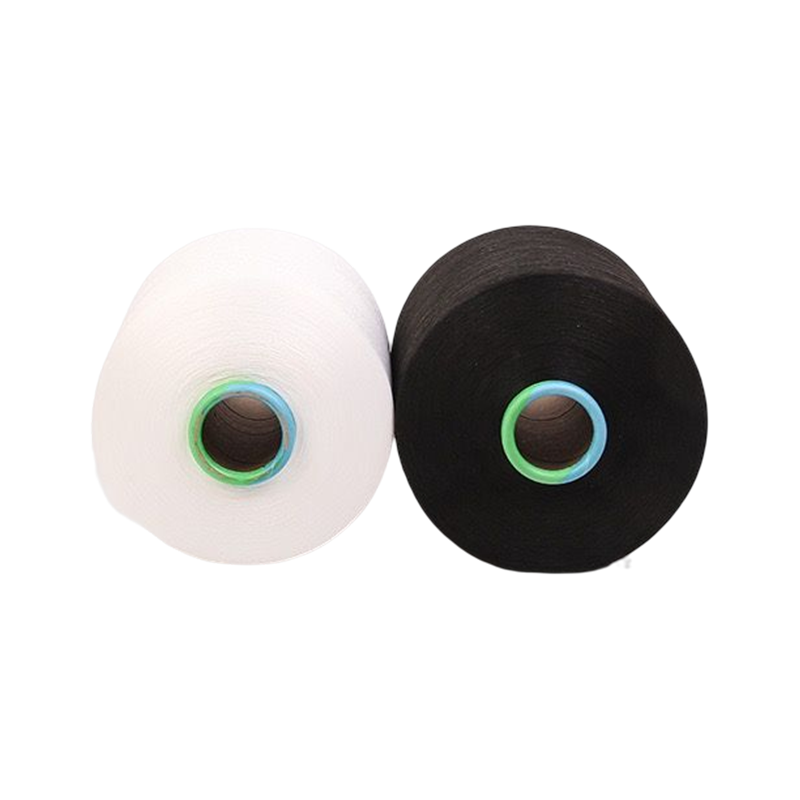
-3.png "Full-color custom polyester DTY yarn Silver Series ZE0006-ZE0668 121")
-2.png "High elastic environmentally friendly polyester DTY yarn Blue Series ZB0118 350")
-2.png "Multifunctional Environmentally friendly recycled polyester DTY yarn Purple ZP0471-ZP0566 306")
