
 English
 Español


Article Directory
- 1 How Draw Textured Yarn Is Made and What It Delivers
- 2 Key Properties That Decide Fabric Application
- 3 DTY in Woven Fabric Manufacturing
- 4 DTY in Knitted Fabric Manufacturing
- 5 DTY in Upholstery, Automotive, and Industrial Fabrics
- 6 How to Select the Right DTY Specification
- 7 Frequently Asked Questions About DTY in Fabric Manufacturing
Choose draw textured yarn for a stretch trouser, an activewear jersey, or an upholstery weave, and the fabric changes at once: bulk rises, handle softens, elasticity appears, and dye shades turn more uniform. Draw textured yarn (DTY) is a fully drawn polyester multifilament yarn made by drawing and false-twist texturing partially oriented yarn (POY), which gives the filament bundle a permanent crimp. Mills specify DTY whenever polyester tenacity and a cotton-like touch must share one construction. Zhejiang Hengke Textile Technology Co., Ltd., a Chinese DTY exporter with annual capacity above 300,000 tons, ships these yarns worldwide within about 20 days of order confirmation.
How Draw Textured Yarn Is Made and What It Delivers
DTY is manufactured by feeding POY through a draw-texturing machine that stretches the filament, heat-sets a false twist, and then releases the twist to lock in a crimped, high-volume structure. Draw ratio normally runs 2.6 to 3.5 times, and texturing speeds reach 600 to 1,200 metres per minute.
Production sequence
- POY creeling: partially oriented yarn from spinning is loaded onto the creel.
- Drawing: filaments stretch 2.6 to 3.5 times to align polymer chains.
- False-twist texturing: twist is heat-set and removed so filaments keep a wavy form.
- Intermingling: air jets entangle filaments for clean knitting or weaving.
- Winding: finished DTY is wound onto cones or dye packages for shipment.
Key Properties That Decide Fabric Application
Four properties decide whether a fabric program can run on DTY: bulk, elasticity, softness, and dyeability. Bulk gives covering power, so lightweight fabrics keep opacity. Elasticity supplies comfort stretch and crease recovery. Softness delivers the spun-like hand knitters prize, and the textured surface improves disperse dye uptake for deeper, more level shades. Specification choices shift the balance: more filaments per denier soften the yarn, while a higher draw ratio adds strength at the cost of stretch. For the full mechanism, see this detailed analysis of DTY yarn fabric performance improvement.
| Property | What the textured structure does | Fabric effect |
| Bulk | Open crimp traps air between filaments | Higher covering power at lower weight |
| Elasticity | Crimp extends and recovers under load | Comfort stretch and crease recovery |
| Softness | Disrupted bundle lowers filament stiffness | Cotton-like hand in knitwear |
| Dyeability | Textured surface improves dye uptake | Deeper and more level shades |
DTY in Woven Fabric Manufacturing
In weaving, DTY runs as warp and weft for stretch trousers, suit linings, mattress ticking, and curtains, because its bulk covers pick gaps and its crimp restores creases after wear. A typical construction uses 150D to 300D DTY in both directions, or DTY warp with FDY weft for a smoother face. Trilobal cross-sections add lustre for linings; round sections keep the surface matte for bottom weights. Because stretch comes from the yarn itself, woven DTY fabrics reach 18 to 22% elongation without elastane.
Colour programs benefit when one base yarn spans a whole shade family: a blue DTY matched to a dye-lot standard can be reordered without re-approval.
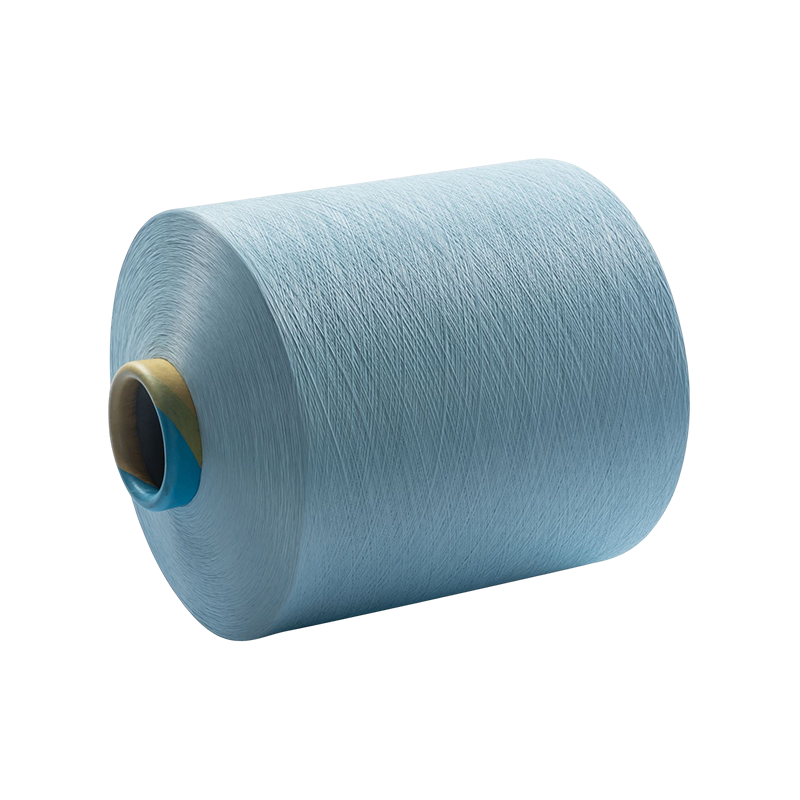 High Elastic Blue Polyester DTY Yarn ZB0118 350This blue drawn textured yarn combines stretch, softness, and wrinkle resistance, making it a practical choice for sportswear, underwear, and home textiles where colorfastness and durability matter.View Product →
DTY in Knitted Fabric Manufacturing
Circular knitting is the largest outlet for DTY: jerseys, interlock, fleece, and rib fabrics made from textured yarn carry most of the sportswear, seamless garment, hosiery, and glove markets. Knitters prefer 50D to 150D DTY with 36F to 144F filament counts; higher counts soften the hand and improve drape, and higher intermingling prevents snagging on the needle bed. Functional antibacterial, moisture-wicking, or UV-resistant variants serve comfort and protection in one yarn.
Woven programs
- Warp and weft tension control
- 150D to 300D typical denier
- Dimensional stability and crease recovery
- 180 to 350 g/m2 fabric weight
Knitted programs
- Loop formation and sinker control
- 50D to 150D typical denier
- Stretch recovery and softness
- 120 to 240 g/m2 fabric weight
DTY in Upholstery, Automotive, and Industrial Fabrics
Outside apparel, DTY supplies upholstery velvets, automotive seat covers, luggage shells, and industrial webbing, where abrasion resistance and UV stability matter more than hand feel. Automotive and contract upholstery programs typically run 450D to 600D round or trilobal DTY, sometimes in high-tenacity or flame-retardant versions. The crimp resists flattening under load and hides soiling, while trilobal sections soften reflection on seat covers and headliners. For luggage and webbing, DTY tenacity of 4.0 to 5.2 cN/dtex replaces heavier yarns without losing tear strength.
Grey and silver DTY shades are the standard starting point for automotive interiors; the same grey series is frequently resampled for rail and marine seating.
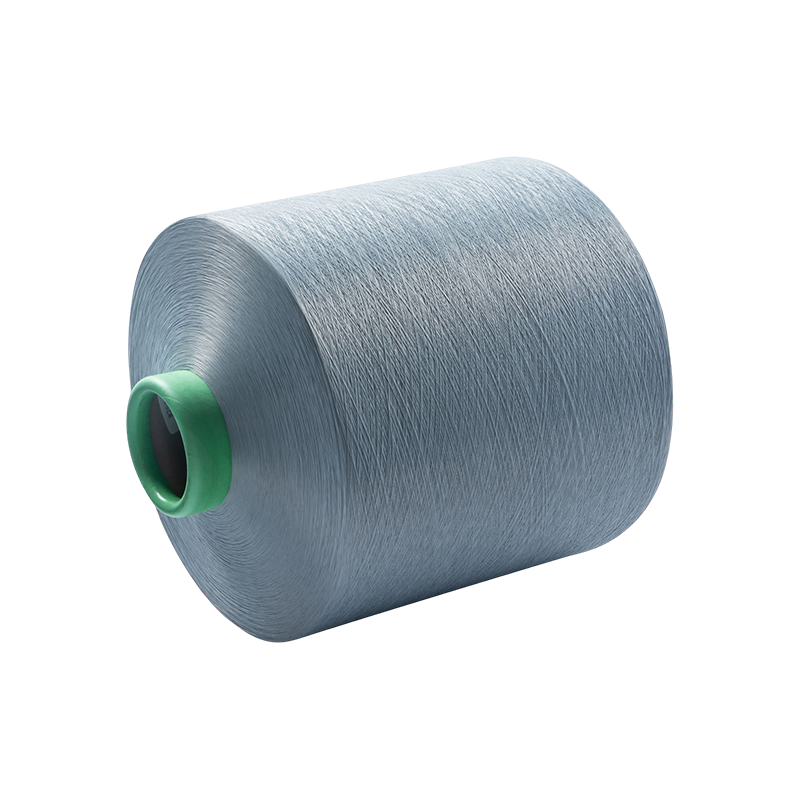 Silver Series Custom Polyester DTY Yarn ZE0006-ZE0668Offering customizable silver-grey shades with semi-metallic luster, this DTY yarn suits high-end apparel and automotive interiors, providing a neutral base for diverse downstream color palettes.View Product →
Indicative DTY consumption by fabric manufacturing segment
How to Select the Right DTY Specification
Denier, filament count, luster, and cross-section are the four decisions that settle handle, coverage, and dye appearance. Start with target fabric weight and end use, then fix denier; adjust filament count for softness; choose round for matte or trilobal for lustre. A supplier with a structured range and verified colour lots shortens sampling: Hengke's DTY assortment spans dozens of shades grouped by family, so buyers can match a tone before committing production. Mills that need fast approvals can browse the supplier's full color card range and lock a colour standard before production.
The practical starting point for any specification check is the supplier's standard DTY range and its shade card logic.
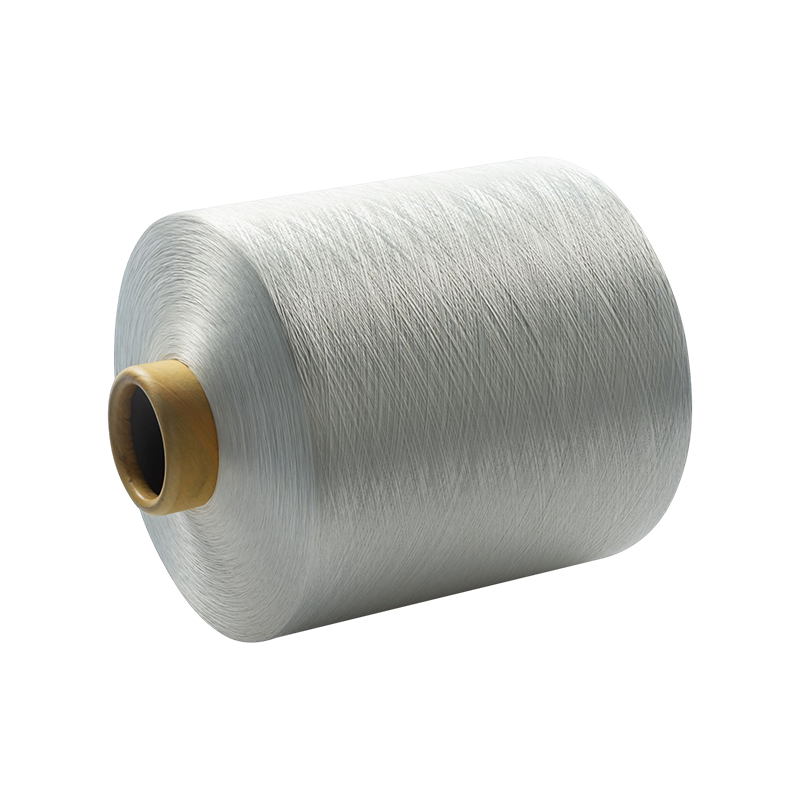 Polyester DTY Factory Product Range OverviewThis supplier listing presents a broad DTY assortment, including antibacterial, recycled, and color-specific series, serving as a reference point for comparing yarn specifications and shade options.View Product →
| Application target | Denier | Filament count | Cross-section advice |
| Light lining, sheer knit | 50D–75D | 36F–72F | Trilobal for sheen |
| T-shirt jersey, blouses | 100D–150D | 48F–96F | Round for matte natural |
| Bottom weights, upholstery | 200D–300D | 48F–144F | Round, dull or semi-dull |
| Automotive, industrial | 450D–600D | 96F–192F | High-tenacity round |
Frequently Asked Questions About DTY in Fabric Manufacturing
Is DTY the same as polyester textured yarn?
Yes. Draw textured yarn is the standard textured polyester filament yarn: a POY-derived yarn that has been drawn and false-twist textured to gain bulk, crimp, and elasticity.
Can DTY provide stretch without spandex?
Up to a point. The crimp gives immediate stretch and recovery of about 20 to 35%, depending on denier and process. For five-to-eight times stretch, combine DTY with spandex or use an air-covered elastic yarn.
Which DTY denier is best for jersey fabrics?
75D/36F to 150D/48F covers most single-jersey programs. 75D builds a light 140 to 160 g/m2 shirt fabric; 150D gives a 180 to 220 g/m2 sports jersey with more body and recovery.
Does DTY shrink during finishing?
Normal DTY shrinks about 4 to 8% when dyed at 130 degrees Celsius; heat setting during texturing holds that range, and heat-set lots keep finished shrinkage below 5%.
-2.png "Lightweight soft polyester DTY yarn Light Pink/Red/White/Purple/Yellow ZR0161-ZR0313 758")
-2.png "Anti-wrinkle and antibacterial polyester DTY yarn Green Series ZG0136 Grass Green 084")
-2.png "Antibacterial and anti-odorant polyester DTY yarn White/Grey ZY0050-ZY0238FM")
-3.png "Wash-resistant and wear-resistant polyester DTY yarn Yellow/Grey/White ZY0076-ZY0334 178")
-3.png "Full-color custom polyester DTY yarn Silver Series ZE0006-ZE0668 121")
-2.png "High elastic environmentally friendly polyester DTY yarn Blue Series ZB0118 350")
-2.png "Multifunctional Environmentally friendly recycled polyester DTY yarn Purple ZP0471-ZP0566 306")
