
 English
 Español


Article Directory
A bedding manufacturer in Vietnam rejected 12 tons of 150D/48F polyester DTY after first-piece inspection showed a shade difference of more than 2.0 CIELAB units between production lots. The yarn met the declared denier and tenacity on paper, but crimp contraction varied by nearly 8 percent between batches, pushing dye uptake beyond the acceptable window. For makers of curtains, bedding, and upholstery, this scenario is not rare. Home textile quality depends on specifications that go far beyond writing "150D polyester" on a purchase order.
Why DTY Yarn Is a Core Material for Home Textiles
DTY is the dominant textured polyester yarn for home textiles because it balances bulk, elasticity, dyeability, and cost per kilogram more effectively than FDY, nylon, or spun polyester alternatives.
Flat FDY lacks bulk. A woven fabric made from FDY needs more warp and weft threads per centimeter to reach the opacity that DTY achieves with less fiber. Nylon provides elasticity but costs 1.5 to 2 times more per kilogram and has weaker UV resistance in curtains. Cotton blends add comfort but absorb moisture, hold stains, and shrink more after the first wash.
For these reasons, DTY is a standard input for curtains, bedding, upholstery, and cushion covers in mass production. Its crimped structure gives better cover factor, faster dye penetration, and a cushioned hand that buyers associate with quality.
| Segment | Typical construction | DTY properties required | Risk if specified wrong |
| Curtains and drapes | Woven satin, jacquard | UV stability, color depth, drape | Post-wash shrinkage |
| Bedding | Sheeting, printed twill | Softness, dye uptake, low pilling | Pilling and uneven print |
| Upholstery | Heavy jacquard, pile | Tenacity, abrasion, bulk | Face wear and seam slippage |
| Cushions and throws | Knit, dobby weave | Elasticity, recovery, hand feel | Deformation under load |
Key Specifications Manufacturers Must Verify
Manufacturers should verify seven specifications before approving DTY for home textile production: denier, filament count, tenacity, elongation at break, crimp contraction, boiling water shrinkage, and dye uptake consistency.
The table below summarizes typical values, the reason each parameter matters, and the consequence of getting it wrong.
| Specification | Typical range | Why it matters | Risk when wrong |
| Denier (D) | 75D to 300D | Sets yarn thickness and fabric weight | Off-gauge fabric, wrong gsm |
| Filament count (f) | 24f to 144f | Controls hand feel, sheen, cover | Harsh or shiny surface |
| Tenacity (g/d) | 3.5 to 4.5 | Determines strength and abrasion life | Tearing, seam slippage |
| Elongation at break | 25 to 45 percent | Affects weaving, knitting, recovery | Yarn breaks during production |
| Crimp contraction | 18 to 30 percent | Sets bulk and cover factor | Flat, thin fabric hand |
| Boiling water shrinkage | 3 to 7 percent | Predicts dimensional change after wash | Curtains shrink unevenly |
| Dye uptake consistency | Within 5 percent | Controls cross-batch color uniformity | Shade bands in finished goods |
Denier and filament count
Denier is the linear density of the yarn; filament count is the number of individual microfibers inside it. For home textiles, 75D/36F suits sheers and voile, 150D/48F or 72F serves mainstream curtains and bedding, and 300D/96F carries upholstery-grade fabrics. Higher filament counts at the same denier add softness and luster, but raise texturing cost.
Tenacity and elongation
Tenacity above 3.5 grams per denier is expected in home textile grades. A broken filament or seam slippage in a curtain panel usually traces back to tenacity below 3.2 g/d. Elongation between 25 and 35 percent is typical for weaving; knitting and circular machines tolerate, and often need, 35 to 45 percent for dimension control.
Crimp contraction and shrinkage
Crimp contraction reflects the latent bulk that develops when the yarn is heated during dyeing or finishing. Values under 15 percent give a lean, slippery hand; values above 30 percent create excessive fluffiness that distorts jacquard patterns. Boiling water shrinkage above 7 percent is a red flag for any product that will be machine-washed.
Dye uptake
Dye uptake is the relative depth of shade a yarn reaches under a standard dye recipe. Cross-batch variation of more than 5 percent is the most frequent trigger for shade complaints. Rejecting a finished curtain or bedding lot costs far more than testing yarn samples before production.
Matching DTY Specifications to Home Textile Products
The correct DTY grade for a home textile order depends on the end product, the fabric construction, and the dyeing route. There is no universal specification.
Two grades cover most programs. The comparison below shows how 150D/48F and 300D/96F behave in practice.
150D/48F for curtains and bedding
- Lighter hand and better drape for panel curtains
- Faster dye cycles and lower energy per kilogram
- Fabric weight typically 150 to 250 gsm
- Preferred for printed and solid sheeting
300D/96F for upholstery and heavy covers
- Higher tenacity to survive abrasion
- Dense crimp gives springy bulk for seating
- Fabric weight typically 350 to 600 gsm
- Preferred for jacquard and heavy plain weave
Crimp contraction and fabric weight savings
-1.png) Hengke Grass Green 084 Antibacterial Polyester DTY Yarn ZG0136This jacquard seating cover yarn offers wrinkle resistance and antibacterial function, with dye uptake controlled to under 3% within-lot deviation, making it dependable for hotel and residential upholstery.View Product →
Hengke Grass Green 084 Antibacterial Polyester DTY Yarn ZG0136This jacquard seating cover yarn offers wrinkle resistance and antibacterial function, with dye uptake controlled to under 3% within-lot deviation, making it dependable for hotel and residential upholstery.View Product →
For upholstery programs, Hengke Textile Technology Co., Ltd. offers its grass green DTY grade (Grass Green 084) for jacquard seating covers in hotel and residential projects, with dye uptake controlled to a within-lot deviation below 3 percent.
Color Consistency, Dye Uptake, and Supplier Reliability
Color consistency is the most common source of rejected DTY lots in home textiles, because shade variation appears only after dyeing, when the yarn is already knitted or woven.
The root cause is usually a difference in polymer crystallinity, which shifts the rate at which dye molecules penetrate the filament. Two lots with identical denier can produce visibly different colors under the same recipe. This is why dye uptake consistency belongs in the purchase specification, not just in the laboratory.
Suppliers with a systematic color card reduce specification risk, because each shade is tied to a product code and a production history. Hengke Textile Technology Co., Ltd. organizes its DTY program by color families, from rice white ZY0050/ZY0238FM for bedding neutrals to blue ZB0118 (Blue350) for deep curtain tones.
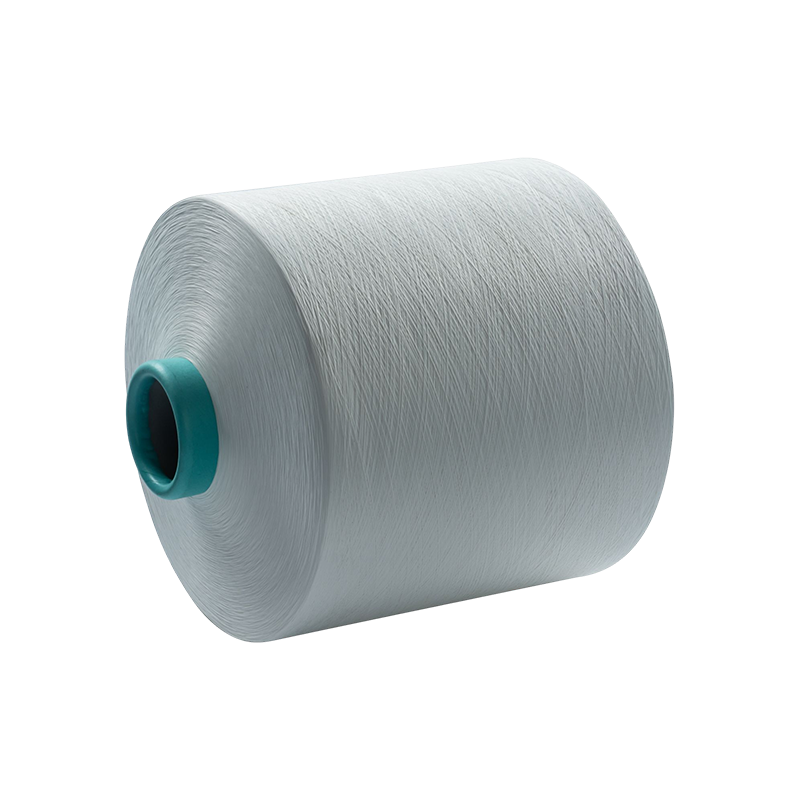 Hengke White/Grey Antibacterial Deodorizing DTY Yarn ZY0050-ZY0238FMA systematic color-card option for bedding neutrals, this antibacterial and anti-odor yarn supports sportswear, underwear, and home textiles while meeting batch traceability and testing requirements.View Product →
 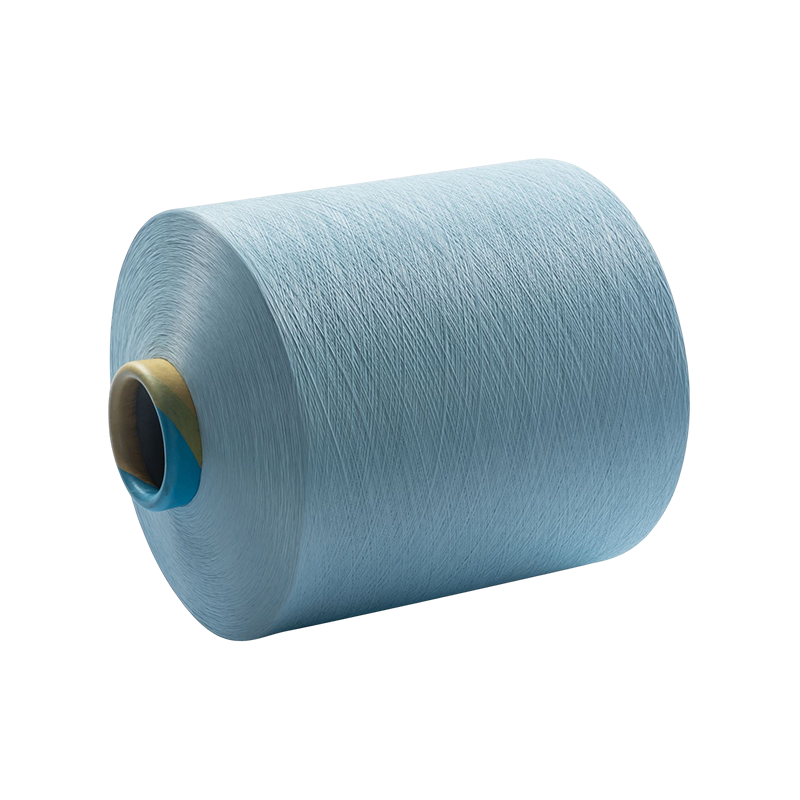 Hengke High-Elastic Blue DTY Yarn ZB0118 350 for Deep Curtain TonesWith a crimp contraction rate of 35-39% and deep-blue color retention, this high-elastic yarn suits medium to heavy-weight fabrics and aligns with deep curtain tone specification needs.View Product →
Supplier Qualification and Quality Control
Qualifying a DTY supplier for home textile programs requires auditing testing laboratory capability, batch traceability, and documented lead-time performance, not only comparing price lists.
- Testing lab: capacity for tensile, elongation, shrinkage, and dye uptake tests on every batch
- Traceability: a lot code on each cone that links to spinning and texturing parameters
- Dye program: a published color card with shade codes and confirmed dye recipes
- Delivery: documented lead time, ideally under 25 days from order confirmation
All four points are checkable before the first commercial order. Ask for test certificates from the last five lots, not a single sample.
Hengke Textile Technology Co., Ltd. states an annual capacity above 300,000 tons and a standard delivery of 20 days after order confirmation, supported by its own testing laboratory. Cross-reference our detailed DTY specification and application guide before drawing up your next purchase order.
Frequently Asked Questions
What is the difference between DTY and FDY for home textiles?
FDY is a flat filament yarn with no crimp; DTY is textured, giving bulk, elasticity, and a softer hand. Home textiles that need opacity, drape, or recovery are better served by DTY. FDY remains an option for lining fabrics and rigid constructions.
What denier should I choose for DTY curtains?
For residential curtains, 150D/48F is the most common starting point, producing a fabric weight of 180 to 250 gsm with good drape. Heavy blackout constructions move to 300D, while lightweight sheers start at 75D.
How do I verify dye uptake consistency between lots?
Run a standard dye test on samples from each lot using the same recipe and conditions. Measure the depth of shade on a spectrophotometer and require a delta E below 1.5. Ask the supplier for the batch-level dye uptake certificate before shipping.
What shrinkage value is acceptable for DTY bedding?
Boiling water shrinkage below 5 percent is a safe target for machine-washable bedding. Above 7 percent, plan for visible distortion and reject the lot for fitted sheet programs.
-2.png "High-performance environmentally friendly polyester DTY yarn Brown Series ZN0085 FM")
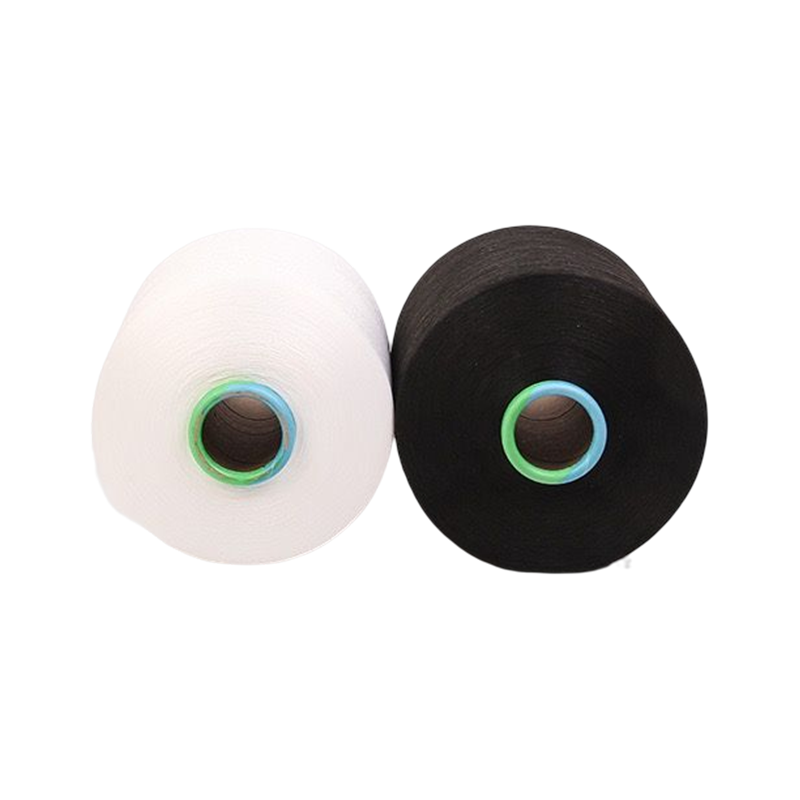
-2.png "Antibacterial and anti-odorant polyester DTY yarn White/Grey ZY0050-ZY0238FM")
-2.png "Lightweight soft polyester DTY yarn Light Pink/Red/White/Purple/Yellow ZR0161-ZR0313 758")
-3.png "Wash-resistant and wear-resistant polyester DTY yarn Yellow/Grey/White ZY0076-ZY0334 178")
-3.png "Full-color custom polyester DTY yarn Silver Series ZE0006-ZE0668 121")
-2.png "High elastic environmentally friendly polyester DTY yarn Blue Series ZB0118 350")
-2.png "Anti-wrinkle and antibacterial polyester DTY yarn Green Series ZG0136 Grass Green 084")
