
 English
 Español


Article Directory
- 1 Denier and Filament Count Are the First Two Selection Parameters
- 2 Crimp Contraction and Elasticity Determine Stretch and Bulk
- 3 Tenacity, Elongation and Heat Shrinkage Set Processing Limits
- 4 Dye Uptake and Color Consistency Are Commercial Parameters
- 5 Intermingling, Finish and Package Quality Dictate Knitting Efficiency
- 6 How to Validate a DTY Yarn Supplier Before Bulk Orders
- 7 DTY Yarn for Apparel Fabrics: Selection FAQs
A 150D/48F polyester DTY yarn can run perfectly on a circular knitting machine for 30,000 meters, then start breaking every four rolls because the intermingling count dropped below 40 points per meter. The yarn specification sheet did not change, the factory did not change, but the selection window did. DTY, or draw textured yarn, is a polyester filament yarn produced by draw-texturing partially oriented yarn to introduce crimp, bulk, and stretch. Choosing DTY for apparel fabrics means choosing a set of parameters that control knitting efficiency, dye consistency, shrinkage, and fabric hand.
Denier and Filament Count Are the First Two Selection Parameters
For apparel-grade DTY, denier and filament count determine the yarn’s linear density and fineness, and they must be matched to the fabric weight, gauge, and touch.
Denier is the weight in grams of 9,000 meters of yarn. A 75D yarn weighs 8.3 g per 1,000 m, while a 150D yarn weighs 16.7 g per 1,000 m. Filament count tells you how many micro-filaments make up that bundle; more filaments usually mean a softer hand feel but also higher production cost and greater sensitivity to texturing conditions.
| Denier/Filament | Typical use | Hand-feel |
| 50D/24F | Lightweight blouses, linings | Soft, fine |
| 75D/36F | Sheer knitwear, fine jerseys | Smooth, drapeable |
| 100D/48F | T-shirts, single jersey | Balanced |
| 150D/96F | Sportswear, double knit | Full, resilient |
| 300D/96F | Outerwear, heavy fleece | Substantial, durable |
Crimp Contraction and Elasticity Determine Stretch and Bulk
Crimp contraction controls how much bulk and elasticity DTY will bring into a fabric; low-crimp yarns lie flat, while high-crimp yarns spring back.
During draw-texturing, the false-twist process sets a crimped geometry into each filament. Crimp contraction figures of 15–30% are normal for apparel-grade DTY; lower values suit woven fabrics, and higher values suit single jersey and interlock. Elongation at break is part of the same discussion: standard DTY usually stretches 25–40% before breaking, and high-elasticity variants can exceed 45%.
crimp contraction
elongation at break
hot-air shrinkage
Round vs Trilobal DTY Cross-Section
Round
Balanced luster, even dyeing, and a softer, more matte surface. Best for colored yarns and relaxed knitwear.
Trilobal
Triangular cross-section creates brighter luster, higher surface friction, and better moisture transport. Common in linings, sportswear, and fine knits.
Tenacity, Elongation and Heat Shrinkage Set Processing Limits
A DTY yarn must survive dyeing and drying without excessive distortion; tenacity and heat shrinkage are the parameters that predict this behavior.
Tenacity is measured in centinewtons per decitex and indicates how much pulling force the yarn can tolerate before breaking. In high-speed circular knitting, tenacity below 3.0 cN/dtex leads to broken filaments and machine downtime; high-tenacity DTY at 4.5 cN/dtex or more allows speeds above 1,000 m/min.
| Property | Standard apparel grade | High-performance grade |
| Tenacity (cN/dtex) | 3.5–4.2 | 4.5–5.5 |
| Elongation at break (%) | 25–35 | 20–30 |
| Hot-air shrinkage at 180°C (%) | 5–9 | 3–5 |
| Boiling-water shrinkage (%) | 2–4 | 1.5–3 |
Dye Uptake and Color Consistency Are Commercial Parameters
Color consistency is the first thing a buyer checks on a finished garment, and it is decided by the DTY’s intrinsic dye uptake, not by the dyehouse alone.
Polyester DTY is usually dyed with disperse dyes at temperatures around 130°C. Variations in the yarn’s crystallinity and filament cross-section change the dye absorption rate. Two lots of 150D/48F with the same tenacity can still produce different shade depths if their thermal history differs. A reliable way to manage this risk is to use a supplier’s color card database, which links each product number to a color family and a production batch. At Zhejiang Hengke Textile Technology Co., Ltd., the color card is organized into families such as blue, beige, gray, purple, pink, and red, making it easier to match a seasonal palette with an actual DTY product instead of a generic shade name.
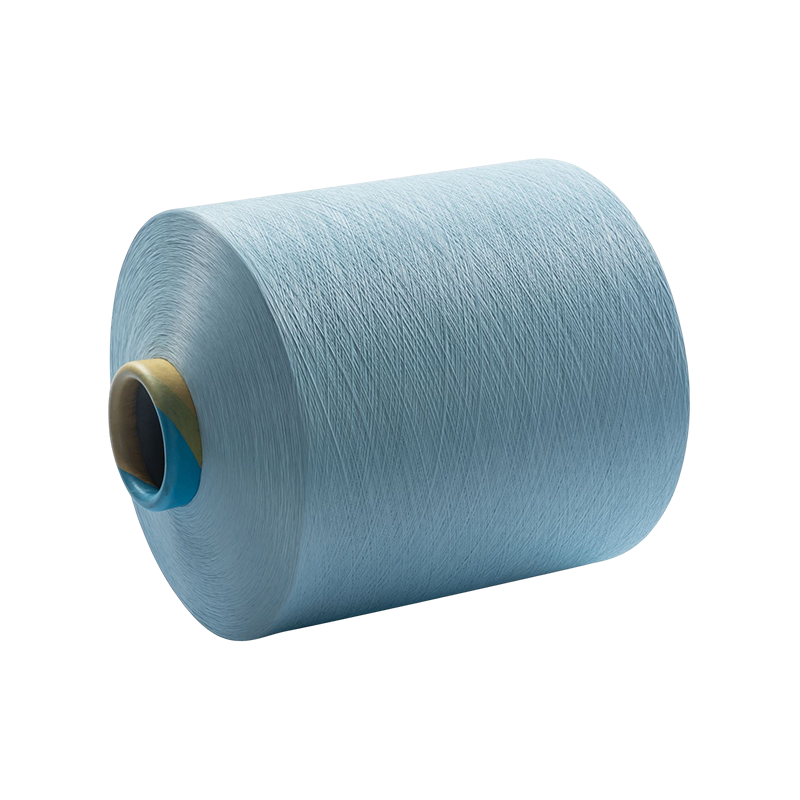 Blue Series Polyester DTY Yarn ZB0118 350This eco-friendly high-elastic DTY yarn carries a specific batch code that supports color family tracing and consistent shade matching during dyeing, ideal for production reliability.View Product →
For example, the Hengke Blue 350 product code ZB0118 ties multiple production lots to one color reference. When you specify a product number instead of a color name, the mill can trace the exact DTY that produced the approved lab dip.
Intermingling, Finish and Package Quality Dictate Knitting Efficiency
Intermingling points per meter, spin finish level, and package winding quality cause more downtime than most fiber properties.
In a 150D DTY, typical intermingling runs between 40 and 100 points per meter. Too few points allow filaments to split during knitting; too many create tight spots that cause stripes. Finish levels around 0.2–0.5% reduce static and fibre-metal friction. Package density and taper angle determine whether a package can run on a 1.5-degree cone without ladders.
- Check intermingling on a needle board at 50 m/min; count at least 40 points for apparel knits.
- Measure package density with a spring-loaded scale; standard DTY packages usually run 900–1,100 g/L.
- Ask for unwinding tests at 800–1,200 m/min before committing to large orders.
- Validate tail length and transfer tails; automatic winders depend on them.
How to Validate a DTY Yarn Supplier Before Bulk Orders
Supplier selection for DTY is a technical audit, not a price negotiation; check laboratory, capacity, and color traceability.
Request the following evidence in writing: crimp contraction and tenacity certificates, boiling-water shrinkage results for the exact denier, dye uptake or shade traceability for the intended color, and intermingling data for the package format you plan to use. A capable supplier will have its own testing lab, as Zhejiang Hengke Textile Technology Co., Ltd. states, plus an annual capacity above 300,000 metric tons and a delivery cycle of about 20 days after order confirmation. Those are not marketing terms; they determine whether you can hold your own production schedule.
Theoretical mass of 1,000 m of DTY at each nominal denier
Use this relationship to double-check invoicing and costing. If a 150D DTY is quoted per kilogram, a woven 10,000 m order requires about 167 kg of yarn before waste and dye loss.
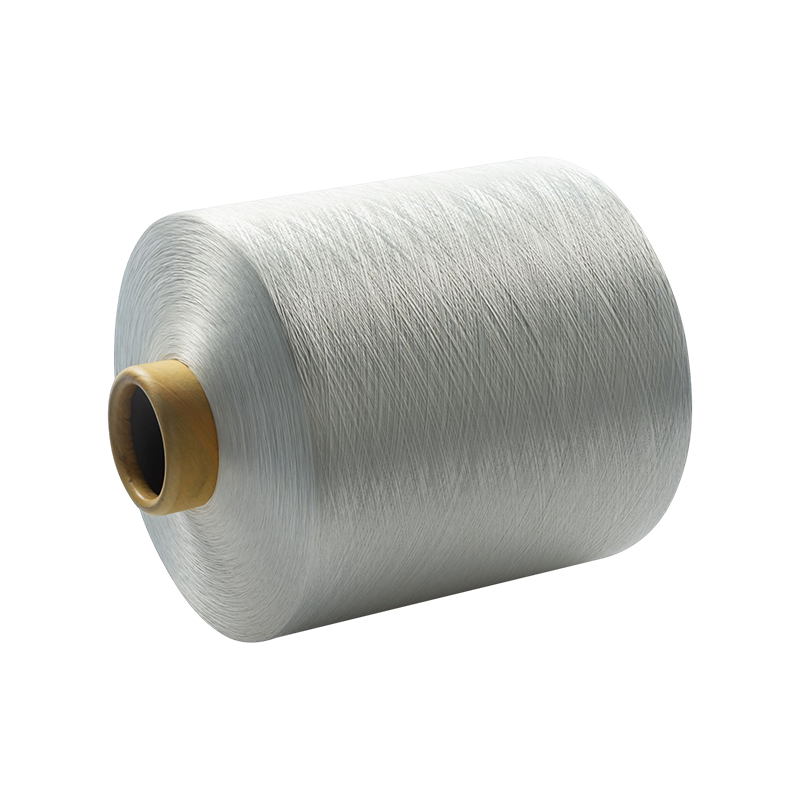 Polyester DTY Factory Product RangeA factory overview listing multiple DTY yarn series with varied colors and features like antibacterial, wrinkle-resistant, and recycled options, aiding buyers in comparing and selecting suitable specifications.View Product →
For a more detailed reading on specification matching, our guide to choosing the right polyester DTY yarn for textile products explains how the same parameters behave across weaving, knitting, and finishing.
DTY Yarn for Apparel Fabrics: Selection FAQs
Most DTY selection problems can be avoided by checking denier, crimp, shrinkage, intermingling, and color traceability before production.
What denier is best for t-shirt fabric?
100D/48F is a standard starting point for single jersey t-shirts; 75D/36F is better for lightweight summer pieces, and higher filament counts such as 96F or 144F give a softer touch.
Why does DTY shrink differently from FDY?
DTY has crimp and higher bulk, so its hot-air shrinkage is usually higher than FDY. Apparel-grade DTY should stay in the 5–9% range, and low-shrink versions are available at 3–5%.
How many intermingling points do I need?
For circular knitting, use DTY with at least 40 to 50 intermingling points per meter to avoid filament splitting. Woven applications can work with fewer, but verify on a needle board before production.
Should I buy DTY by denier or by color number?
Buy by a full product code that includes denier plus color reference. A color number alone is ambiguous; a product code such as ZB0118 Blue350 ties the shade to a specific yarn line and production lot.
-2.png "High-performance environmentally friendly polyester DTY yarn Brown Series ZN0085 FM")
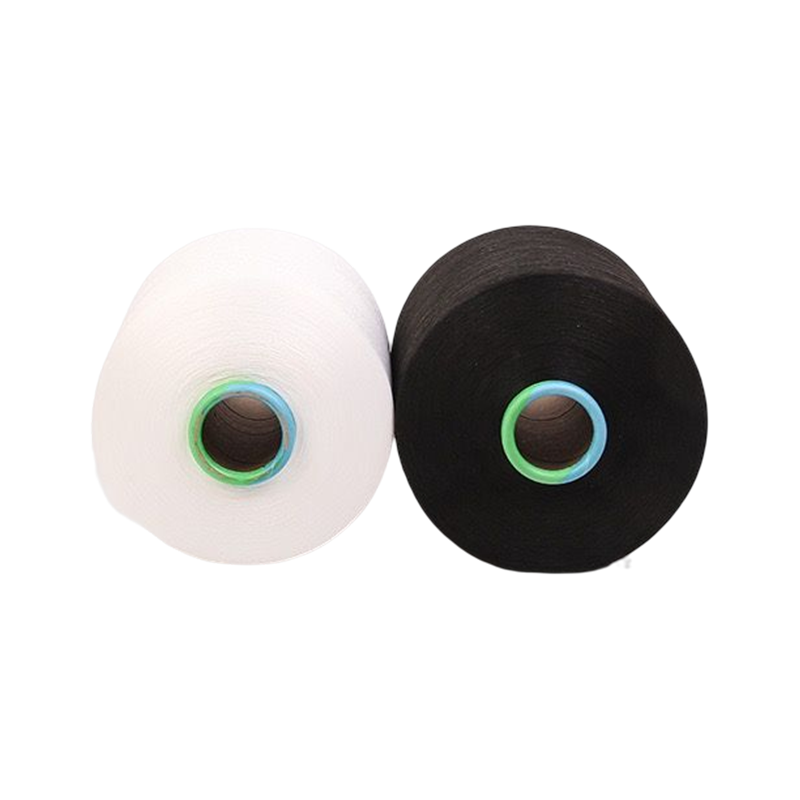
-2.png "Antibacterial and anti-odorant polyester DTY yarn White/Grey ZY0050-ZY0238FM")
-2.png "Lightweight soft polyester DTY yarn Light Pink/Red/White/Purple/Yellow ZR0161-ZR0313 758")
-3.png "Wash-resistant and wear-resistant polyester DTY yarn Yellow/Grey/White ZY0076-ZY0334 178")
-3.png "Full-color custom polyester DTY yarn Silver Series ZE0006-ZE0668 121")
-2.png "High elastic environmentally friendly polyester DTY yarn Blue Series ZB0118 350")
-2.png "Anti-wrinkle and antibacterial polyester DTY yarn Green Series ZG0136 Grass Green 084")
