
 English
 Español


Article Directory
When a textile brand sends out an inquiry for draw textured yarn, the brief is rarely as simple as "we need DTY." It usually sounds more like this: the design team has approved a shade, say, a dusty blue or a light grass green; the technical team has fixed the denier, filament count and interlacing level for the target fabric; and the production planner needs the yarn on the floor in three weeks. The real question is not whether a supplier can produce DTY. It is whether the supplier can produce the right DTY, in the right color, to the right standard, and repeat that result order after order.
That distinction matters because drawn textured yarn carries a large share of everyday textile production. Activewear, knitwear, upholstery and automotive fabrics all rely on DTY for the bulk, elasticity and softness that flat filament yarn cannot provide. But custom draw textured yarn solutions are not a single product. They are a set of decisions — yarn geometry, color development, quality control and supply timing — that a textile brand must get right before production starts.
What a custom DTY solution actually covers
The short version is that a custom solution starts with the physical parameters that determine how the yarn behaves in the fabric. Color matters, but it comes after the yarn is built. If the supplier locks the wrong denier or the wrong interlacing level, no shade can save the finished fabric. A full discussion of these trade-offs is available in this guide to choosing polyester DTY specifications.
Denier and filament count
Denier defines the linear density of the yarn and, together with fabric construction, determines weight and cover. A 75D yarn suits lightweight knit tops, while 150D and 300D yarns appear in heavier jersey, outerwear and upholstery. Filament count changes the hand feel: more filaments produce a softer, fuller touch, but they also affect dyeing behavior and cost. A customizable DTY solution should allow you to specify both values rather than accept a fixed product menu.
Interlacing, luster and texture
Interlacing, sometimes called networking, creates bond points that improve running performance in high-speed knitting and weaving. Too few interlacing points and the yarn splits; too many and the fabric becomes stiff. Luster options such as bright, semi-dull and trilobal alter the visual character: trilobal cross-sections add shimmer for decorative textiles, while semi-dull yarns give the matte finish common in apparel. A supplier that can explain these trade-offs, instead of quoting a single standard product, is the one that can actually build a custom solution.
The table below summarizes the parameters a textile brand typically discusses before sampling.
| Parameter | Typical options | Impact on the fabric |
|---|---|---|
| Denier | 75D, 100D, 150D, 300D | Yarn thickness, fabric weight and coverage |
| Filament count | 24F to 288F depending on denier | Hand feel, softness and surface texture |
| Interlacing level | Standard, high or low network points | Process stability in weaving and knitting |
| Luster | Bright, semi-dull, trilobal | Appearance, sheen and dye uptake |
| Color system | Dope-dyed or conventionally dyed | Color fastness, cost and environmental profile |
Dyeing behavior is directly connected to yarn construction, so a brand that plans to dye dark shades should confirm the yarn's dye uptake characteristics early. The relationship between dyeing, stretching and drying strength is explained in more detail in this article on polyester DTY dyeing and strength.
Color is a specification, not an afterthought
Once the physical parameters are fixed, color becomes the most visible part of the solution. Textile brands rarely choose a DTY shade from a generic chart. They need a shade that survives changes in lighting, matches across trims, and stays consistent from the first shipment to the last. That is why color organization matters, and why the color card is often the first page a sourcing team opens when evaluating a supplier.
At Hengke, the color card is arranged by color family — beige, blue, brown-curry, gray, green, orange-yellow, pink, purple and red — with multiple pages of product references under each family. The structure mirrors the way brands buy: start with a color direction, narrow it to a shade number, then confirm the specification. The color card works as a shared reference between design and mill before a single sample is shipped.
Consider the blue family. A brand developing a denim-inspired knit line will evaluate the blue DTY from the Blue350 series not only for the shade but for how it behaves after dyeing and stretching. For a seasonal color with a sustainability angle, the grass green DTY is a practical reference point, since green shades often raise questions about solution-dyed options and batch-to-batch reproducibility.
-1.png) Wholesale Anti-wrinkle and antibacterial polyester DTY yarn Green Series ZG0136 Hengke Textile Technology Co., Ltd is China custom Anti-wrinkle and antibacterial polyester DTY yarn Green Series ZG0136 Grass Green 084 ...View Product →
Wholesale Anti-wrinkle and antibacterial polyester DTY yarn Green Series ZG0136 Hengke Textile Technology Co., Ltd is China custom Anti-wrinkle and antibacterial polyester DTY yarn Green Series ZG0136 Grass Green 084 ...View Product →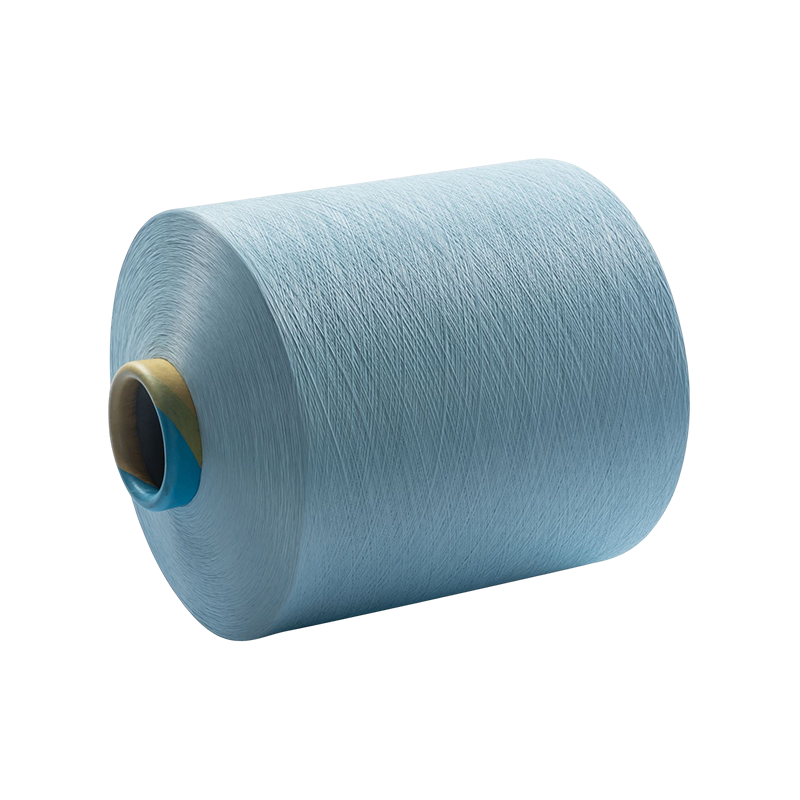 Wholesale High elastic environmentally friendly polyester DTY yarn Blue Series ZHengke Textile Technology Co., Ltd is China custom High elastic environmentally friendly polyester DTY yarn Blue Series ZB0118 350 suppli...View Product →
Hengke links product numbers and color codes deliberately — ZB0118 for Blue350, ZG0136 for Grass Green 084, ZP0471 and ZP0566 for Purple 306, and similar codes across the range. That coding system gives repeat orders a fixed reference. A shade is not described by a photograph or a memory; it is identified by a verified record that production and testing teams can reproduce.
Quality control that survives batch three
Customization is meaningless if the first batch passes and the third batch drifts. Consistency is what separates a supplier from a commodity reseller, and it depends on testing, documentation and process discipline.
In-house testing before shipment
Hengke operates its own testing laboratory with equipment for checking yarn count, tenacity, elongation, dyeing behavior and shade consistency. This matters for brands that sell garments with strict quality requirements, because yarn-level defects — uneven dye uptake, variation in elasticity, barre risk — appear only after the fabric is knitted or dyed, when the cost of correction is highest. Batch records and test reports reduce that risk before the yarn leaves the factory.
Capacity, warehousing and delivery
A custom solution also includes the ability to supply at the right time. Hengke reports an annual capacity of more than 300,000 tons and a standard delivery window of about 20 days after order confirmation, supported by in-house warehousing and a production base in Zhejiang with a sister office in Jiangsu. For textile brands planning seasonal production, a 20-day window is a planning advantage: it shortens the gap between color approval and bulk shipment, and it makes late-season top-up orders feasible. The company's export business also means that documentation, packing and communication are built for international buyers.
Five questions to ask before you commit to a DTY supplier
No custom DTY quotation should be evaluated on price alone. These five questions will tell you whether the supplier can deliver the solution your brand actually needs.
- Can you match one shade across multiple deniers and filament counts? A custom program may require the same color in a 75D jersey yarn and a 150D mesh yarn, and both must match when sewn together.
- What is the batch-to-batch tolerance for denier, elongation and interlacing? Ask for numbers, not promises. The testing lab should be able to provide them.
- Do you supply a pre-shipment test report for every batch? Third-party or in-house, a written report protects both sides when the fabric goes into production.
- What is the real lead time from shade approval to shipment? A supplier who quotes 20 days and misses it costs you a season; verify the schedule before ordering.
- How do you handle a repeat order for a shade that is no longer active? A documented color code archive makes reorders reliable, even years later.
A DTY partner, not just a DTY seller
The best custom draw textured yarn solution is the one that removes variables from your production line. A verified color system, fixed product numbering, in-house testing, honest lead times, and the ability to adjust denier, filament and interlacing to your fabric — these are the concrete elements that make a yarn supplier a genuine partner. Hengke builds its offer around that combination, and the catalog is open for inspection: the full polyester DTY product range is available on the website, together with the ACY yarn category and the color card for brands that want to compare before they send an inquiry.
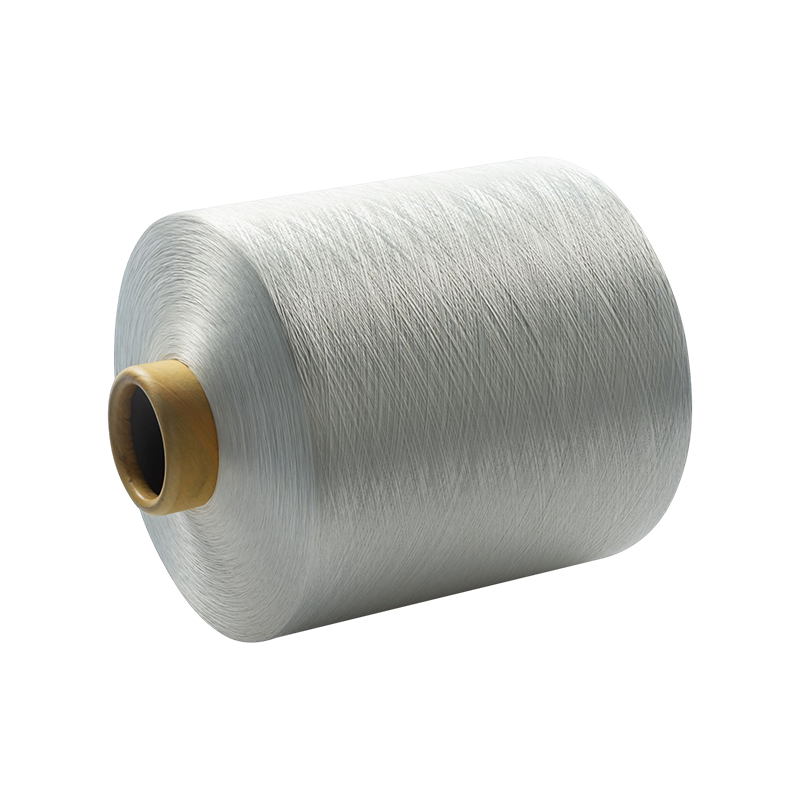 Polyester DTY Manufacturers, Drawn Textured Yarn FactoryWe are China Polyester DTY Manufacturers and Drawn Textured Yarn Factory, Hengke Textile Technology Co., Ltd supply various colors Polyes...View Product →
-2.png "High-performance environmentally friendly polyester DTY yarn Brown Series ZN0085 FM")
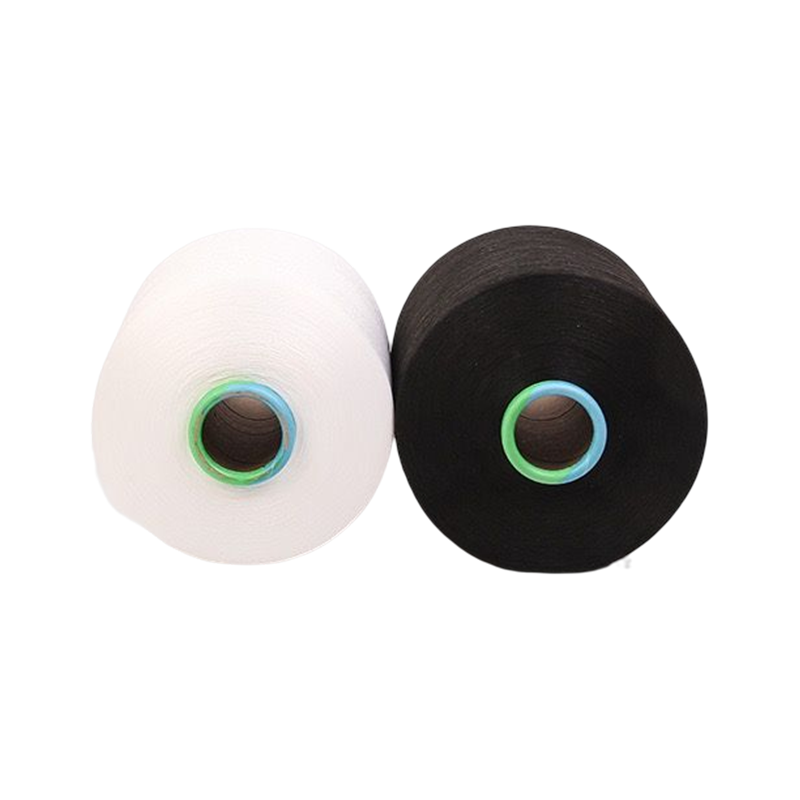
-2.png "Antibacterial and anti-odorant polyester DTY yarn White/Grey ZY0050-ZY0238FM")
-2.png "Lightweight soft polyester DTY yarn Light Pink/Red/White/Purple/Yellow ZR0161-ZR0313 758")
-3.png "Wash-resistant and wear-resistant polyester DTY yarn Yellow/Grey/White ZY0076-ZY0334 178")
-3.png "Full-color custom polyester DTY yarn Silver Series ZE0006-ZE0668 121")
-2.png "High elastic environmentally friendly polyester DTY yarn Blue Series ZB0118 350")
-2.png "Anti-wrinkle and antibacterial polyester DTY yarn Green Series ZG0136 Grass Green 084")
