
 English
 Español


Article Directory
The Short Answer: What Materials Are Actually Used in DTY
When you request quotes for draw textured yarn, the first specification after denier is almost always the raw material. DTY is not a single polymer; it is a texturized filament made from thermoplastic resins. In commercial production, polyester (PET) is the dominant material, followed by nylon and polypropylene. Additives such as titanium dioxide, pigments, and functional agents are also part of the final yarn composition. For most apparel and home textile applications, polyester DTY is the right starting point because it balances strength, dyeing predictability, and cost. But the correct choice depends on the end product and the fabric's mechanical requirements. Many first-time buyers assume DTY has a single material formula, but in reality the same yarn type can be engineered from very different polymers.
From Polymer to DTY: How the Material Is Processed
Draw textured yarn is made in two stages. First, polymer chips are melted, extruded, and wound into partially oriented yarn (POY). Then, POY is drawn and false-twisted on a texturing machine to create a soft, bulky yarn. The base polymer determines the yarn's inherent limits—melting point, tenacity, moisture regain—while the texturing process controls the geometry, bulk, and handle. Suppliers like Hengke Textile start from this feedstock and manage the entire quality chain through in-house testing before delivery. The draw-twist settings are adjusted for each material: polyester needs a higher drawing temperature, while polypropylene requires lower tension and a shorter cooling zone.
The Three Most Common DTY Materials
Polyester (PET) DTY
Polyester DTY begins as PET chips, produced from PTA and MEG. After melt spinning and false-twist texturing, it offers high tenacity, good UV resistance, and predictable disperse dyeing. This is why it is used for linings, sportswear, upholstery, and nearly every woven or knitted fabric where dimensional stability matters. At Hengke Textile, polyester DTY is our core product line, and the colors are organized in the color card for quick reference.
Nylon (PA) DTY
Nylon DTY uses polyamide 6 or 66 as the base. It has lower density and higher elongation than PET, with excellent abrasion resistance and elastic recovery. Fabrics for hosiery, swimwear, and compression garments are the most common end uses. The trade-off is higher raw material cost and a different dyeing system (acid dyes instead of disperse). For a detailed comparison, see our post on polyester DTY vs other yarn types.
Polypropylene (PP) DTY
Polypropylene DTY is lighter than both PET and nylon and resists moisture absorption, so it dries quickly and works well in activewear liners, medical textiles, and filtration media. PP is almost always colored with pigment masterbatches because it is difficult to dye after extrusion. Its main limitations are a lower melting point and poor resistance to UV unless stabilized.
Additives and Color Masterbatches
The material story does not stop at the base polymer. Most DTY contains additives that change the appearance or function of the yarn. Titanium dioxide (TiO2) is added to control luster: bright yarn has little TiO2, while full dull yarn contains about 2-3% and gives a matt surface. Color masterbatches are also mixed into the polymer before spinning to produce dope-dyed or melt-dyed yarn. This method improves colorfastness and cuts the need for downstream dyeing. For example, our polyester DTY in Blue 350 and purple polyester DTY in shade 306 are produced this way, so the color is locked into the fiber.
-1.png) Wholesale Multifunctional Environmentally friendly recycled polyester DTY yarn PHengke Textile Technology Co., Ltd is China custom Multifunctional Environmentally friendly recycled polyester DTY yarn Purple ZP0471-ZP0...View Product →
Wholesale Multifunctional Environmentally friendly recycled polyester DTY yarn PHengke Textile Technology Co., Ltd is China custom Multifunctional Environmentally friendly recycled polyester DTY yarn Purple ZP0471-ZP0...View Product →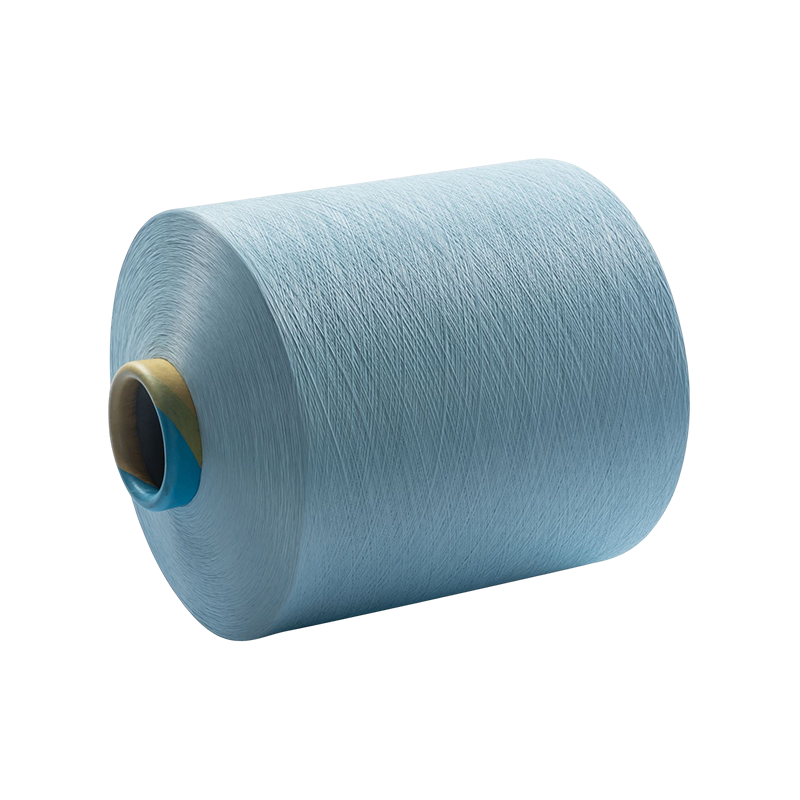 Wholesale High elastic environmentally friendly polyester DTY yarn Blue Series ZHengke Textile Technology Co., Ltd is China custom High elastic environmentally friendly polyester DTY yarn Blue Series ZB0118 350 suppli...View Product →
Functional additives such as antibacterial agents, UV absorbers, and flame retardants are either compounded into the polymer or applied as a finish after texturing. These require careful quality control to ensure even distribution and durability.
How Material Choice Affects Yarn Performance
The table below summarizes the main differences when you compare DTY made from PET, nylon, and PP. Use it as a starting point for supplier discussions.
| Property | Polyester (PET) DTY | Nylon (PA) DTY | Polypropylene (PP) DTY |
|---|---|---|---|
| Density (g/cm³) | 1.38 | 1.14-1.16 | 0.91 |
| Tenacity (cN/dtex) | 3.5-5.0 | 4.0-6.0 | 2.5-4.0 |
| Moisture regain | 0.4% | 4.0-4.5% | <0.1% |
| Abrasion resistance | Good | Excellent | Fair |
| Elastic recovery | Moderate | Excellent | Good |
| Typical dye class | Disperse | Acid | Pigment (dope-dyed) |
| Main applications | Apparel, home textiles, industrial | Sportswear, hosiery, elastic fabrics | Activewear liners, medical, filtration |
As the table shows, polyester gives a balanced profile at a cost that is usually 20-30% lower than nylon for the same denier. Nylon becomes worthwhile when stretch recovery and abrasion dominate. Polypropylene is chosen mainly for its low weight and moisture management, but at the cost of dyeing flexibility and heat resistance.
Recycled and Bio-Based Alternatives
Recycled polyester DTY (rPET) is now a credible alternative to virgin PET. It is made from recycled bottle flakes or industrial waste, re-polymerized, and then textured. The quality gap to virgin yarn has narrowed substantially, and rPET is often suitable for linings, bag fabrics, and casual apparel. Bio-based polymers such as PLA and PTT are also emerging, but they remain niche due to price and limited availability. If your goal is to reduce the environmental footprint, rPET DTY is the most practical place to start. For garments that require stretch and recovery, our air-covered yarn (ACY) with a spandex core is another way to add elasticity while preserving a clean product story.
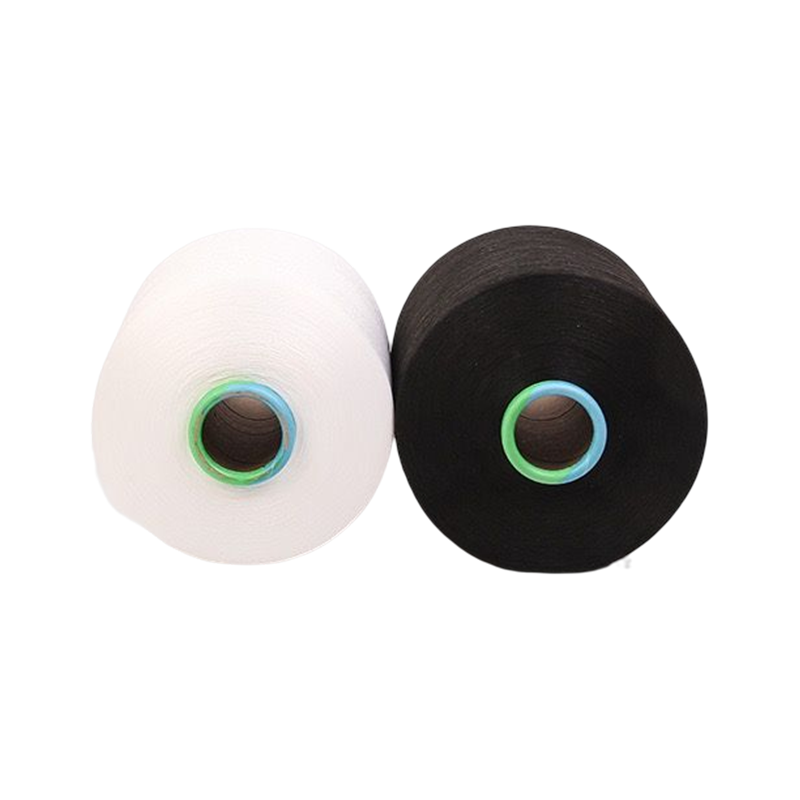
 Wholesale ACY(Air Covered Yarn) environmentally friendly yarn White/Black SuppliHengke Textile Technology Co., Ltd is China custom ACY(Air Covered Yarn) environmentally friendly yarn White/Black suppliers and company,...View Product →
What to Confirm When Buying DTY
Before you place a DTY order, confirm the base polymer, the additive system, and the test method for tenacity and dyeing uniformity. If you need a specific color, ask whether it is dope-dyed or piece-dyed; this has a major impact on lead time and color consistency. Also consider the final fabric's abrasion and UV requirements. A supplier that can show lab data for these properties will help you avoid surprises. Our polyester DTY specification guide explains how we set up quality parameters for different end uses.
As a practical rule, polyester DTY is the default for most woven and knitted fabrics, nylon DTY is worth the premium when stretch recovery and abrasion dominate, and polypropylene DTY is the right choice for lightweight, quick-drying products. Once you have narrowed down the material, a reliable partner can then help you match the right denier, filament count, and shade.
At Hengke Textile, we deliver polyester DTY and ACY yarn within 20 days of order confirmation, backed by our own testing lab. If you are evaluating a new fabric project, send us the target weight and performance requirements—we will suggest a material that meets both your budget and your technical needs.
-2.png "Anti-wrinkle and antibacterial polyester DTY yarn Green Series ZG0136 Grass Green 084")
-2.png "Antibacterial and anti-odorant polyester DTY yarn White/Grey ZY0050-ZY0238FM")
-2.png "Lightweight soft polyester DTY yarn Light Pink/Red/White/Purple/Yellow ZR0161-ZR0313 758")
-3.png "Full-color custom polyester DTY yarn Silver Series ZE0006-ZE0668 121")
-3.png "Wash-resistant and wear-resistant polyester DTY yarn Yellow/Grey/White ZY0076-ZY0334 178")
-2.png "High elastic environmentally friendly polyester DTY yarn Blue Series ZB0118 350")
-2.png "Multifunctional Environmentally friendly recycled polyester DTY yarn Purple ZP0471-ZP0566 306")
