
 English
 Español


Article Directory
Softness, stretch, and fabric bulk in a knit garment almost always trace back to one decision made on the production floor: how the Polyester DTY yarn was textured. Draw Textured Yarn takes partially oriented polyester filament and pushes it through drawing and false-twist texturing, permanently crimping the filaments so the finished yarn stretches, recovers, and covers fabric the way flat filament yarn never can. Every stage of that process, from chip drying through final winding, shapes how the yarn performs on a knitting machine and how the finished fabric feels against skin.
The Seven-Stage DTY Manufacturing Process
Polyester DTY yarn is built in stages, with POY serving as the intermediate base material before drawing and texturing transform it into a crimped, elastic finished yarn. Skipping or rushing any single stage shows up later as inconsistent stretch, uneven dye uptake, or yarn breakage on a customer's knitting machine, which is why mills track each stage as closely as the finished product itself.
Polymer Drying
PET chips are dried to a controlled moisture level to prevent degradation and filament breakage during melting.
Melt Spinning
Chips are melted, filtered, and extruded through spinnerets, then cooled into continuous solidified filaments.
POY Formation
Filament is first spun into partially oriented yarn, the base material for the drawing and texturing stages ahead.
Drawing
POY is stretched between rollers, aligning polymer chains and building the tensile strength the final yarn needs.
False-Twist Texturing
Heated filament is twisted, set, then untwisted, locking in the permanent crimp that gives DTY its stretch and bulk.
Heat Setting
Thermal treatment stabilizes the textured structure, improving crimp retention and reducing shrinkage during later processing.
Oiling and Winding
Finishing oil and controlled tension prepare the yarn for smooth downstream knitting or weaving with fewer breakages.
Elasticity and crimp index across flat filament, POY, and finished DTY yarn
What Changes Between POY and Finished DTY
Drawing and texturing do not just add crimp, they reshape nearly every mechanical property of the yarn. Comparing POY before processing with finished DTY after processing shows how deliberately the manufacturing stages trade raw elongation for elasticity, bulk, and dimensional stability, turning a stretchy but unstable intermediate material into a yarn ready for demanding knitting and finishing conditions.
POY Before Processing
- High elongation, low crimp, minimal texture
- Moderate strength, not yet fully oriented
- Requires further drawing before end use
DTY After Processing
- Permanent crimp delivers stretch and recovery
- Higher tensile strength from full drawing
- Ready for knitting, weaving, or finishing
Elongation at break drops sharply once POY is drawn and textured into DTY
Quality Control During DTY Manufacturing
Because crimp and elasticity are what customers actually feel in a finished fabric, DTY quality checks go beyond the strength testing used for flat yarn. Mills run each batch through four core inspections before it ships, catching problems in crimp consistency or dye behavior that would otherwise only surface after a customer has already knitted the yarn into fabric.
Strength and Elongation
Breaking strength and stretch recovery confirm the yarn holds up through knitting and daily wear.
Crimp Performance
Crimp stability, contraction, and uniformity are measured since they drive fabric elasticity and hand feel.
Yarn Evenness
Thickness variation and filament consistency are scanned to protect fabric appearance and dye uptake.
Dyeing Performance
Even dye absorption and shade consistency are verified across large-scale production runs.
Modeled bulk and crimp development building sharply during the texturing stage
False twist texturing is the process step that converts flat, low-elasticity filament into permanently crimped Polyester DTY yarn, and it is the single stage most responsible for the softness, stretch, and fabric coverage textile mills specify DTY for.
Where Polyester DTY Yarn Is Used
Consistent crimp and elasticity are what make DTY the default choice across stretch-driven textile categories.
DTY versus flat filament yarn across softness, elasticity, bulk, and strength
Frequently Asked Questions
What is the difference between DTY and FDY yarn?
DTY goes through false-twist texturing to create permanent crimp and stretch, while FDY stays flat and fully drawn without that texturing stage.
Why does POY need further processing to become DTY?
POY has only partial molecular orientation and no crimp, so it must be drawn and texturized before it has the strength and elasticity textile mills require.
What makes DTY yarn feel softer than flat filament yarn?
The permanent crimp created during texturing gives each filament a wavy structure that increases bulk and surface softness compared with straight, flat filament.
How does manufacturing precision affect finished fabric quality?
Tight control over drawing and texturing parameters when producing Polyester DTY yarn directly determines crimp stability, elasticity, and how consistently the fabric performs across a full production run.
-2.png "High-performance environmentally friendly polyester DTY yarn Brown Series ZN0085 FM")
-2.png "High elastic environmentally friendly polyester DTY yarn Blue Series ZB0118 350")
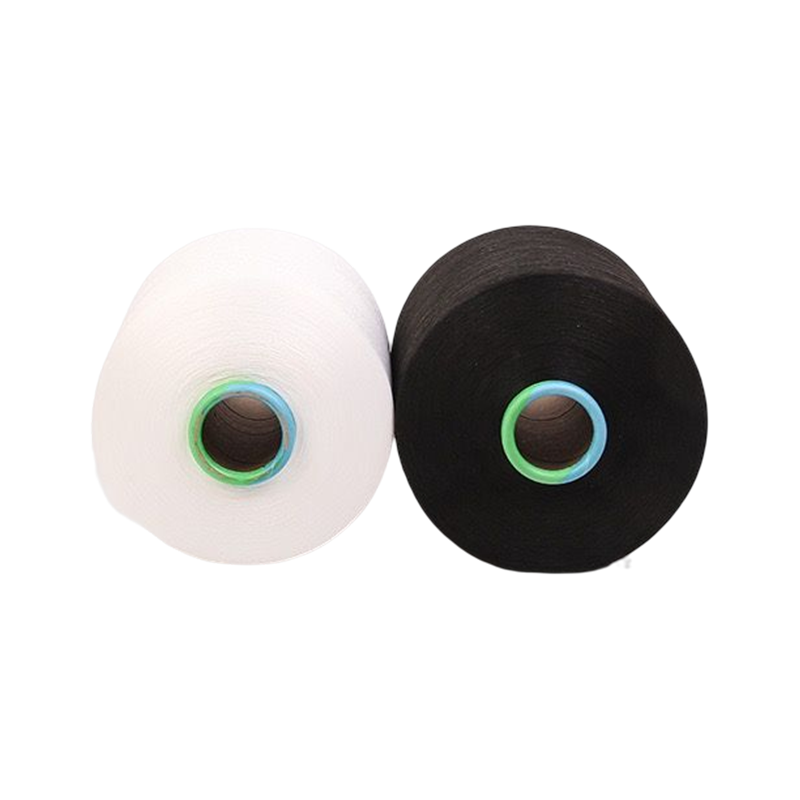
-2.png "Antibacterial and anti-odorant polyester DTY yarn White/Grey ZY0050-ZY0238FM")
-2.png "Lightweight soft polyester DTY yarn Light Pink/Red/White/Purple/Yellow ZR0161-ZR0313 758")
-3.png "Wash-resistant and wear-resistant polyester DTY yarn Yellow/Grey/White ZY0076-ZY0334 178")
-3.png "Full-color custom polyester DTY yarn Silver Series ZE0006-ZE0668 121")
-2.png "Anti-wrinkle and antibacterial polyester DTY yarn Green Series ZG0136 Grass Green 084")
