
 English
 Español


Article Directory
Same polymer, same starting filament, completely different fabric outcome. Polyester Draw Textured Yarn takes an extra texturing step that FDY skips entirely, and that single difference is what decides whether a finished fabric stretches and feels soft or holds a smooth, structured shape.
What Makes Polyester DTY Different
Polyester DTY starts as a drawn filament yarn, then goes through false twisting or another texturing process that introduces crimp and bulk. That texturing step is the entire story: it's what gives DTY its stretch, its softness, and its fuller fabric volume compared with straight, untextured FDY.
DTY vs FDY at a Glance
| Property | Polyester DTY | FDY |
| Yarn structure | Crimped, textured | Straight, oriented |
| Surface | Bulky, soft | Smooth, flat |
| Elasticity | Higher | Lower |
| Tensile strength | Moderate | Higher |
| Knitting performance | Excellent | Good |
| Weaving performance | Good | Excellent |
DTY trades some tensile strength for stretch and softness — the right trade depends entirely on whether the fabric needs to move with the body or hold its structure.
Where Polyester DTY Excels
- Sportswear and activewear — elasticity and recovery suited to performance movement
- Casual and knitted apparel — soft hand feel for everyday comfort garments
- Home textiles — blankets and upholstery that benefit from volume and softness
- Functional fabrics — outdoor and flexible textiles needing enhanced movement
Where FDY Takes Over
- Fashion and woven fabrics — smooth surface and elegant drape
- Lining materials — dimensional stability keeps garments holding shape
- Industrial and technical textiles — higher tensile strength for reinforcement applications
Making the Right Call
Need stretch, softness, or a bulky knit look? Polyester DTY is the fit.
Need a smooth surface, high strength, or dimensional stability? Choose FDY.
Unsure which fits a blended fabric? Match yarn to the dominant performance requirement, not the secondary one.
Selection Mistakes Worth Avoiding
Choosing yarn purely on unit price tends to backfire once fabric quality or processing losses show up downstream. Ignoring end-use performance is just as costly — a stretch garment specified with FDY, or a structured woven fabric specified with DTY, rarely turns out the way the design called for. Yarn evenness and strength consistency matter just as much as picking the right type in the first place.
Frequently Asked Questions
Is polyester DTY yarn stronger or weaker than FDY?
FDY generally has higher tensile strength, while DTY trades some of that strength for better elasticity and stretch recovery.
Which yarn knits better, DTY or FDY?
DTY typically performs better in knitting due to its bulk and flexibility, while FDY tends to excel in weaving applications.
Can DTY and FDY be combined in one fabric?
Yes. Blending is common when a fabric needs both structural stability and stretch, drawing on the strengths of each yarn type.
Is polyester DTY suitable for industrial textiles?
Generally not the first choice — FDY's higher strength and dimensional stability make it better suited to technical and reinforcement applications.
Matching yarn structure to fabric purpose is what separates a garment that performs from one that disappoints — and that's exactly the decision Polyester Draw Textured Yarn and FDY exist to help manufacturers make correctly.
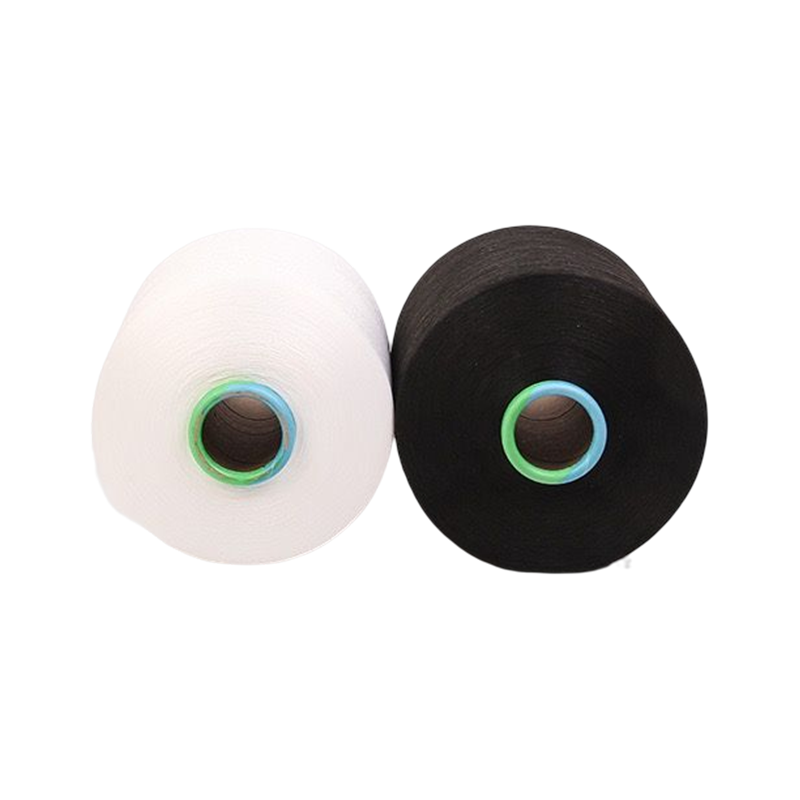
-2.png "Antibacterial and anti-odorant polyester DTY yarn White/Grey ZY0050-ZY0238FM")
-2.png "Lightweight soft polyester DTY yarn Light Pink/Red/White/Purple/Yellow ZR0161-ZR0313 758")
-3.png "Wash-resistant and wear-resistant polyester DTY yarn Yellow/Grey/White ZY0076-ZY0334 178")
-3.png "Full-color custom polyester DTY yarn Silver Series ZE0006-ZE0668 121")
-2.png "High elastic environmentally friendly polyester DTY yarn Blue Series ZB0118 350")
-2.png "Anti-wrinkle and antibacterial polyester DTY yarn Green Series ZG0136 Grass Green 084")
-2.png "Multifunctional Environmentally friendly recycled polyester DTY yarn Purple ZP0471-ZP0566 306")
