English
 Español


Article Directory
- 1 Denier and filament count set the first boundary
- 2 Intermingling level controls knitting performance
- 3 Tenacity, elongation, and shrinkage define dimensional stability
- 4 Color consistency decides whether the fabric can be sold
- 5 How to qualify a DTY supplier for knitted fabric programs
- 6 Frequently asked questions about DTY for knitted fabrics
DTY, or draw-textured yarn, is the standard polyester feed yarn for knitted fabrics because it combines bulk, elasticity, and dyeability at a lower cost than nylon or spandex-based alternatives. Those properties are not guaranteed by the label alone; they sit in the process history of each production lot.
Denier and filament count set the first boundary
Denier and filament count determine the hand feel, opacity, and knitting performance of a DTY before the yarn ever reaches the needles.
Denier (D) is the linear density of the yarn, and filament count (F) is the number of individual filaments inside the yarn. Their ratio, D/F, describes the fineness of each filament. A 150D/48F yarn has a D/F ratio of about 3.1, while a 150D/72F yarn drops to about 2.1. Finer filaments give a softer hand and better drape, but they create more surface area, which means more friction against needles and guides.
| 75D / 36F | 2.1 | Lightweight single jersey, linings | High-speed runs; requires clean lubrication |
| 100D / 36F | 2.8 | Fine-gauge knit tops | Moderate tension; low filamentation |
| 150D / 48F | 3.1 | Mid-weight jersey, pique, fleece face | Most common workhorse; broad machine compatibility |
| 150D / 72F | 2.1 | Soft-touch single jersey, sportswear | Needs higher intermingling to prevent hairs |
| 200D / 96F | 2.1 | Heavy jersey, tracksuit panels | Watch needle wear on older machines |
| 300D / 96F | 3.1 | Outerwear knits, upholstery, terry | Robust needles; slower machine speed |
Buyers who know their end market start from the fabric. A sportswear brand asking for a silky single jersey will not accept a commodity 150D/48F; the mill has to quote a higher filament count at the same denier. That is why the first conversation with a supplier should fix the exact D/F combination, not just the denier.
Color is the second axis of the specification. In active knitwear, blue shades are ordered every season, and a stock shade such as Blue 350 gives the mill a repeatable color reference.
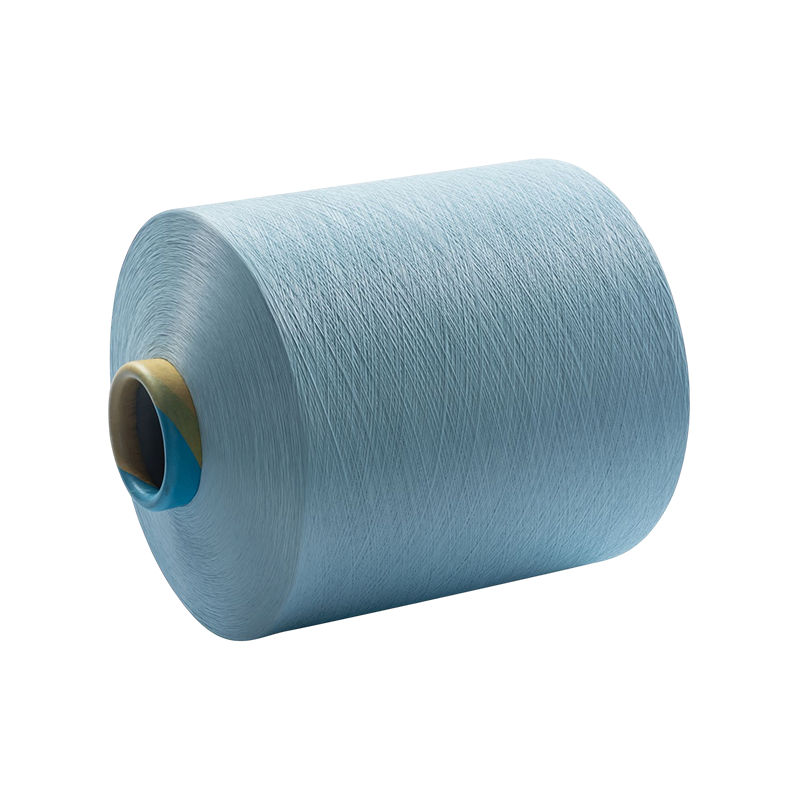 High Elastic Eco-Friendly Polyester DTY Yarn in Blue Shade 350This blue polyester DTY yarn offers high elasticity, softness, and wrinkle resistance, with a durable PET construction. Its deep-blue pigment ensures UV resistance and color retention, making it well-suited for active knitwear and other demanding textile applications.View Product →
Intermingling level controls knitting performance
Intermingling, measured in nips per meter, determines whether a DTY runs clean on a knitting machine or sheds filaments and creates lint.
During false-twist texturing, the filaments gain crimp and bulk; if they stay loose, they catch on needles and guides. Intermingling uses compressed air to lock filaments together at regular intervals. Texturizers grade the result as normal, strong, or high intermingling, often abbreviated as NIM, SIM, and HIM.
- Below 40 nips per meter: filamentation appears quickly on machines running above 3,000 rpm.
- 60-80 nips per meter: the standard window for most circular knitting; the yarn still opens normally in dyeing.
- Above 100 nips per meter: the yarn feels boardy, and intermingle marks become visible in lightweight knits.
Tenacity, elongation, and shrinkage define dimensional stability
Tenacity, breaking elongation, and boiling water shrinkage predict whether a knitted fabric will hold its shape through dyeing and finishing.
Standard polyester DTY for knitting delivers 3.5-4.5 cN/dtex tenacity and 20-30% elongation at break. Below 3.0 cN/dtex, breaks appear at high knitting speeds; above 35% elongation, the fabric tends to bag. Boiling water shrinkage in the 3-7% range is normal for DTY, and it must be uniform within the lot.
Color consistency decides whether the fabric can be sold
Color consistency between lots is the most visible quality signal in a knitted fabric, because yarn variation shows up directly on the face of the knit.
Knitted structures magnify yarn differences. If a DTY lot has uneven dye uptake, the fabric develops barre: horizontal or vertical stripes caused by differential dyeing. The causes sit in the polymer's thermal history, the heat-setting profile in texturing, and the finish oil application. A reliable supplier tests dyeability on production lots, not just mechanical properties.
Color matching is the commercial side of the same problem. A supplier that maintains a systematic color card organized by shade family can repeat a seasonal shade a year later without starting over. The card should cover the neutrals and darks that mills reorder most: beige, gray, blue, green, brown, pink, purple, red, and orange-yellow.
In underwear and basic T-shirt knitting, off-white shades are the largest volume family, and a documented rice-white reference keeps repeat orders stable.
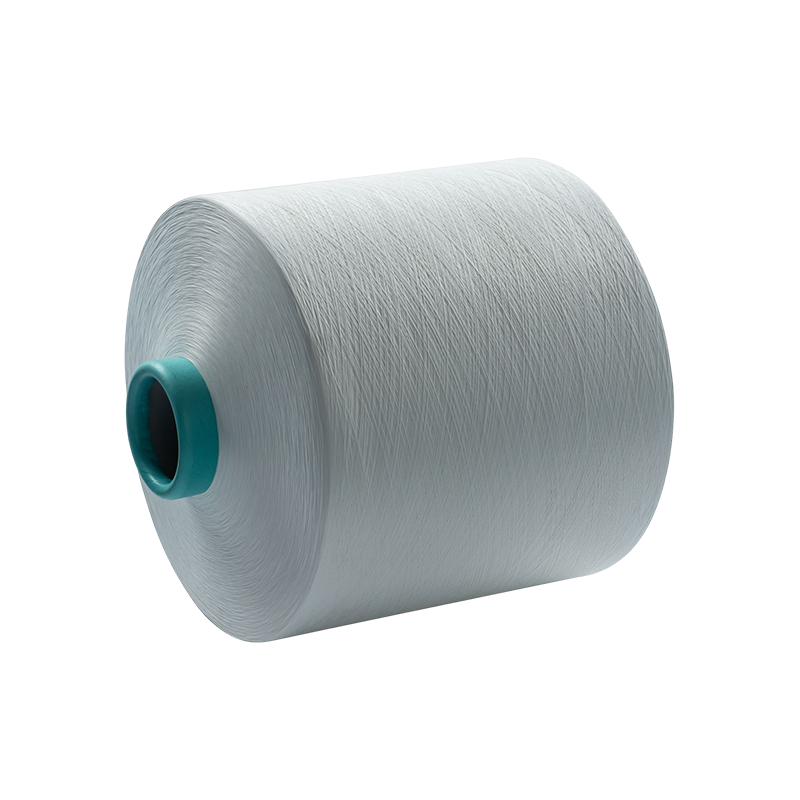 Antibacterial and Odor-Resistant Polyester DTY Yarn in White and GreyThis white and grey polyester DTY yarn combines advanced antibacterial technology with high elasticity and softness. It inhibits bacterial growth and reduces odor, while maintaining shape and resistance to washing, ideal for sportswear, underwear, and household textiles.View Product →
How to qualify a DTY supplier for knitted fabric programs
Qualifying a DTY supplier is a four-step process: verify the spec sheet, test the yarn, run a knitting trial, and audit process discipline.
Price per kilogram is the last number a mill should look at. The number that matters is the yarn cost per defect-free kilogram of finished fabric. A supplier with documented process control delivers fewer breaks, less barre, and more consistent shrinkage than a cheaper alternative.
Hengke Textile Technology Co., Ltd. is an example of a supplier that publishes its process commitments directly. Its in-house testing laboratory and complete testing equipment back a stated annual capacity of more than 300,000 metric tons, and orders are typically shipped within 20 days after confirmation. The company's guidance on key quality-control points for polyester DTY explains the inspection routine buyers should ask for before shipment.
For seasonal programs, a supplier that can match a specification across many shades matters. Grass green is a useful test shade because it exposes dyeability variation quickly.
 Anti-Wrinkle Antibacterial Polyester DTY Yarn in Grass Green 084This green polyester DTY yarn integrates anti-wrinkle and antibacterial functions with eco-friendly processing. It offers vibrant color stability under UV exposure and reliable crimp retention, suitable for medical, baby, sports, and home textile products.View Product →
Frequently asked questions about DTY for knitted fabrics
What is the most common DTY specification for knitted fabrics?
150D/48F is the most common specification for mid-weight knitted fabrics such as single jersey, pique, and fleece. Lightweight fabrics use 75D/36F, and heavy outerwear knits use 200D to 300D with 96 filaments.
How do I test the intermingling level of a DTY lot?
Take a 1-meter sample, hold it under tension, and count the nips or open spots with a magnifying lens. Circular knitting normally calls for 60-80 nips per meter, and the count should not vary by more than five nips within the same lot.
What causes barre in polyester DTY knitted fabric?
Barre comes from differential dye uptake caused by uneven polymer quality or heat history between lots. The fix is at the supplier stage: a testing lab should verify dyeability and shrinkage on every production lot before shipment.
How long does a typical DTY order take to deliver?
A stable export supplier usually delivers within 20 days after order confirmation. Confirm the intermingling density, shrinkage range, and shade code in writing before the order is placed.