English
 Español


Article Directory
- 1 Carpet-Grade DTY: Definition and Material Logic
- 2 Mechanical Requirements: Tenacity, Elongation, and Crimp
- 3 Thermal Requirements: Shrinkage and Heat-Set Response
- 4 Color Requirements: Dye Uniformity and Shade Delivery
- 5 Structural Requirements: Twist, Ply, and Linear Density
- 6 How to Qualify a DTY Supplier for Carpet Programs
- 7 Frequently Asked Questions
A carpet mill running a 72-needle tufting machine at 900 strokes per minute will reject an incoming DTY lot if two or three cones out of a thousand fall outside the crimp tolerance. The cost of that disruption belongs to the mill, not the yarn supplier. That is why polyester draw-textured yarn (DTY) for carpet applications is purchased against measurable performance requirements — tenacity, crimp, shrinkage, and dye uniformity — before price per kilogram is even discussed.
Carpet-Grade DTY: Definition and Material Logic
Draw-textured yarn (DTY) is a polyester multifilament yarn that has been drawn and false-twist textured to create crimp, bulk, and elastic recovery. In carpet manufacturing, DTY is the standard face yarn for tufted cut-pile and loop-pile constructions because its crimp produces the surface cover that determines how dense and even a finished carpet looks.
Filament cross-section alters performance before any other parameter. Trilobal DTY filaments scatter light and hide soil more effectively than round filaments, which extends the visible life of carpet in corridors and entry zones. This behavior is documented in our technical review of trilobal polyester yarn and carpet lifespan.
Mechanical Requirements: Tenacity, Elongation, and Crimp
A tenacity of 3.2–4.5 cN/dtex and an elongation at break of 25–38% define the working window for carpet DTY. Below that window, the yarn fails at the needle eye; above it, pile height becomes irregular and shading appears across the roll width.
| Parameter | Typical range | Failure caused by deviation |
| Tenacity | 3.2–4.5 cN/dtex | Needle breakage, line stoppage |
| Elongation at break | 25–38% | Uneven pile height |
| Crimp contraction | 12–20% | Poor cover, exposed backing |
| Crimp stability | 80% minimum | Shading shift after heat setting |
| Abrasion resistance | No broken loops at 10,000 cycles | Premature wear in traffic lanes |
Abrasion is best verified on a tufted panel rather than on bare yarn, because loop integrity depends on stitch density and backing engagement as much as on filament toughness.
Thermal Requirements: Shrinkage and Heat-Set Response
Hot-air shrinkage of 8–13% at 180°C and boiling-water shrinkage of 6–9% are the accepted ranges for carpet DTY, with a maximum spread of 1.5 percentage points between packages in the same lot.
Uniformity matters more than the absolute number. During twist setting and package dyeing at 130–200°C, cones that shrink unevenly create tension differences across the beam; after tufting, those differences become shading bands that survive finishing and read as permanent stripes.
Color Requirements: Dye Uniformity and Shade Delivery
Package dyeing at 130°C amplifies minor filament differences: a dye uptake variation of just 2–3% between cones produces striping visible from three meters away.
Buyers reduce this risk by starting from a verified base shade. Hengke Textile Technology Co., Ltd. organizes its polyester DTY range by color family across a complete color card system, so a carpet program can lock a reference shade before production instead of negotiating dye recipes after delivery.
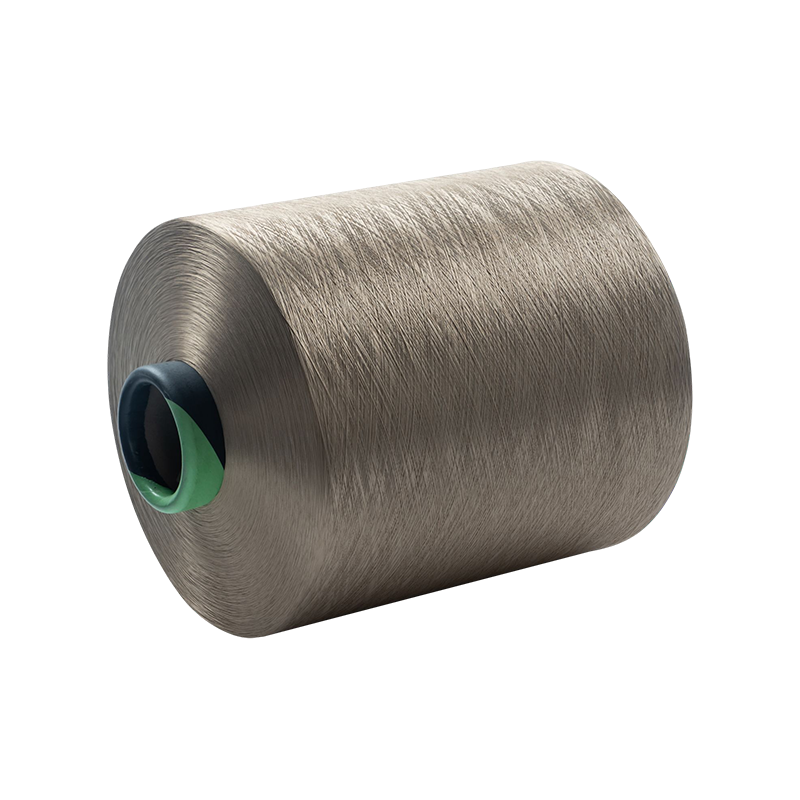
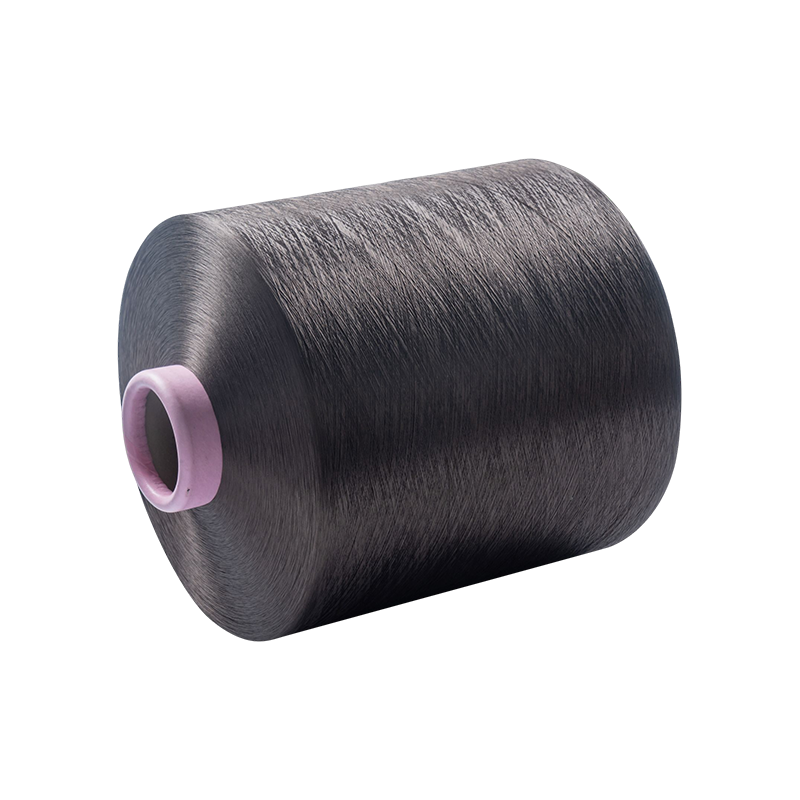 High-Performance Eco-Friendly Polyester DTY Yarn in Brown, ZN0085 FMThis brown drawn textured yarn offers deep, uniform colorfastness rated 4-5 on ISO 105-B02, with high strength and dimensional stability. Its verified base shade supports carpet programs needing consistent reference colors before production.View Product →
Light fastness is part of the same conversation. Residential interior carpet typically requires 5–6 on the blue wool scale; contract and automotive specifications climb to 6–7. For mass-colored DTY, the requirement shifts from dye uptake to inter-batch tolerance, expressed as a Delta E of 1.5 maximum against an approved reference card.
Structural Requirements: Twist, Ply, and Linear Density
Denier selection follows the carpet construction, not the reverse. Fine-gauge loop pile runs 800–1,200 denier, standard residential cut pile runs 1,200–1,800 denier, and Berber or heavy contract constructions run from 1,800 to 3,600 denier.
Typical DTY linear density by carpet construction
Linear density in denier per single end; heavier plied constructions double the effective bundle.
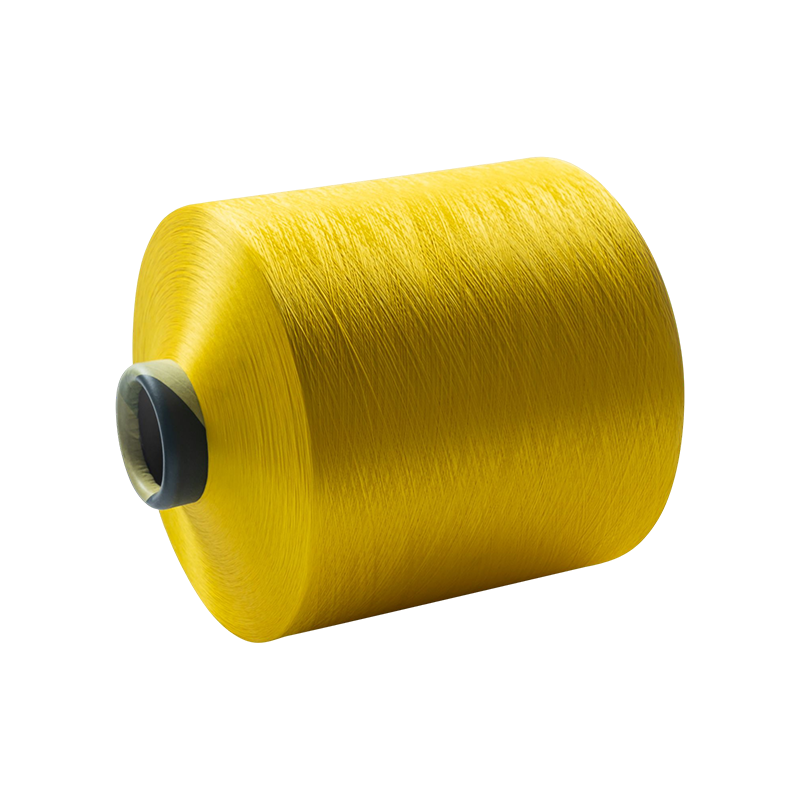
Cut-pile yarns are usually two-ply, twisted at 100–180 twists per meter and heat-set to lock twist and crimp together. Insufficient twist makes the pile tip open and lose definition; excessive twist reduces cover and stiffens the hand. Warm-toned single-ply yarns such as Hengke’s ZY0076/ZY0334 Yellow 178 remain workable in loop constructions, where the loop itself protects the pile tip.
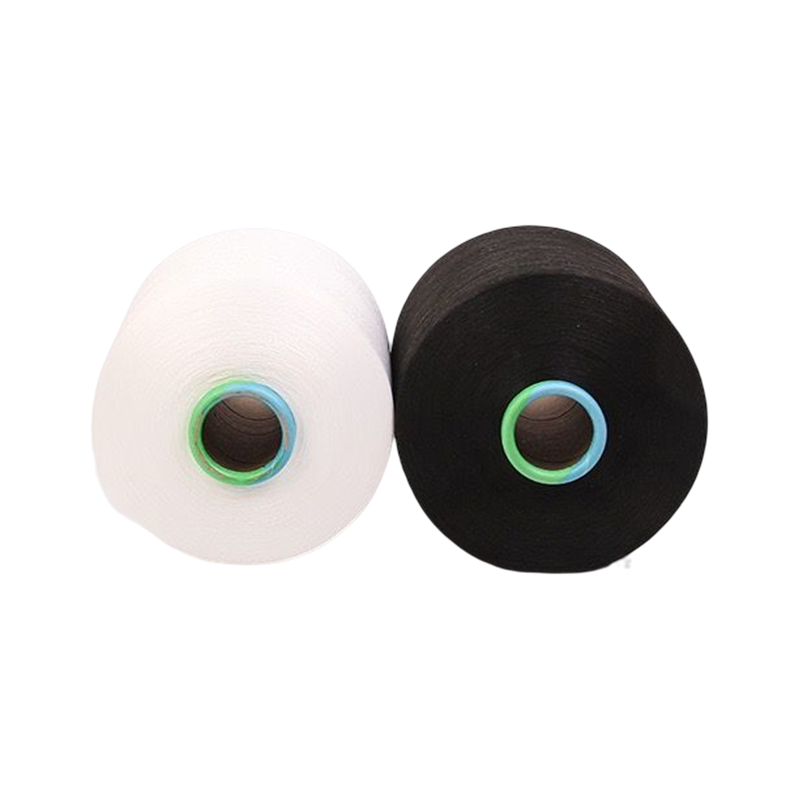
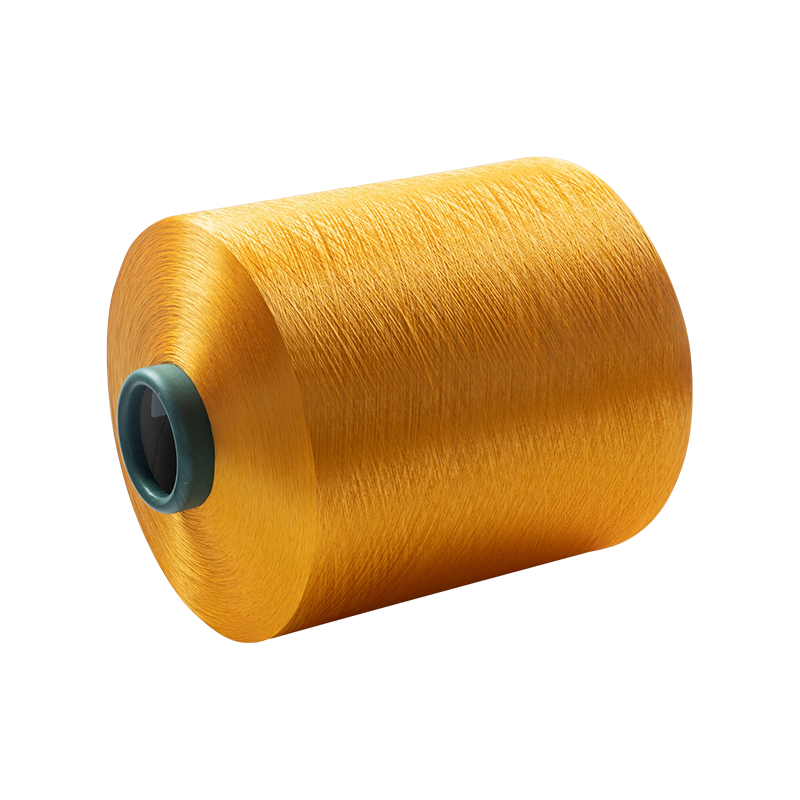 Wash-Resistant Polyester DTY Yarn in Yellow, Grey, White (ZY0076-ZY0334)This single-ply DTY yarn is suitable for loop constructions where the loop protects pile tips. Its high bulk and heat-setting stability allow reliable performance during high-speed knitting, making it a practical choice for cut-pile alternatives.View Product →
How to Qualify a DTY Supplier for Carpet Programs
Qualification rests on five checks that go beyond a datasheet.
- Set the test protocol before sampling: linear density per ISO 2060, tenacity and elongation per ISO 2062, crimp contraction per GB/T 6506.
- Audit the laboratory. The supplier should test in-house so batch decisions are made on real cones, not on re-sold certificates.
- Run a consignment trial. One full dye lot tufted across the full roll width is the only test that exposes shading and crimp defects.
- Verify shade continuity across batch numbers, keeping inter-batch tolerance within a Delta E of 1.5 or less against the approved reference.
- Confirm capacity and lead time. A carpet program consumes tons weekly, so documented production volume and delivery terms belong in the specification.
Frequently Asked Questions
What denier range works best for residential carpet DTY?
Residential loop-pile carpets typically use 800–1,200 denier DTY, while cut-pile carpets run 1,200–1,800 denier. Heavier contract and Berber constructions move to 1,800–3,600 denier.
Why is crimp contraction so important in carpet yarn?
Crimp contraction creates bulk. More bulk means better pile cover at the same fabric weight, and stable crimp keeps the surface even after heat setting and package dyeing.
Can colored DTY replace package-dyed yarn in carpet production?
Yes, when the shade reference is fixed and inter-batch tolerance is controlled within a Delta E of 1.5 or less. Mass-colored DTY eliminates dye uptake differences entirely, which removes the most common source of carpet striping.
What shrinkage value should a carpet buyer specify?
Specify hot-air shrinkage of 8–13% at 180°C and boiling-water shrinkage of 6–9%, and require a package-to-package spread below 1.5 percentage points within each delivered lot.