English
 Español


Article Directory
- 1 What a complete DTY specification block contains
- 2 Linear density and filament count: the pair that prices the order
- 3 Interlace, twist and bulk: the machine-performance parameters
- 4 Colour, luster and whiteness: lock appearance into the document
- 5 Test methods and acceptance criteria that end arguments
- 6 Packing, volume and delivery terms belong in the same document
- 7 Practical answers before the RFQ leaves your desk
A DTY yarn RFQ that reads "300D, black, best price" comes back with a price, a lead time and a hidden gap. Linear density travels with a tolerance band, interlace level decides whether the yarn survives a high-speed needle bed, and oil content decides how the cone unwinds. When those fields are missing from the enquiry, the supplier substitutes the settings already running on the texturing line, and the buyer discovers the difference on the knitting floor instead of in the quotation.
This guide covers the parameters that belong in a polyester drawn textured yarn (DTY) request for quotation, the units they are written in, the tolerance bands that are commercially realistic, and the test standards that turn a lab disagreement into a documented answer.
What a complete DTY specification block contains
A complete DTY specification block contains twelve fields: linear density, filament count, interlace level, twist, tenacity, elongation at break, crimp contraction, oil content, luster, fibre cross-section, colour reference and packing format. A quotation issued without them is an estimate, not an offer, because each field is a production variable that the mill sets independently.
The table below lists the twelve fields with the units and the windows that suppliers can hold as standard production. Values outside these windows remain manufacturable, but they become a dedicated lot with a dedicated price and a longer sampling cycle.
| Field | Written as | Typical commercial window | Why it belongs in the enquiry |
| Linear density | denier (D) or dtex | nominal value with plus or minus 2.0% to 3.0% | Sets fabric weight, yield per kilogram and price |
| Filament count | f, for example 48f | 24f to 144f for apparel | Drives hand feel, cover and light reflection |
| Interlace level | nodes per metre | 90 to 120 for circular knitting | Prevents filament spread and needle lines |
| Twist | turns per metre | zero for interlaced, 100 to 120 for weaving | Decides beam stability and yarn cohesion |
| Tenacity | cN/dtex | 3.2 to 4.0 | Predicts breakage at high machine speed |
| Elongation at break | percent | 18% to 30% | Balances stretch recovery against dimensional stability |
| Crimp contraction | percent | 8% to 20% | Controls bulk and cover in the finished fabric |
| Oil content (OPU) | percent by mass | 0.5% to 1.2% | Affects friction, static and downstream dyeing |
| Luster | bright, semi-dull, trilobal bright | selected per end use | Changes sheen and how a shade reads in fabric |
| Fibre cross-section | round or trilobal | round as default | Drives soil hiding and specular reflection |
| Colour reference | code plus physical chip | Delta E 1.0 or tighter, D65/10 degrees | Prevents batch-to-batch shade drift |
| Packing format | cone weight and pallet build | 1.0 kg to 4.0 kg cones | Drives freight cost, handling and creel fit |
Linear density and filament count: the pair that prices the order
Linear density and filament count must always be written as a pair, because 150D/48F and 150D/144F are different products, with different prices, different luster and a different hand. A quotation that names only "150D" leaves the filament count open, and the mill will choose the count that best fits its current schedule.
How to write the yarn count so it cannot be misread
State the count in the format used by the receiving mill, then add the tolerance. ISO 2060 defines linear density measurement on a skein, and it is the reference most European and Asian mills quote against when a result is disputed.
- Nominal linear density in denier or dtex: 150D, or 167 dtex.
- Filament count after the slash: 48F, 72F, 144F.
- Tolerance band as a percentage of nominal: plus or minus 2.0%, plus or minus 2.5%, plus or minus 3.0%.
- Mass basis used for pricing: net yarn mass in kilograms, excluding the cone.
Why the tolerance band matters more than the nominal number
A 3% linear density deviation moves 1,000 m of a 150 denier yarn by roughly 0.5 g per end. On a warp of 4,000 ends that is close to 2 kg of yarn per 1,000 m of greige fabric, enough to push a finished fabric outside its declared grams per square metre. The nominal number looks identical on the purchase order; the tolerance is what changes the bill of materials.
GB/T 14460, the Chinese national standard for polyester drawn textured yarn, grades DTY partly on linear density deviation and its coefficient of variation, which is why serious buyers quote a grade rather than a single number. Filament count is just as consequential: denier and filament count both change hand feel and cover, because 144 filaments of the same total denier feel softer and reflect light differently than 48 filaments.
Interlace, twist and bulk: the machine-performance parameters
An interlace level between 90 and 120 nodes per metre suits most single-jersey circular knitting. Below 60 nodes per metre the filaments spread on the needle bed and cause dropped stitches; above 140 nodes per metre tight spots form and reappear as barre after dyeing, which no amount of finishing can remove.
Twist-free or twisted: decide by process, not by preference
- 80 to 120 nodes per metre hold the filament bundle together
- Runs directly on circular knitting and hosiery machines
- Softer hand, no steam setting step before dyeing
- The standard price band for most apparel programmes
- 100 to 120 turns per metre applied after texturing
- Preferred for warp preparation and weaving beams
- Requires steam setting to fix the twist
- Higher conversion cost per kilogram of yarn
Bulk and crimp: quote crimp contraction, not "high bulk"
Crimp contraction between 8% and 20% covers most apparel DTY, and crimp modulus describes how much of that bulk survives tension on the machine. Bulk is created in the texturing step and fixed by heat setting, so an RFQ that asks for "high bulk" gives the mill no measurable target. Write crimp contraction and crimp stability as percentages, tested after the conditioning treatment defined in GB/T 14460.
Colour, luster and whiteness: lock appearance into the document
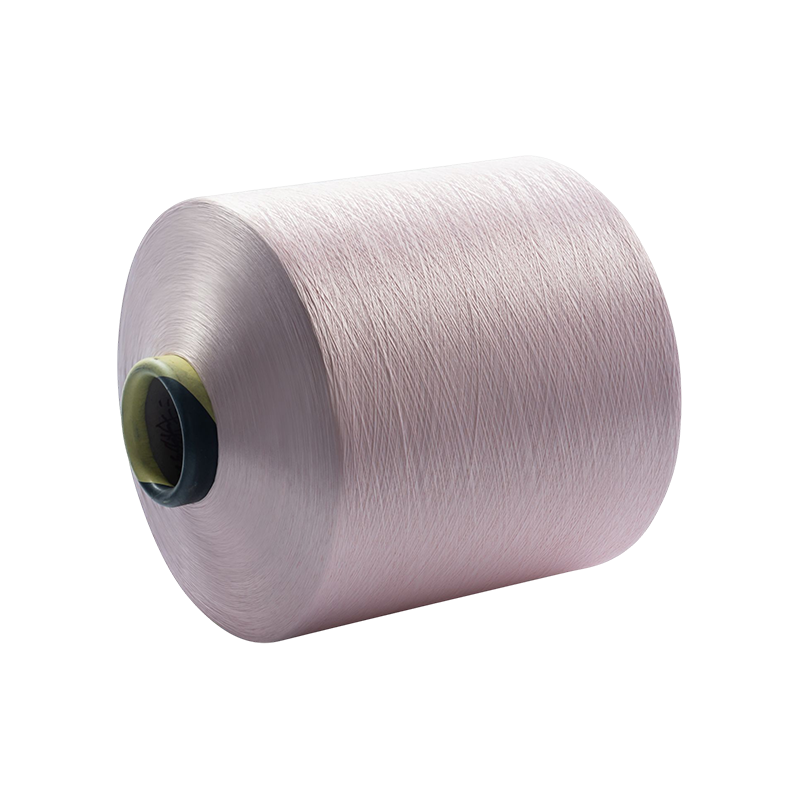
Specify colour with a code plus a physical chip and a CIELAB tolerance of Delta E 1.0 or tighter under D65/10 degrees illumination. Two mills can both be honest about "light pink" and still ship yarn that produces two visibly different fabrics, because the words carry no numeric boundary.
Polyester DTY shades are usually delivered dope-dyed, where pigment enters the polymer before spinning, or package-dyed after texturing. Dope-dyed yarn holds shade from lot to lot more consistently and needs no dyeing step downstream, which is why colour-driven programmes ask for it first.
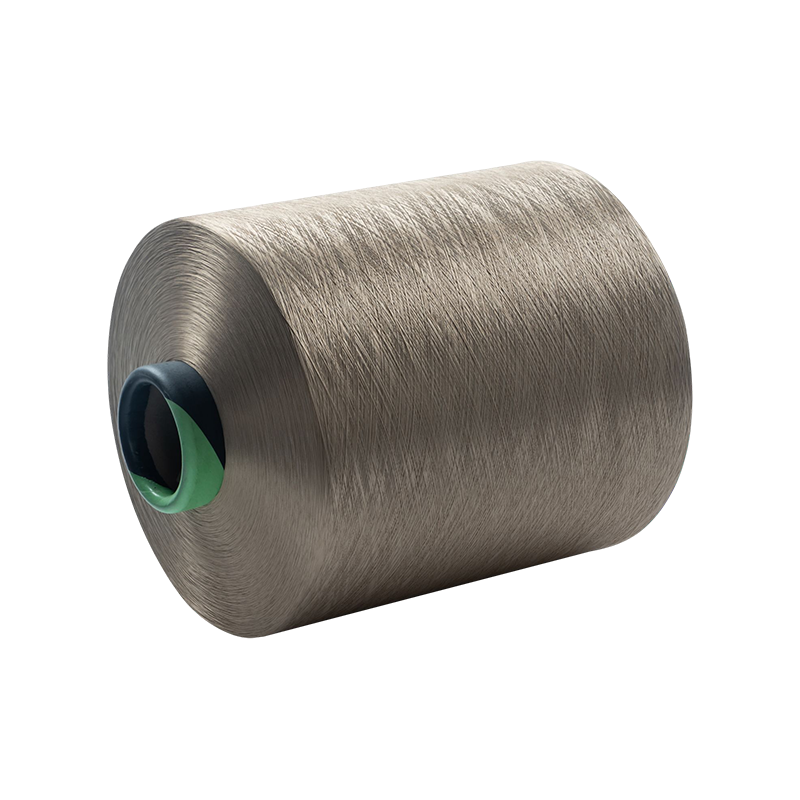
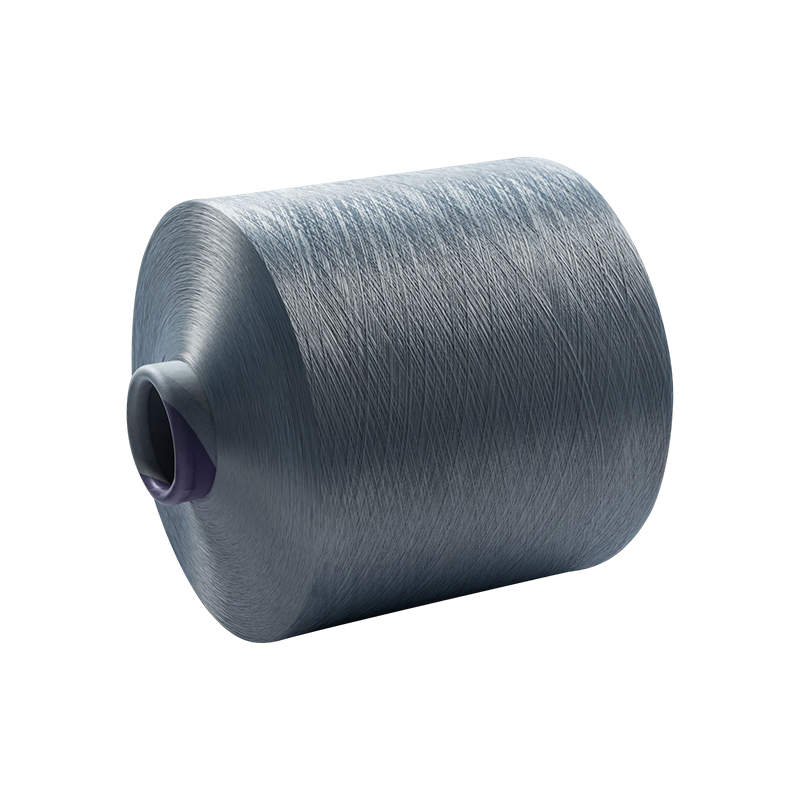
Hengke Textile Technology Co., Ltd. organises its stock shades through a colour card grouped by shade family, from beige and blue through to grey, purple and red, each family carrying its own page range. For a buyer, that structure matters: it shows which shades already run and which ones require a new lot.
- Luster: bright, semi-dull or trilobal bright, stated for the receiving fabric.
- Cross-section: round or trilobal, which changes soil hiding and specular reflection.
- Whiteness: a CIE whiteness index value for white and off-white shades, not a trade name.
- Colour tolerance: Delta E limit plus the illuminant and observer angle used to judge it.
- Physical reference: a signed chip or a retained sample from the approved lot.
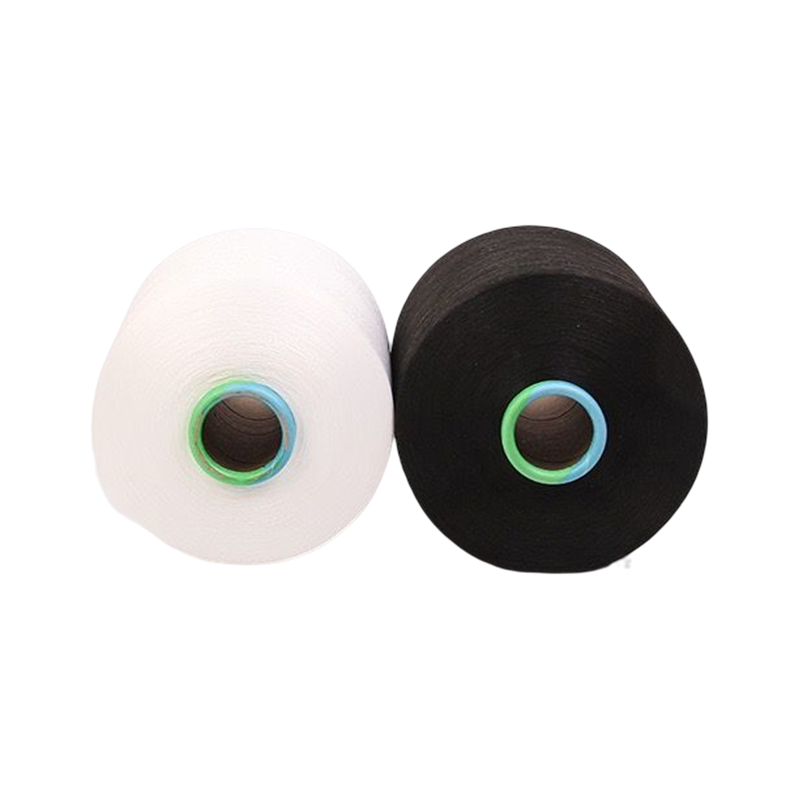
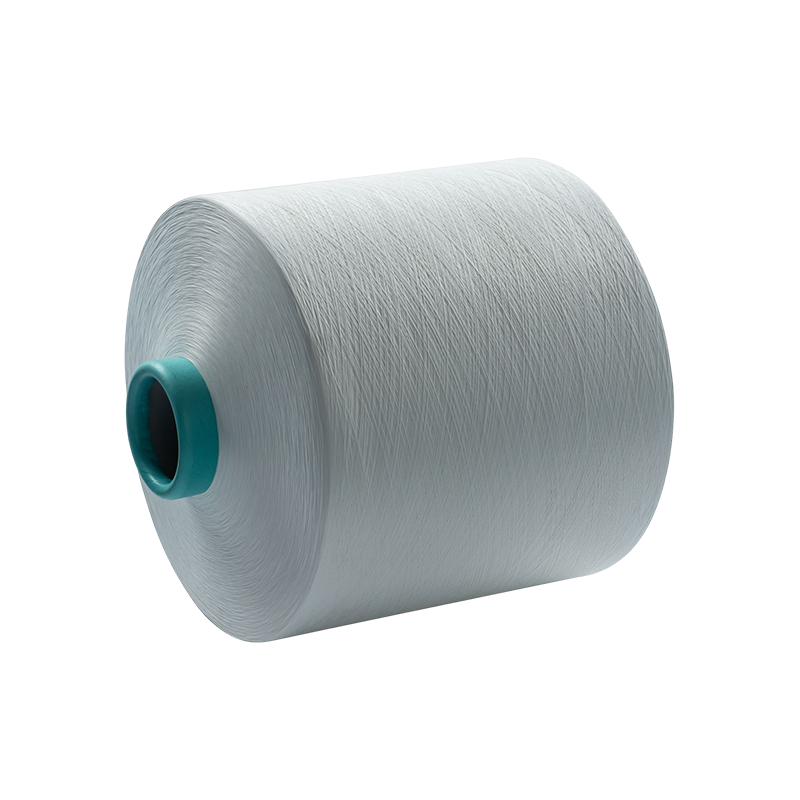 Antibacterial Anti-Odor Polyester DTY Yarn in White and GreyFor buyers mapping running shades or specifying standards, this antibacterial polyester DTY offers white/grey variants and certifiable performance.View Product →
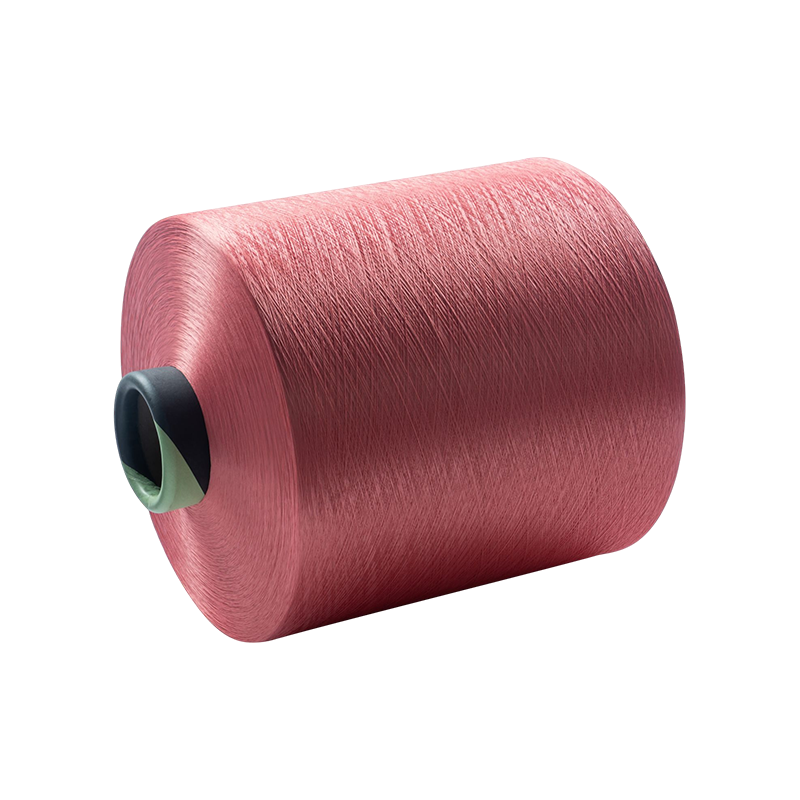 Lightweight Soft Polyester DTY Yarn for Apparel and Home TextilesA cotton-like, high-bulk DTY in multiple colors and lusters, suitable for sportswear, innerwear, home textiles, and industrial fabrics with customizable deniers.View Product →
Test methods and acceptance criteria that end arguments
Name the standard together with the property, because a property without a method is not a specification. ISO 2060 governs linear density from skein, ISO 2062 and ASTM D2256 govern single-end tensile properties, and ISO 2859-1 governs the sampling plan used to accept or reject a lot.
- ISO 2060 for linear density and its coefficient of variation.
- ISO 2062 or ASTM D2256 for tenacity and elongation at break.
- ISO 139 for the standard atmosphere used to condition test samples.
- ISO 2859-1 for the AQL sampling scheme, commonly set at AQL 2.5 for major defects.
- GB/T 14460 where the mill works to the Chinese DTY grade definitions.
ISO 139 conditioning means 20 degrees Celsius plus or minus 2 degrees and 65% relative humidity plus or minus 4%. Testing without conditioning inflates or deflates elongation results, which is the most common reason two laboratories disagree about the same yarn.
A defensible test plan is also countable. Ten bobbins drawn per lot, twenty single-end breaks per bobbin for tensile data, and one knitted panel of at least one metre for shade and barre. Suppliers with their own laboratory instruments can run that plan before shipment; Hengke Textile Technology Co., Ltd. states that it operates an in-house testing laboratory with a complete set of inspection equipment, which keeps these results in the production loop rather than in a third-party queue.
Packing, volume and delivery terms belong in the same document
Packing is a specification, not a logistics detail afterthought, and it belongs in the same RFQ as the yarn parameters. Cone dimensions decide whether the yarn fits an existing creel; pallet height decides the container load; both decide the landed cost per kilogram.
- Cone weight and type: 1.0 kg to 4.0 kg, cylindrical or tapered.
- Cones per carton and cartons per pallet, with the pallet footprint in millimetres.
- Net and gross weight per carton, plus any shrink-wrap or moisture-barrier requirement.
- Minimum order quantity per shade, which is different from the MOQ per order.
- Delivery date and Incoterm, so price and schedule are compared on the same basis.
- Documents required at shipment: packing list, test report, certificate of origin.
Delivery commitments should be stated as a number of working days from order confirmation. A supplier able to hold large-scale capacity can give a firm date rather than a range; the reference point for polyester DTY from Zhejiang is a confirmed 20-day delivery window, which is the figure Hengke Textile Technology Co., Ltd. publishes for standard orders.
Shade availability changes the schedule more than transport does. A shade already running in the range, such as the Silver 121 series, can be sampled from existing production and shipped inside the normal window, while a new shade needs a dedicated lot, a colour match and its own approval cycle before it reaches the same 20-day clock.
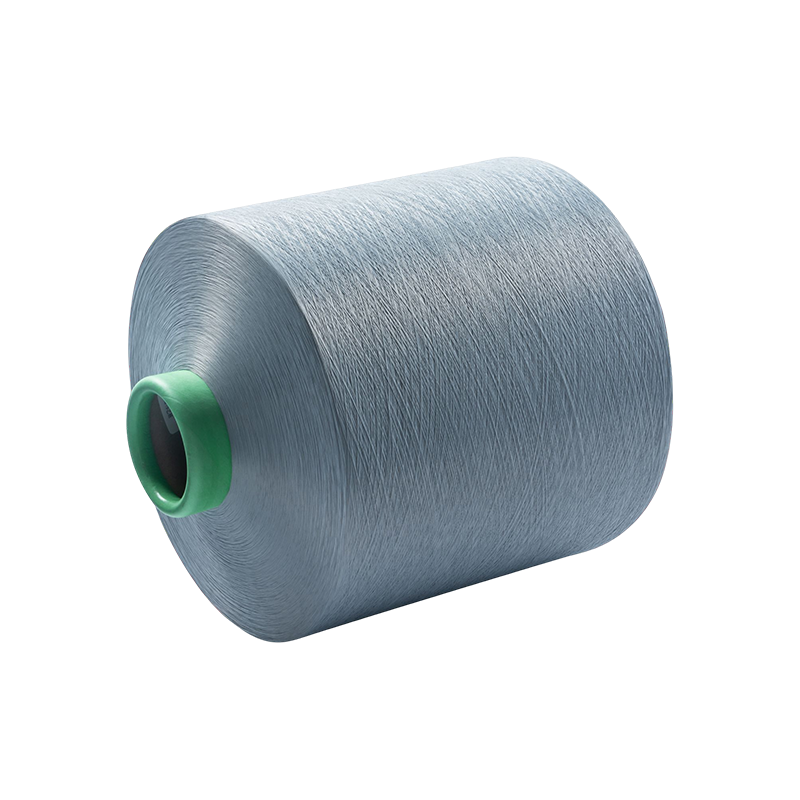 Full-Color Custom Polyester DTY Yarn Silver Series 121A silver-luster DTY with full-color customization and high color consistency; available from existing Silver 121 production for faster sampling and standard lead times.View Product →
Practical answers before the RFQ leaves your desk
What is the minimum information needed for a usable DTY quote?
Seven fields are enough for a comparable price: linear density with a tolerance, filament count, interlace level, luster, colour reference, quantity and packing format. A quote that omits the linear density tolerance cannot be compared against a second supplier, because the two offers may describe yarns of different actual mass.
How tight should the linear density tolerance be?
Plus or minus 2.0% is the working standard for apparel programmes, and plus or minus 1.5% or tighter is normal for technical textiles and warp-critical styles. Tightening from plus or minus 3.0% to plus or minus 1.5% halves the accepted production window, so expect a narrower supply base and a longer sampling cycle rather than the same price.
Does the interlace level change the price?
Within 60 to 140 nodes per metre, interlace is a texturing-line setting rather than a raw material change, so it usually sits inside one price band. Requests outside that band may require a dedicated lot with its own minimum order quantity, because the line has to be reset and re-stabilised for the run.
How many samples should be checked before releasing bulk?
Test three cones per lot, run ten single-end tensile breaks per cone under ISO 139 conditioning, and knit a panel of at least one metre for shade and barre before releasing the balance. On arrival, inspect against ISO 2859-1 at AQL 2.5 for major defects, which converts an opinion into a documented accept-or-reject decision.
The RFQ is the cheapest place to solve a yarn problem. Every field added before the quotation stage removes one variable from the production line, one dispute from the laboratory and one week from the delivery schedule.