English
 Español


Article Directory
- 1 What DTY Yarn Quality Actually Measures
- 2 How DTY Quality Shows Up on Circular Knitting Machines
- 3 How DTY Quality Shows Up on Weaving Looms
- 4 The Pre-Shipment Test Sequence That Predicts Machine Performance
- 5 Colour Consistency Is Part of Yarn Quality
- 6 Writing DTY Quality Limits Into a Purchase Order
- 7 Questions Buyers Ask Before Releasing a DTY Lot
A 28-gauge circular knitting machine running 150D/48F polyester DTY at 22 rpm turns out clean fabric when the yarn's crimp contraction CV measures 2.8 percent. The same machine, the same shade and the same certificate of analysis at 4.2 percent produce needle lines across the full width of the roll.
That 1.4-point gap is why buyers who knit or weave judge DTY on five measured parameters rather than on price per kilogram: linear density CV, tenacity and elongation CV, crimp contraction, interlace level and oil pickup. The rest of a specification sheet is shade, packaging and paperwork.
This article covers what each parameter does at the machine, which limits hold on circular knitting and which hold on weaving, and how to test a lot before it ships.
What DTY Yarn Quality Actually Measures
Polyester DTY quality is the lot-to-lot stability of five measurable properties, and each one maps to a published test method rather than to an opinion formed at the machine.
Polyester DTY (draw textured yarn) is a continuous-filament yarn produced by drawing and false-twist texturing partially oriented yarn (POY) on a texturing machine, usually at 500 to 900 metres per minute. The process builds crimp, bulk and stretch into the filament, so textured yarn carries roughly 30 to 50 percent more bulk and two to three times the elastic recovery of flat filament yarn at the same linear density.
That added bulk is exactly what makes the yarn sensitive. Crimped filaments trap air, reflect light unevenly when crimp varies, and slide against steel at a friction level set by the oil film on the surface. Testing therefore follows a fixed framework: ISO 139 for conditioning, ISO 2062 or ASTM D2256 for single-end tensile properties, GB/T 6505 for oil content and ISO 105-J03 for colour difference. In China, GB/T 16602-2008 grades textured polyester yarn by linear density CV, breaking strength CV and crimp contraction, which is why those three numbers appear on almost every DTY certificate.
| Parameter | Working range | Effect on knitting | Effect on weaving |
| Linear density CV | 2.0 percent or less at first grade | Uneven loop length, needle lines | Weft density bands, streak marks |
| Single-end tenacity | 3.8 cN/dtex or above, CV under 6 percent | Fewer yarn breaks at 30 rpm | Lower warp and weft stop rates |
| Elongation at break | 22 to 30 percent, CV under 8 percent | Tension fluctuation across the cylinder | Shed timing error, stop marks |
| Crimp contraction | 18 to 25 percent, CV under 3.5 percent | Barre, bulk variation between feeds | Cover factor variation |
| Interlace level | 8 to 14 nodes per metre knitting, 4 to 8 weaving | Filament spread, fisheyes, loop distortion | Warp stickiness, hairiness at heddles |
| Oil pickup | 0.30 to 0.55 percent | Needle wear, oil marking | Friction at guides, shedding cleanliness |
A lot can pass its certificate of analysis and still fail at the machine, because the certificate describes averages and CVs for the whole lot, while a knitting machine samples one package, 48 filaments at a time, thousands of times a minute.
How DTY Quality Shows Up on Circular Knitting Machines
Knitting is the harsher of the two processes for DTY: interlace level, oil pickup and crimp contraction CV decide whether a lot runs, and a 34-inch cylinder at 28 gauge carries roughly 3,000 needles that all draw from the same package between 22 and 30 rpm.
Interlace level sets loop geometry
Interlace nodes, counted in nodes per metre, are the tangle points that hold the filament bundle together. Between 8 and 14 nodes per metre the bundle stays closed through the needle path. Below 8 nodes, filaments spread before the loop closes and produce fisheyes and thin places; above 14, the yarn stiffens, loop length varies from feeder to feeder, and needle load rises.
Oil pickup controls friction and needle wear
An oil pickup between 0.30 and 0.55 percent keeps the friction coefficient low enough for high-speed needle movement without depositing visible oil. Below 0.30 percent, friction and needle wear climb and break rates follow; above 0.55 percent, oil migrates into the fabric and interferes with subsequent coating or dyeing.
Crimp contraction CV drives barre
A crimp contraction CV above 3.5 percent means packages in the same lot bulk differently. Those differences knit into bands that repeat with the machine's feeder geometry, and they cannot be removed by washing or heat setting.
- Needle lines repeating every 48 or 96 courses point to one package, not to the machine.
- Random fisheyes and filament spread indicate interlace below 8 nodes per metre.
- White powdery build-up on needles and sinkers indicates oil pickup below 0.30 percent.
- Bands that shift position across the roll indicate crimp contraction CV above 3.5 percent.
The machine does not read the certificate of analysis. It reads the package, one loop at a time, and it reports what it finds as fabric.
How DTY Quality Shows Up on Weaving Looms
Weaving punishes a different set of defects: tenacity below 3.8 cN/dtex and elongation CV above 8 percent drive warp and weft stop rates, and the stop marks left behind survive dyeing and finishing.
On a water-jet loom running 600 picks per minute, warp tension is governed by the let-off system and by the yarn's own extension under load. A lot that varies between 22 and 30 percent elongation across packages changes shed geometry at the fell of the cloth, and every interruption shows up as a thicker or thinner weft band that finishing cannot hide.
Tenacity and warp stop rates
Warp ends break where abrasion and tension peaks meet. Yarn at 3.8 cN/dtex or above with a strength CV under 6 percent holds a steady stop rate; below that threshold, the weakest packages in the lot decide the stop rate for the whole beam.
Elongation CV and stop marks
Elongation CV under 8 percent keeps shed timing consistent. Above it, warp ends reach the shed at slightly different extensions and the loom stops on a slack or tight end, leaving a mark that repeats at the beam circumference.
The Pre-Shipment Test Sequence That Predicts Machine Performance
Seven checks, run in order on a conditioned sample, predict how a DTY lot behaves on the machine, and the first one is not a test at all.
- Condition the sample for 24 hours in the ISO 139 standard atmosphere, 20 to 25 C at 60 to 70 percent relative humidity.
- Run single-end tensile tests to ISO 2062 or ASTM D2256 on at least 20 specimens and record mean tenacity, mean elongation and the CV of both.
- Measure crimp contraction on 10 packages and reject the lot if the CV exceeds 3.5 percent.
- Extract oil content to GB/T 6505 and confirm the result falls between 0.30 and 0.55 percent.
- Count interlace nodes per metre and match them to the process, 8 to 14 for knitting and 4 to 8 for weaving.
- Check colour difference against the approved standard under D65; a difference above 1.0 is a rejection.
- Knit or weave 300 kilograms at full production speed before releasing the balance of the order.
Colour Consistency Is Part of Yarn Quality
A colour difference above 1.0 under D65 between two DTY lots shows as a shade band in the finished fabric, which is why shade is specified with the same rigour as tenacity whenever a knit programme runs across multiple lots.
Shade control starts with the source: a supplier whose DTY range is organised by colour family can supply the same shade code across consecutive orders instead of matching it from scratch. This is the logic behind building a yarn range around colour families rather than around denier alone, and it is why a working colour card with per-shade product pages shortens the approval cycle for repeat programmes considerably.
Where a single shade must run continuously for months, a supplier that holds stock across a full colour range removes the lot-matching risk entirely, because the second order is drawn from the same production record as the first.
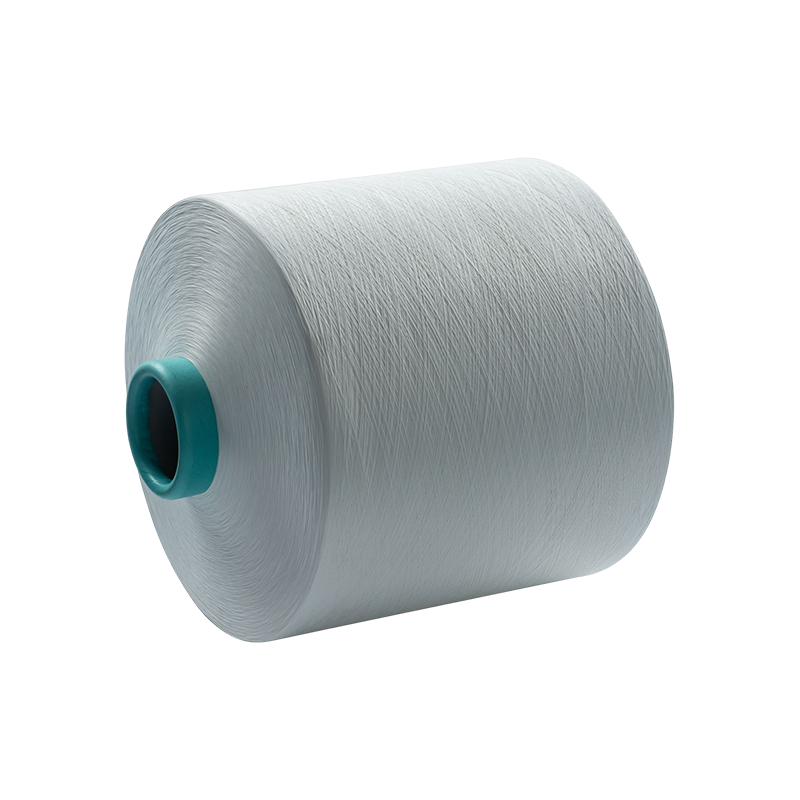 Antibacterial Anti-Odor Polyester DTY Yarn ZY0050-ZY0238FMReview this antibacterial anti-odor polyester DTY for sportswear, home textiles, and medical uses, with ISO/OEKO-TEX compliance and customizable denier.View Product →
Writing DTY Quality Limits Into a Purchase Order
A purchase order for DTY should carry five numeric limits plus the test method and the sampling plan for each one; without them, a dispute is settled on appearance rather than on data.
- Linear density and its CV, with the method named.
- Tenacity, elongation and the CV of elongation.
- Crimp contraction and its CV.
- Interlace level in nodes per metre, matched to knitting or weaving.
- Oil pickup percentage with the extraction method specified.
Zhejiang Hengke Textile Technology Co., Ltd., headquartered at 188 Gongxing Road, Qiantang District, Hangzhou, with a sister office in Jiangsu, produces polyester DTY and ACY yarn and operates its own testing laboratory. The company states annual capacity above 300,000 tons and delivery within 20 days of order confirmation, which matters when a knitting mill needs a replacement lot inside a production window rather than inside a season.
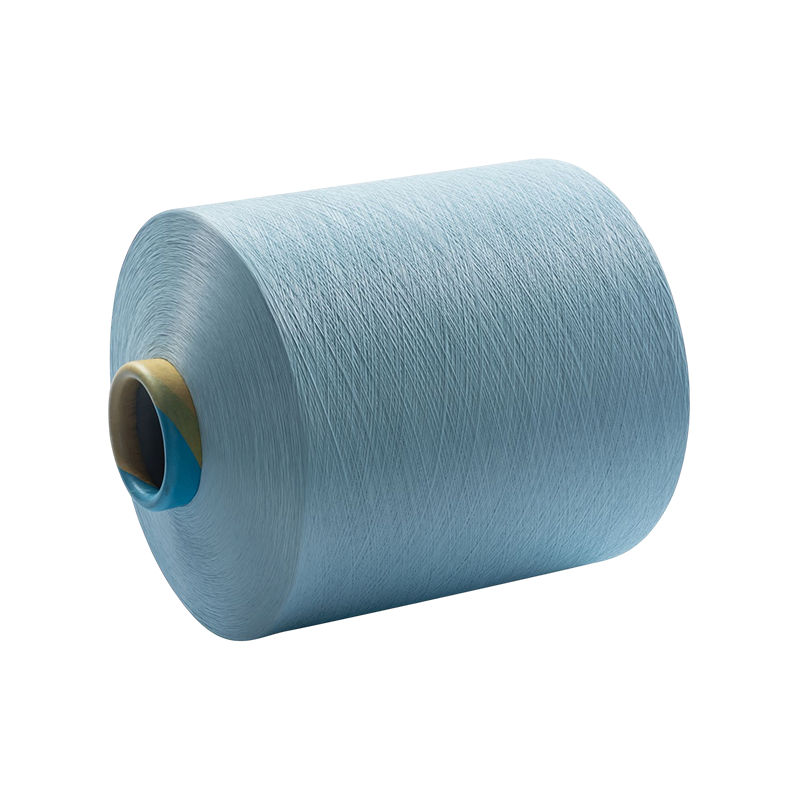 Blue Series Polyester DTY Yarn ZB0118 350DConsider this 350-denier SIM DTY for sportswear, upholstery, and automotive interiors, with high tenacity and strong color retention.View Product →
Questions Buyers Ask Before Releasing a DTY Lot
What linear density CV should a knitting mill specify?
Specify 2.0 to 2.5 percent for first-grade textured yarn in GB/T 16602-2008. On 28-gauge machines, lots between 2.5 and 3.5 percent usually run but show more needle-line rejects, and lots above 3.5 percent are not worth trial running.
Can one DTY lot serve both knitting and weaving?
Only within narrow limits. Knitting wants 8 to 14 interlace nodes per metre and high bulk; weaving wants 4 to 8 nodes, higher tenacity at 3.8 cN/dtex or above, and tighter elongation control. A compromise lot works at 8 to 10 nodes, but expect to lose output on one of the two processes.
How long must a DTY sample be conditioned before testing?
Twenty-four hours in the ISO 139 standard atmosphere, 20 to 25 C and 60 to 70 percent relative humidity. Testing an unconditioned package shifts elongation readings noticeably and can turn a passing lot into a rejected one for no reason other than moisture.
What oil pickup range keeps needles clean without marking fabric?
Between 0.30 and 0.55 percent, verified to GB/T 6505. Under 0.30 percent, friction and needle wear rise; over 0.55 percent, oil migrates into the fabric and causes marking that shows up after heat setting.
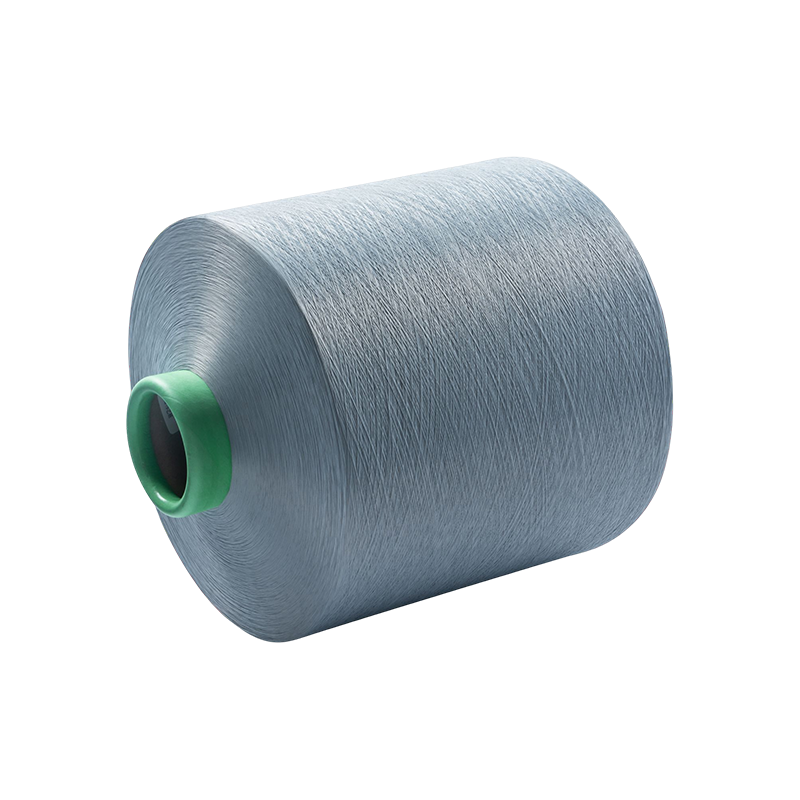 Silver Series Custom Polyester DTY Yarn ZE0006-ZE0668Review this 121-denier silver DTY for technical sportswear, upholstery, and automotive fabrics, with tight dye-lot control and heat-setting stability.View Product →